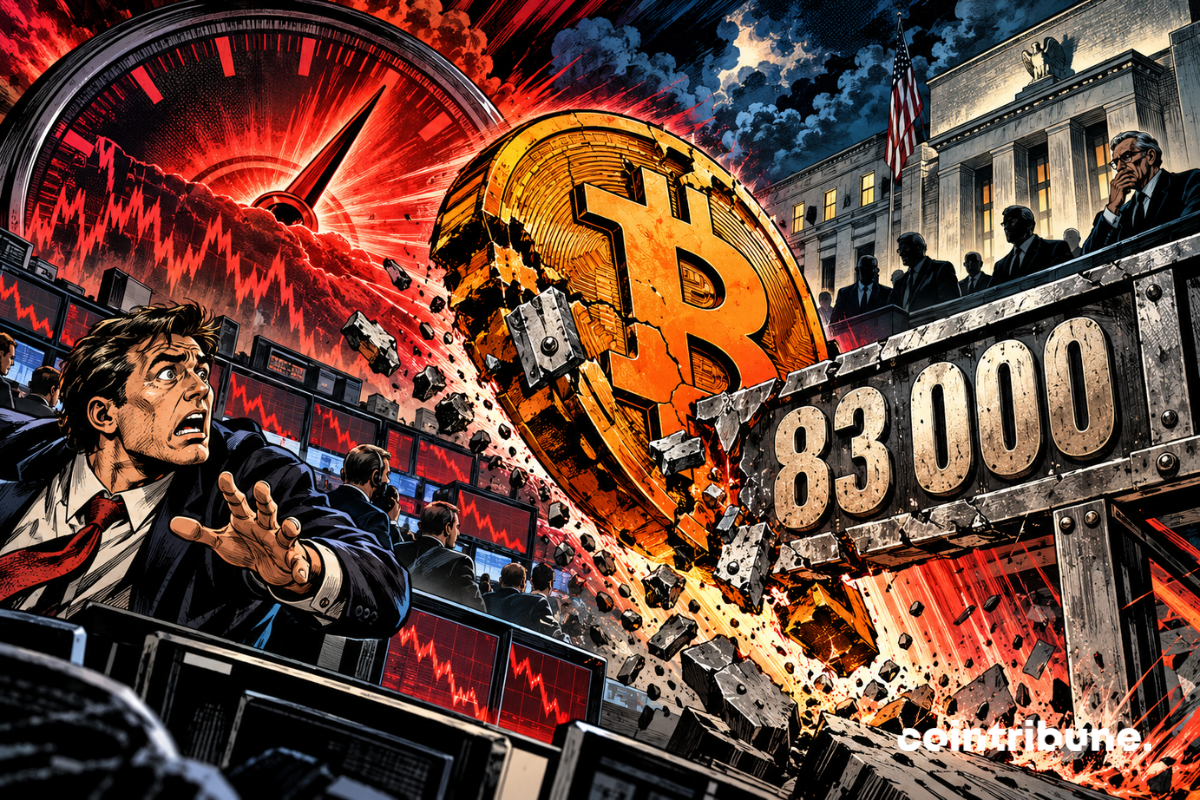
Bitcoin fell below $83,000 this Wednesday, October 14, after a higher-than-expected publication of American inflation. The CPI reached 3.7% year-on-year in September, compared to 3.6% expected. Core inflation also climbs to 2.6%. Investors now fear further rate hikes from the US Federal Reserve, while the crypto market is already struggling to regain momentum.
In brief
- Bitcoin falls below $83,000 after the publication of the American CPI.
- Inflation hits 3.7%, while the Core CPI beats expectations at 2.6%.
- Markets are reassessing the risks of further rate hikes from the Fed.
Bitcoin plunges below $83,000 after CPI surprise
The market was awaiting US inflation figures. They just fell, and bitcoin reacted immediately. BTC drops below $83,000 after Bureau of Labor Statistics release. A few hours earlier, it was still moving around $83,500. Selling pressure resumes while investors were already anticipating a difficult publication.
The numbers beat forecasts on two important indicators. Overall inflation reached 3.7% in September, compared to 3.4% in August. Economists expected 3.6%. Over one month, prices increased by 0.6%, in line with expectations.
The Core CPI, which excludes food and energy, stands at 2.6% over one year. The consensus was 2.5%, after 2.4% in August. Its monthly increase reached 0.3%, compared to 0.2% forecast. The surprise is therefore not huge in absolute value. However, it comes at a bad time for bitcoin. The market is coming out of several complicated sessions. By October 7, BTC had already fallen below $84,000 with $547 million in crypto liquidations.
The latest inflation data now adds macroeconomic pressure to this fragility. U.S. stock futures also fell after the release. The Nasdaq 100 notably lost nearly 0.5% in the first reactions.
The Fed could raise rates for longer than expected
The problem for bitcoin mainly comes from American monetary policy. Inflation above expectations reduces the Fed’s room for maneuver. To curb the rise in prices, the central bank can maintain its high rates or decide on further increases.
It actually raised its key rate by 25 basis points in September, bringing its range to 3.75-4%. Before the CPIinvestors were mainly banking on a break at the October 28 meeting. The publication modifies their expectations. According to market data reported by the Financial Times, the estimated probability of a rate hike as early as October rose from around 22% to 45% after the inflation figures.
Traders are also pricing in a scenario of three additional 25 basis point hikes in the coming quarters. This timetable remains an anticipation of the markets, not a commitment from the central bank.
US bonds are already reacting. The yield on two-year Treasury bills reached around 4.86%, driven by new monetary expectations. For bitcoin, higher bond yields represent additional competition. Investors can obtain attractive returns on assets deemed less risky.
Financing conditions also remain less favorable for speculative positions. The Fed has not yet made a new decision. She has several other economic statistics to review before her meeting at the end of October.
Bitcoin risks returning to $80,000
The return below $83,000 puts several price levels back in the center of trade. Bitcoin had already tested the $81,000 zone during previous corrections. The psychological threshold of $80,000 then constitutes another benchmark monitored by traders. On the upside, $84,000 and $85,000 remain areas to reconquer to regain some stability.
However, the market has little margin after its latest turbulence. On October 12, Bitcoin’s fall below $82,000 accompanied more than $406 million in liquidations of bullish positions. These liquidations affected the entire crypto market, not just BTC.
US Bitcoin ETFs have also gone through a rough patch. Between October 5 and 9, they saw nearly $679 million in net outflows. The pressure on investors therefore does not come only from the CPI. The next publication of American producer prices, scheduled for October 15, will provide new information on the evolution of inflation.
Bitcoin will also have to deal with rate expectations until the Fed’s decision on October 28. For the moment, the drop below $83,000 illustrates the sensitivity of BTC to American economic surprises. A stabilization of monetary expectations could calm sales. Further degradation would make the $80,000 more exposed.
Maximize your Tremplin.io experience with our ‘Read to Earn’ program! For every article you read, earn points and access exclusive rewards. Sign up now and start earning benefits.