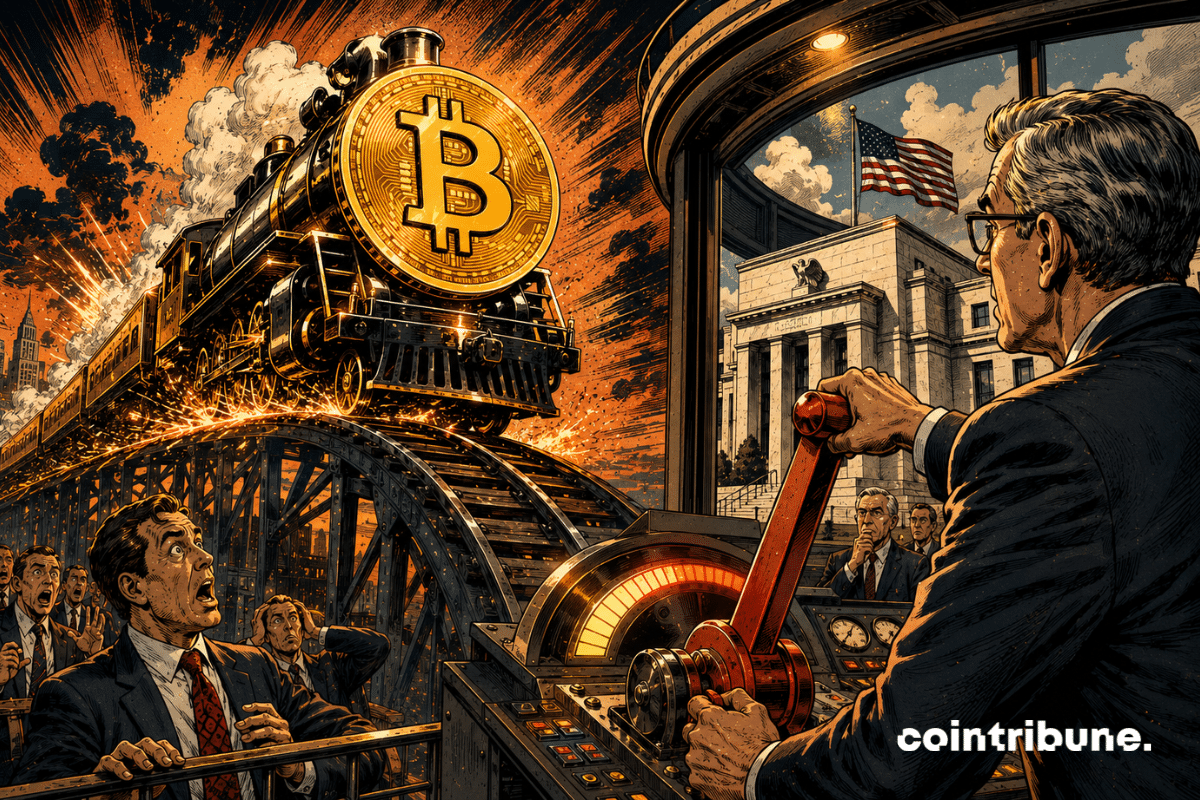
Bitcoin started the month of September below $78,000 after an increase of 25% in August, its best monthly performance since November 2024. Indeed, this entry into the month called “Rektember” revives unfavorable seasonality. Bitcoin has lost on average around 3% in September since 2013. In 2026, however, the main risk comes not from the calendar, but from the Federal Reserve. The markets are now forecasting a possible increase in rates from September 16.
In brief
- Bitcoin enters “Rektember” after a 25% increase in August.
- September historically shows an average return of -3% for BTC.
- The risk of a Fed rate hike reaches 66%.
- High bond yields put more pressure on risky assets.
- Inflation and upcoming US statistics could steer bitcoin.
September remains the least favorable month for bitcoin
While the market cautiously begins the period, the expression “Rektember” combines September with the English term “rekt” used in the crypto ecosystem to report heavy losses. This word is based on the historically weak performance of bitcoin during the ninth month of the year.
BTC has closed September in the red eight times since 2013. Its average monthly return reached -3%, which constitutes its worst performing month over the period.
Some important data summarize this seasonality:
- Bitcoin has lost on average almost 3% in September since 2013;
- Only five of the last thirteen Septembers ended in the green;
- BTC gained around 25% in August 2026;
- Its price fell 1% below $78,000 in early September.
Therefore, this historical average does not directly predict a correction. This sample only covers thirteen years. Additionally, the last three months of September have all had progression. Bitcoin notably increased by 5.16% in 2025.
However, the August rebound may facilitate profit-taking. After a monthly capital gain of 25%, some owners can secure part of their gains, especially when bitcoin cannot sustainably regain the threshold of $80,000.
The probability of a rate hike reaches 66%
Monetary risk represents a more real element than seasonality. At the end of August, the CME FedWatch gave a 66% probability of a 25 basis point increase during the next Fed meeting. This evaluation still reached 40% a week earlier.
With this in mind, this decision could increase the federal rate range from 3.50%-3.75% to 3.75%-4.00%. A second increase before the end of the year would then raise this range to 4.00%-4.25%. Futures contracts are the source of these probabilities. They can still make progress before the meeting of September 15 and 16.
Kevin Warsh solidified his anticipations during his speech in Jackson Hole. Thus, the President of the Fed recalled that PCE inflation was around 3.7% over twelve months and 4.1% at an annualized rate over six months, against a target of 2%.
In his official speechhe declared:
We need to be convinced that core inflation is moving clearly and fairly quickly towards our target. Otherwise, we have work to do.
This explanation does not guarantee an increase in September. It nevertheless attests that the Federal Reserve remains ready to restrict its policy if the next statistics do not reveal a sufficient slowdown in prices.
Rising yields reduce the appeal of risky assets
Kevin Warsh’s words created a new phase of tension on the bond market. Thus, the yield on ten-year US Treasury securities approached 4.8% from its highest level since January 2025.
Higher yields have made bonds and dollar investments relatively more attractive. There is no regular income payout for bitcoin. Investors therefore usually ask for a larger increase perspective to accept its volatility if rates change.
The pressure is not exclusively linked to cryptos. Indeed, the S&P 500 recorded a loss of 0.7% on 1er September, while the Nasdaq fell 1%. Gold also fell, under pressure from the rise in the dollar and yields.
In addition, geopolitical tensions between the United States and Iran add another risk. WTI oil is above $90 a barrel after new American strikes. A sustained increase in energy would fuel inflation and strengthen the case for raising rates.
The progression of bitcoin will therefore really depend on the next American figures on employment and prices. A slowdown in inflation would decrease the likelihood of a rate increase. On the contrary, strong statistics would consolidate the dollar and keep BTC under pressure before the decision on September 16.
Maximize your Tremplin.io experience with our ‘Read to Earn’ program! For every article you read, earn points and access exclusive rewards. Sign up now and start earning benefits.