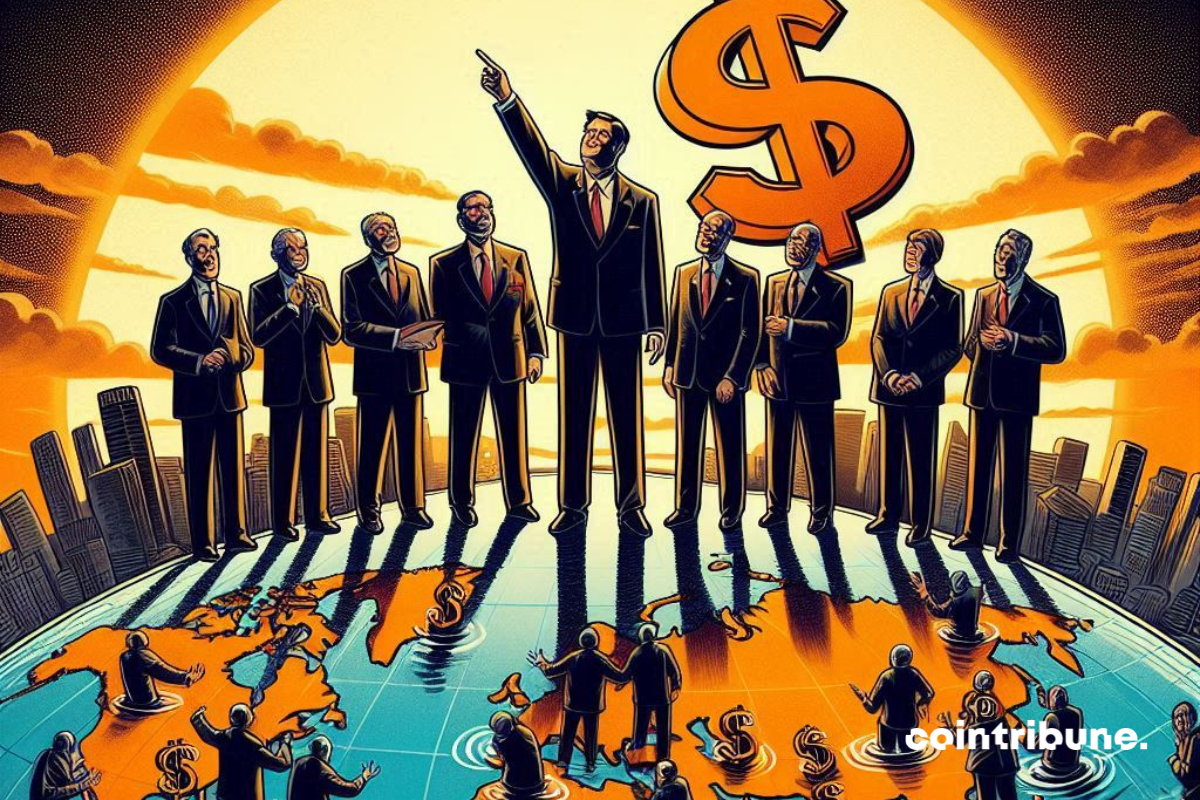
G20 finance ministers meeting in Rio de Janeiro have taken a symbolic step by pledging to cooperate to tax the super-rich more effectively. The move, while embryonic, marks a turning point in the fight against global inequality.
Unprecedented tax cooperation in perspective
For the first time in its history, the G20 officially recognizes the need to reform taxation of the richest. This position reflects an awareness of the harmful effects of inequalities on economic growth and social cohesion.
The ministers highlighted the negative impact of these disparities on economic growth and social cohesion.
There statement adopted in Rio commits member countries to ” cooperate to ensure that very wealthy individuals are effectively taxed“Although not binding, this initiative opens the way to exchanges of good practices and the development of mechanisms to combat tax evasion.
Despite this progress, there are still many disagreements regarding the practical modalities of implementation. The United States and Germany are particularly opposed to the idea of a global minimum tax on large fortunes, defended by Brazil. Washington considers that taxation is above all a matter of national sovereignty.
Other countries, such as France, South Africa and Spain, support a more ambitious approach. These divergences reflect the complexity of reconciling national interests and international cooperation in tax matters.
G20, towards an overhaul of tax systems?
Raising taxes on the ultra-rich is seen as a way to mobilize resources to address global challenges. IMF Director Kristalina Georgieva stresses the importance of ” replenish budgetary reserves while meeting social and development needs” .
This approach could notably contribute to financing the fight against climate change. According to Camila Jardim of Greenpeace, ” It is outrageous to expect ordinary taxpayers to pay for this, while the super-rich escape tax.” .
Economist Gabriel Zucman, author of a report on the subject, sees this declaration as a first step towards a redesign of tax systems. He calls for going further by establishing ” coordinated minimum standards ” at an international level.
This development could mark the beginning of a fiscal rebalancing in favour of greater progressivity. However, its realisation will depend on the political will of States and their ability to overcome technical and diplomatic obstacles.
Maximize your Tremplin.io experience with our 'Read to Earn' program! For every article you read, earn points and access exclusive rewards. Sign up now and start earning benefits.
Click here to join 'Read to Earn' and turn your passion for crypto into rewards!