
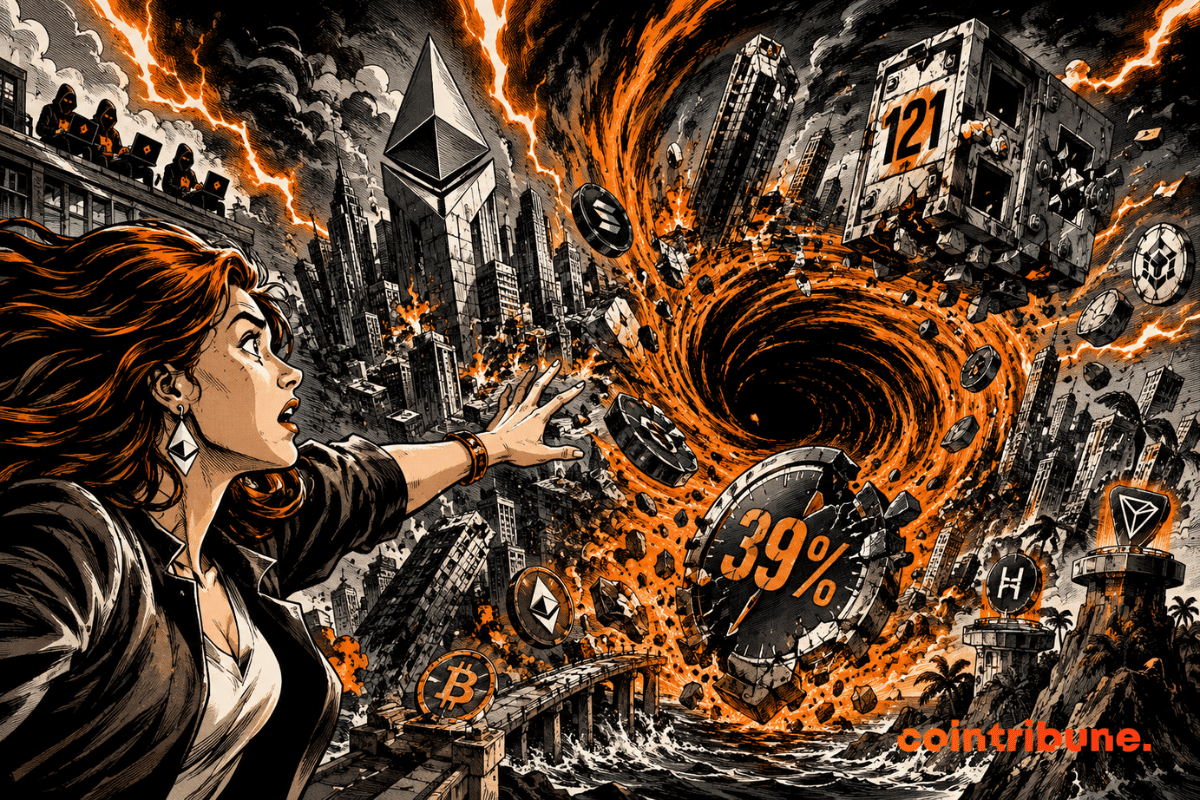
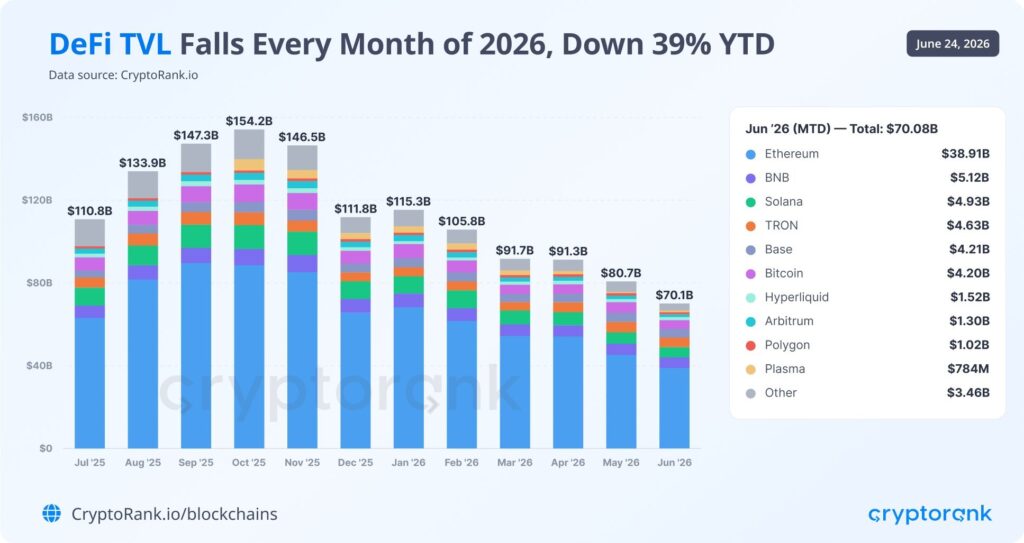
Decentralized finance is going through one of its worst phases since 2022. According to CryptoRank data, DeFi TVL has fallen 39% since the start of the year. It went from 115 billion dollars in January to around 70 billion in June 2026. In six months, almost 45 billion dollars of capital left the DeFi ecosystem. This hemorrhage raises a fundamental question: is it a crypto-cyclical correction or a deeper structural signal?
In brief
- According to CryptoRank, DeFi TVL has fallen 39.1% since January 2026.
- Ethereum remains the leading DeFi ecosystem with $38.9 billion in TVL.
- Of the 10 largest crypto blockchains by TVL, only Tron and Hyperliquid saw growth this year.
- 121 security incidents caused approximately $942 million in losses.
DeFi TVL in free fall since January 2026
According to onchain analyzes published by CryptoRank on June 24, 2026, the DeFi TVL has decreased every month since January. This uninterrupted monthly decline represents a cumulative loss of approximately $45 billion in one half-year. This is the equivalent of the total capitalization of several major altcoins vanished from the crypto sector.
This decline in DeFi is explained above all by the general correction of the crypto market. Bitcoin had reached an all-time high above $122,000 in October 2025, bringing the total market capitalization to $4.21 trillion. Since then, the decline has been brutal:
- Total capitalization hovered around $2.15 trillion at the end of June 2026, a contraction of almost 50% since the peak.
- Bitcoin has lost more than 28% since January 1, Ethereum 43% and Solana more than 43%.
This link is mechanical: a large part of the DeFi TVL is denominated in native assets (ETH, SOL, BNB), whose dollar value has fallen sharply. There contraction of the DeFi TVL therefore reflects both a flight of users and a depreciation of assets locked up in crypto protocols.
Crypto network Ethereum still dominates, Arbitrum in free fall
There hierarchy of crypto blockchains by TVL remains dominated by Ethereum with $38.9 billion. This alone represents more than half of all global DeFi TVL.
Among the top ten channels, Arbitrum recorded the largest proportional contraction: -55.3% to $1.3 billion. A level that brings Ethereum layer-2 back to its capital at the end of 2022.
BNB Chain (-22.7%) and Base (-5.2%) fared better, while Solana fell 40.5% to $4.93 billion. This level remains significant, but markedly below the ambitions displayed in 2025.
Tron and Hyperliquid, the two exceptions that deserve attention
In this general degraded picture, two crypto blockchains appear to be an anomaly. Tron and Hyperliquid are in fact the only ones of the top ten by TVL to have recorded positive growth in 2026.
Tron shows an increase of 5%, bringing its TVL to $4.63 billion. This resilience is explained more by its function than by a revival of speculative activity. Tron remains in fact the crypto network reference for settlement in USDT (Tether stablecoin). A large part of its TVL is concentrated in staking, lending and stablecoin transaction protocols.
Up 6.7% to $1.52 billion, Hyperliquid presents a more interesting profile from a usage point of view. Having become the first market for onchain perpetual contracts, the crypto protocol has attracted steady flows throughout the year thanks to its expanding HyperEVM ecosystem (lending, liquid staking and DeFi primitives). According to Fortune, it is even included in the Crypto 100 ranking.
121 crypto hacks in 2026: the second factor in the DeFi debacle
The crypto market correction is not the only one responsible for the decline in DeFi TVL. A wave of hacks of rare intensity has considerably amplified the pressure on the sector.
According to CryptoRank121 hacks have been recorded since the start of the year for total losses of around $942 million. Even worse! The second quarter of 2026 alone concentrated 85 crypto incidentsrepresenting approximately $775 million stolen. Which makes Q2 2026 the most active quarter for exploits on record.
The two most devastating attacks occurred in April, in the space of a few days:
- Drift Protocol suffered a breach estimated at between $280 million and $295 million.
- KelpDAO fell victim to a LayerZero cross-chain bridge vulnerability that cost it $293 million.
Alone, these two crypto attacks represent more than half of the sector's annual losses.
So one thing is certain: the DeFi market is going through a marked correction in 2026. The ability of crypto protocols to restore technical confidence will be the main performance indicator to monitor over the coming months.
Maximize your Tremplin.io experience with our 'Read to Earn' program! For every article you read, earn points and access exclusive rewards. Sign up now and start earning benefits.


