Between revolutionary announcements, technological developments and regulatory turbulence, the crypto ecosystem continues to prove that it is both a territory of limitless innovation and a field of regulatory and economic battles. Here is a summary of the most notable news from the past week around Bitcoin, Ethereum, Binance and Solana, etc.
Historic drop in Bitcoin reserves on exchanges
Bitcoin reserves held by centralized exchanges have reached their lowest level since the start of 2021. More than 90,700 bitcoins have been withdrawn from major crypto exchanges over the past month, leading to a decrease significant amount of available reserves. A situation which occurs in a context of a general rise in the market, making the phenomenon all the more remarkable.
The reasons behind this massive reduction in reserves remain varied and speculative. Analysts suggest increased awareness of the risks of holding crypto on centralized platforms, particularly due to a recent surge in hacks and bankruptcies in the sector. This trend could indicate a move towards more autonomous management of digital assets, with growing interest in non-custodial wallets and decentralized finance (DeFi) solutions.
Binance sets up its first board of directors
Crypto exchange Binance has taken a significant step forward by announcing the formation of its first board of directors. This new governance structure is made up of seven members, including four internal members of the company and three independent members. The initiative aims to strengthen Binance's compliance in the face of international regulatory challenges.
The council is chaired by Gabriel Abed, former Barbados ambassador to the United Arab Emirates, who brings expertise in diplomacy and international affairs. The composition of the board reflects a desire to balance internal and external perspectives, with the objective of fostering more transparent governance and improving strategic decision-making. However, this composition has sparked mixed reactions within the crypto community, with some welcoming the move towards greater openness, while others expressing concerns about the actual independence of the board and its effectiveness in overseeing the operations of the exchange.
Ripple launches into the stablecoin battle
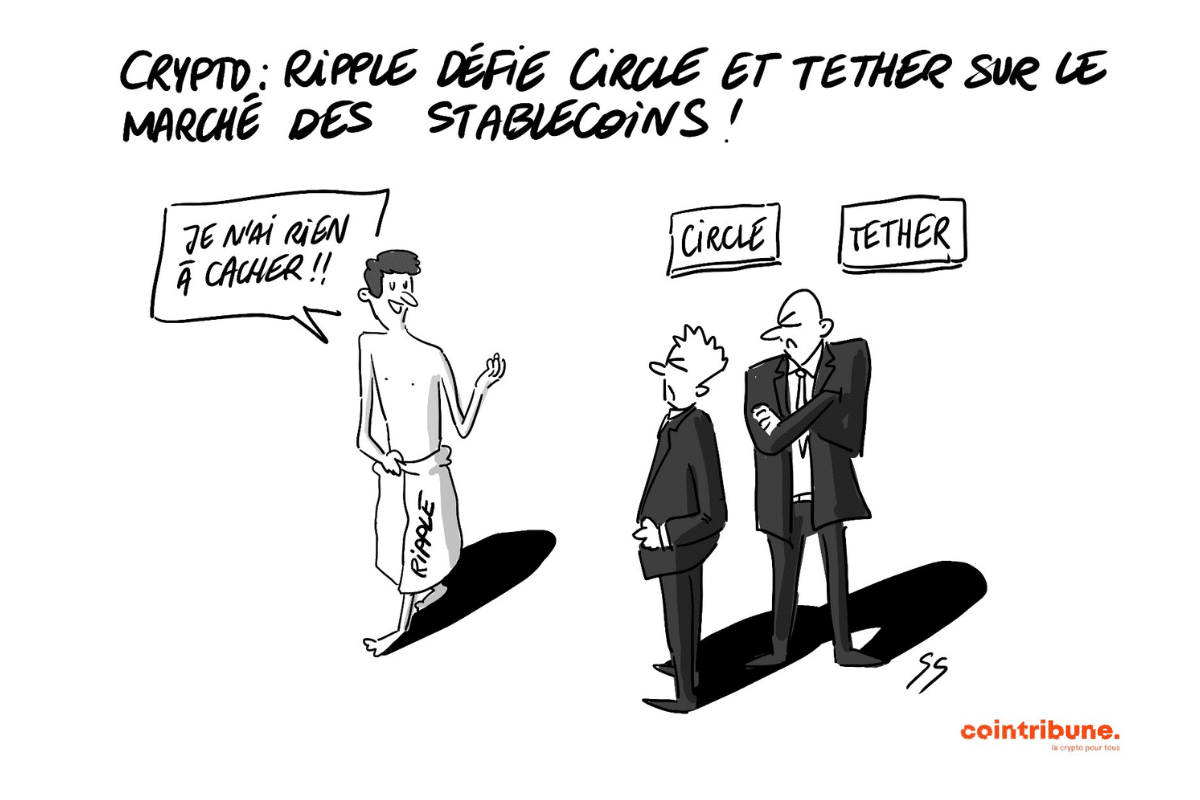
Ripple is expanding its horizons by announcing its intention to enter the stablecoin market, currently dominated by Circle and Tether. The firm plans to launch a stablecoin, backed by the US dollar, which will initially be integrated on the XRP Ledger as well as on the Ethereum blockchain. This bold initiative comes after a period of controversy for Ripple, marked in particular by legal disputes with the American SEC.
Ripple aims to distinguish itself in this new segment with an approach focused on compliance and transparency, two critical aspects that some of its competitors have lacked in the past. The name of this new stablecoin has not yet been revealed, but the company, under the technical leadership of David Schwartz, intends to emphasize the importance of security, stability of value and trust. Building on Circle's model with USDC, Ripple plans to back its stablecoin with tangible assets such as dollar deposits and treasury bills, while ensuring full transparency through monthly attestations by external auditors .
Tether makes massive investment in Bitcoin
Tether, the company behind the USDT stablecoin, has just scored a big hit by acquiring 8,889 bitcoins, representing an investment of nearly $627 million. This strategic operation significantly strengthens Tether's reserves, bringing its total Bitcoin holdings to more than 75,000 BTC, a valuation exceeding $5.3 billion. This bold investment reflects Tether's confidence in Bitcoin as a leading investment asset and demonstrates its long-term vision for the crypto ecosystem.
Beyond this investment in Bitcoin, Tether continues to diversify by engaging in key sectors such as Bitcoin mining and artificial intelligence (AI) technology. These initiatives illustrate Tether's ambition to establish itself as a major and multidimensional player in the cryptocurrency industry.
Solana tackles problematic memecoins
Solana, recognized for its high-performance blockchain, is facing controversy linked to the presence of memecoins deemed offensive on its platform. In a proactive approach, the Solana team has decided to take concrete measures to stem this phenomenon. The main initiative is to introduce filters to eliminate inappropriate content associated with memecoins.
This strategy was announced during a panel discussion at the BUIDL Asia Summit in Seoul. Solana wants to collaborate with crypto wallet developers to implement these filters. These will block access to specific tokens based on blacklists, giving users the ability to filter content they wish to avoid. Austin Federa, Solana Foundation's chief strategy officer, emphasizes the importance of this measure to preserve the permissionless nature of the network while protecting users from problematic content.
Ethereum achieves record profits in Q1 2024
Ethereum had a stellar first quarter of 2024, tripling its profits to $369 million and generating $1.2 billion in revenue primarily from transaction fees. This impressive performance is the result of a considerable increase in transaction fees on the network and highlights the growing demand and sustained activity on Ethereum despite high usage costs for users. Ethereum's financial success this quarter reflects the growing robustness and attractiveness of its ecosystem, particularly in the decentralized finance (DeFi) and decentralized applications (dApps) sectors.
Despite average transaction fees reaching record highs ($79 on average at the beginning of March, with peaks of $400 at the end of February for certain transactions), use of the Ethereum network continued to increase. Total transaction volume climbed 8.4% from the previous quarter, and total value locked (TVL) in DeFi on Ethereum exploded, jumping 86% to $55.9 billion. This remarkable growth not only demonstrates user confidence in the Ethereum network despite costly barriers, but also highlights the Ethereum ecosystem's constant evolution toward greater adoption and continued innovation.
PayPal transforms cross-border transfers with PYUSD
PayPal is revolutionizing cross-border transfers by enabling the use of its stablecoin, PayPal USD (PYUSD), to make fee-free international transfers through its Xoom service. This initiative, available to U.S. users except those residing in Hawaii, represents a major step forward in the efficiency and economy of international money transfers. By eliminating transaction fees for PYUSD-funded transfers, PayPal offers its users a more cost-effective solution for sending remittances abroad, directly addressing one of the major drawbacks of money transfer services traditional: high costs.
This innovation is part of a broader trend of integrating cryptos into traditional financial services and demonstrates PayPal's desire to leverage blockchain technology to improve its services. The introduction of fee-free international transfers via PYUSD highlights the company's commitment to providing more accessible and lower-cost payment options, with the aim of strengthening its leading position in the digital payments space.
This is the main thing to remember for this week. But if you want a more detailed recap and in-depth analysis straight to your inbox, feel free to subscribe to our weekly newsletter.
Maximize your Tremplin.io experience with our 'Read to Earn' program! For every article you read, earn points and access exclusive rewards. Sign up now and start earning benefits.