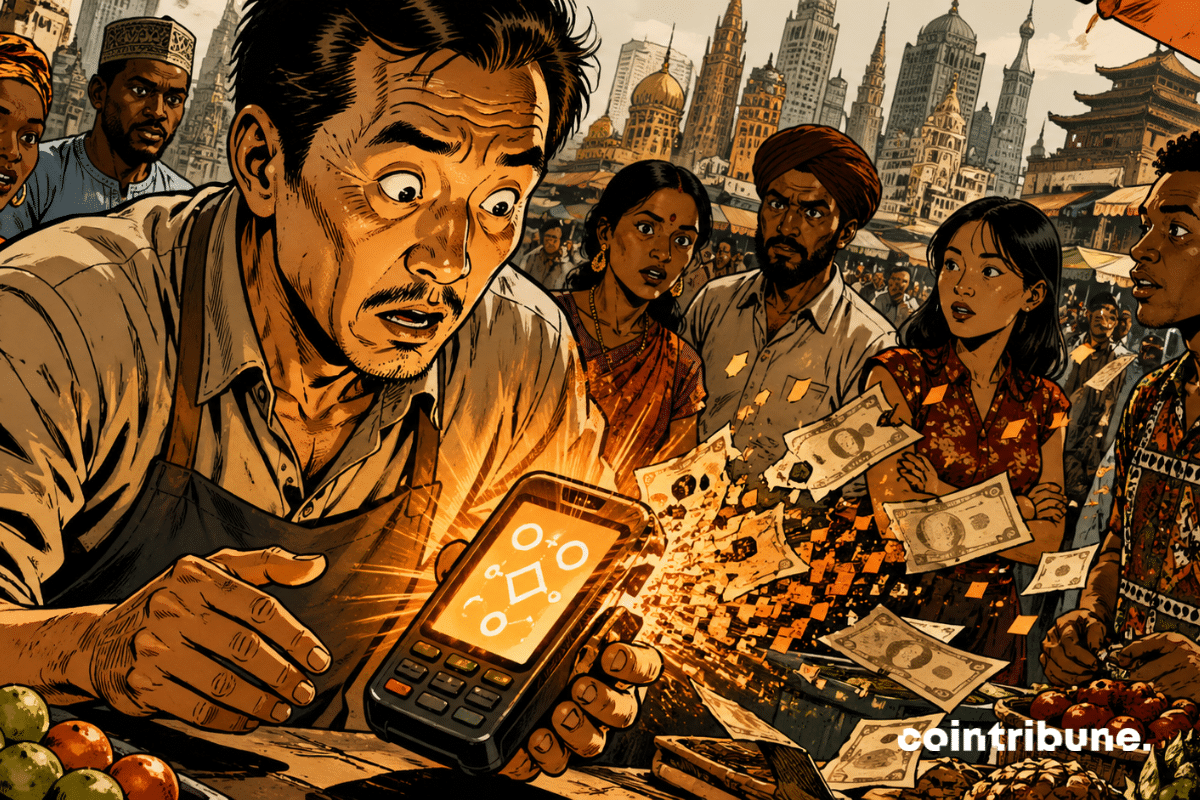
The dollar is no longer only contested, but it is now circumvented in real uses. From April 30, 2026, BRICS will reach a decisive milestone with the deployment of an operational payment system between China and Indonesia. Behind this initiative, a clear ambition: to concretely reduce dependence on the greenback in daily transactions. This progress marks the transition from a political strategy to a tangible application, capable of reshuffling the cards of the international monetary system.
In brief
- The BRICS are taking a new step by transforming de-dollarization into a concrete and operational initiative.
- A dollar-free payment system between China and Indonesia will be officially launched on April 30, 2026.
- This system is based on QR code payment technology allowing simple and direct transactions.
- The first tests have already shown significant results with more than 1.64 million transactions recorded.
China–Indonesia: a dollar-free cross-border payment system
The BRICS dedollarization project takes on a concrete dimension with the announcement of a payment system based on the QRIS standard (Quick Response Code Indonesian Standard), intended to facilitate transactions between China and Indonesia.
The official entry into force is planned for April 30, after a preparation phase deemed successful by the authorities. Filianingsih Hendarta, Deputy Governor of Bank Indonesia, declared : “concretely, the technical and commercial aspects are now ready to be implemented” before specifying : “we hope to be able to officially launch it on April 30, 2026”. This system aims to allow direct payments via QR code, without using the American dollar.
Several key elements structure this initiative:
- The establishment of an interoperable payment system based on QRIS;
- The aim is to facilitate transactions between Chinese and Indonesian users;
- A test phase recorded 1.64 million transactions;
- Total trading volume estimated at 556 billion rupees (~$32 million);
- Adoption supported by increasing number of users and merchants.
This mechanism is primarily aimed at travelers and economic players operating between the two countries, by simplifying cross-border payments. Perry Warjiyo, Governor of Bank Indonesia, underlines this dynamic by highlighting the continued growth of the QRIS ecosystem, driven by expanded adoption at the user and merchant level.
A strategic acceleration of the BRICS agenda
Beyond the bilateral case between China and Indonesia, this initiative is part of a dynamic driven by the BRICS to reduce the influence of the dollar in international trade. The use of a payment system based on interoperable QR codes marks a move towards technological solutions adapted to emerging economies, capable of operating outside of dominant financial infrastructures. This approach builds on uses already widespread in mobile payments in Asia, while giving them a cross-border dimension.
This advance also illustrates a change in method. Where discussions on dedollarization often remained theoretical or institutional, this project offers a concrete and immediately usable application.
It is no longer just a question of diversifying foreign exchange reserves or promoting local currencies in trade, but of creating operational tools for end users. This shift toward pragmatic solutions could accelerate the adoption of alternatives to the dollar in other regions and among other BRICS members.
Ultimately, this type of initiative could gradually reshape international financial flows. If adoption is confirmed and spreads to other economic corridors, despite the bloc's change of direction, the role of the dollar in daily payments could be called into question, without disappearing in the short term. Evolution will depend on the ability of these systems to gain user trust, integrate into existing networks and provide stability comparable to current infrastructures.
Maximize your Tremplin.io experience with our 'Read to Earn' program! For every article you read, earn points and access exclusive rewards. Sign up now and start earning benefits.