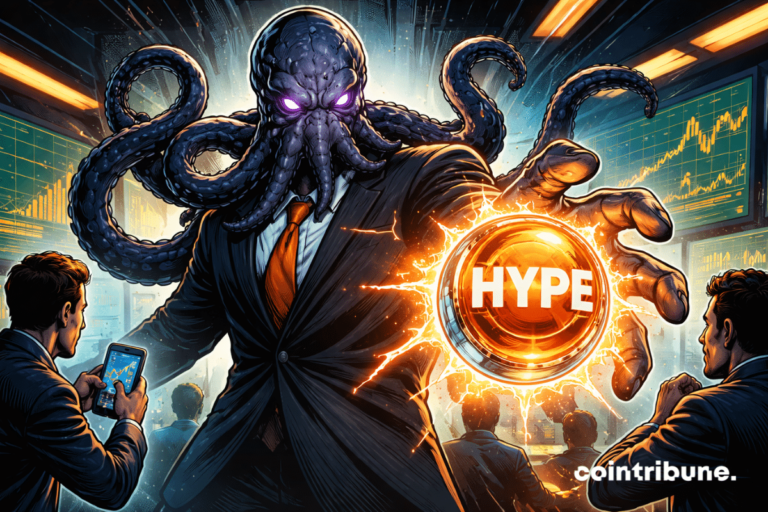
One of the basic precepts of MMT is that the government has no budget constraint. This dangerous theory has nevertheless colonized the highest levels of government.
The curious MMT theory
Before 2020, when inflation was low despite rising deficits and low interest rates, MMT supporters were able to ward off the danger of inflation without much difficulty.
But since inflation returned to the national consciousness in 2021, the idea that budget deficits can allow a nation to live without limits seemed dangerous, even crazy.
Government borrowing limits
Yes, the government has borrowing constraints.
First of all, let's think carefully about what a “borrowing constraint” or a “budget constraint” is. Everyone knows that a government is not like a household.
In an economic model, the budget constraint of a household is simple: you have a certain number of dollars that you can spend, and when you're done spending them, you hit a wall and you can't spend anything more.
In addition to the cash you have in the bank, in your retirement account and in your monthly salary, you can also borrow money: you can charge your purchases to a credit card, you can take out a home loan if you are owner of a house, etc.
Although a government is not like a household, its budgetary and borrowing constraints are similar in this sense that there is not just one hard limit.
On the contrary, as the government borrows, it becomes increasingly difficult and expensive to borrow, and the negative side effects increase.
The consequences of debt
The first bad thing that happens when the government continues to borrow at a very high rate is increasing interest costs.
As long as nominal interest rates are positive, the government pays more and more interest as its debt stock increases.
This is what is currently happening to the United States government. The United States has accumulated a huge debt since the turn of the century, and today, rising interest rates mean that the interest cost on this huge pile of debt is very high and growing.
And if a government borrows above a certain threshold, it can increase long-term interest rates.
People who lend money to the state – banks, rich people, foreigners, etc. – can decide that at a given moment, the State will default on its commitments (or intentionally inflate part of the debt, which constitutes a partial default).
They will then start demanding a default premium on US government bonds. Interest costs will then be much higher.
An endless spiral of debt and interest
Why not borrow even more money to cover these interest costs? Obviously, money borrowed to cover interest charges will also accrue interest, which will increase the total debt outstanding, further increase interest costs, and force the government to borrow even more to cover these interest costs.
And so on, in an infinite and explosive spiral of debt.
Since our original question was “Why can't the government borrow money infinitely?” “, I suppose it is not fully satisfactory to answer “Because that would force the government to borrow infinitely more money ad infinitum.”
If we decide that deficits don't matter, we might as well settle for a large deficit. But many people will be very uncomfortable with the exponential explosion of public debtand people who implement this policy risk being removed from office by voters.
In any case, if the government continues on this path, it will encounter another problem: he will have difficulty finding borrowers.
Are the bankers ready to jump ship?
The banks will stop lending him money, just like businesses and individuals.
Foreigners, like the Chinese central bank or the Saudis, may have deeper pockets, but borrowing too much abroad has a cost: even if you issue bonds in your own currency, if you no longer have other borrowers, your foreign creditors may order you by threatening to get rid of your debt. So this is not a good thing.
At some point, a government that attempts to borrow exponentially growing amounts of money will exhaust all the world's lenders. He will then only have one choice: borrow from the Federal Reserve.
The Fed: the ultimate lender
The Federal Reserve can create money and lend it to the federal government.
This very large-scale practice has the potential to alleviate all of the borrowing constraints I have discussed so far.
The fact printing large amounts of money and using it to buy bonds will lower interest rates, bringing interest costs to near zero. In addition, it will no longer be necessary to find new lenders.
So why isn't the government doing it? The answer is very simple : The fact that the Fed creates money to finance government borrowing will eventually lead to inflation.
Borrow or print?
The Treasury Department does not need to borrow money from the Fed.
If our legislation allowed it, the Treasury could simply create the money itself. The fact that the Treasury must borrow, instead of simply creating money to spend it, is a legal obligation.
So, the question “Why doesn't the Fed create money and lend it to the Treasury to finance government spending?” » is actually the same as the question “Why doesn't the government create money without issuing bonds, when it wants to spend? “.
The answer is inflation.
If enough money is created, a country will experience inflation. It's a simple matter of supply and demand. Creating more of something decreases its value.
Therefore, creating a massive amount of new money will cause the value of money to fall – in other words, it will cause inflation.
The danger of inflation
When the government borrows to spend, money is created and destroyed in equal amounts, leaving the total money supply unchanged.
On the other hand, if the government simply created money and spent it instead of borrowing it, the money supply would increase, which would increase the risk of inflation. The legal obligation for the Treasury to borrow in order to spend is a means of limiting the effect of public spending on inflation.
By insisting that the government can simply print money to pay its bills instead of borrowing, MMT adherents, and the much larger group of progressives who have absorbed and internalized MMT ideas, are throwing away fuel the smoldering fire. They are macroeconomic arsonists and American policymakers should not listen to them.
Maximize your Tremplin.io experience with our 'Read to Earn' program! For every article you read, earn points and access exclusive rewards. Sign up now and start earning benefits.
Click here to join 'Read to Earn' and turn your passion for crypto into rewards!