
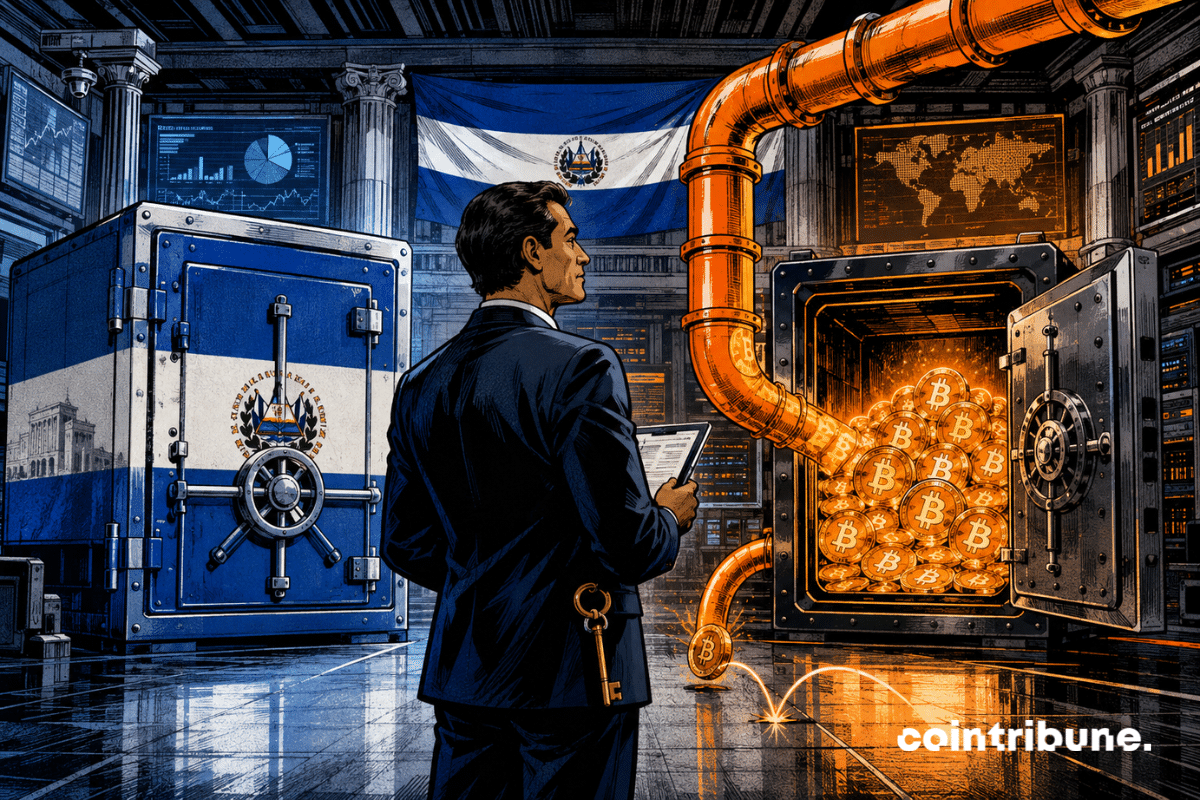
El Salvador continues to show a growing Bitcoin reserve. However, the state would not have used public money to purchase the BTC added since June 2025. The IMF claims to have received documents showing that this increase comes from private donations. The official reserve now stands at around 7,764 bitcoins.
In brief
- El Salvador holds approximately 7,764 BTC in its official reserve.
- IMF says bitcoins added since June 2025 come from private donations
- The institution does not expect further accumulations beyond the donations already documented.
Bitcoin continues to arrive in El Salvador’s reserves
However, the official figures continued to give the impression of regular purchases. In June, El Salvador already had 7,687 bitcoins despite pressure from the IMF. The reserve now reaches around 7,764 BTC. The government counter continued to advance after the first review of the IMF program, finalized on June 27, 2025.
One movement particularly attracted attention. More than 1,000 bitcoins joined official wallets in November. Public tracking then continued to show inflows close to one BTC per day.
Nayib Bukele himself assured in March 2025 that Bitcoin purchases would not stop. The IMF today gives another explanation. The additional BTC would not be financed by the Salvadoran budget. They would have been given.
The IMF confirms the private origin of the new BTC
El Salvador provided documents to the IMF to explain the evolution of its reserve. According to the institution, these documents show that the accumulation observed since the first review of the program comes from private donations.
No public resources would have been used to purchase these bitcoins. The IMF, however, does not give any names. It is unknown who the donors are, how much bitcoin each transferred and under what conditions these donations were made.
The detail matters, because the agreement concluded with El Salvador precisely planned to limit the public sector’s exposure to Bitcoin. The subject had already created tensions. In 2025, El Salvador was accused of circumventing certain IMF requirements around its Bitcoin holdings.
The institution now affirms that the main commitment has been respected. The government did not spend additional public funds to accumulate BTC. The IMF adds that no further increase in the reserve is expected beyond the donations already documented. The formula therefore closes part of the debate. Not necessarily everything. Bitcoins remain in an official reserve, even if the money that allowed their arrival does not come directly from the Public Treasury.
Bukele keeps Bitcoin without breaking with the IMF
The compromise goes further. El Salvador has gradually reduced the public role of the Chivo wallet. The majority of capital and operational control of the portfolio have been transferred to a private operator.
The state retains a minority stake and some responsibilities related to the custody of user assets. Bitcoin has also lost some of the exceptional status achieved in 2021. Its acceptance by businesses has become voluntary. Taxes must be paid in dollars. And the government is committed to better regulating the risks linked to digital assets.
In exchange, relations with the IMF are moving forward. The Fund’s teams and the Salvadoran authorities have just concluded an agreement at the service level on the second and third reviews of the $1.4 billion financing program.
If the board gives the green light, around $140 million more could be released. El Salvador therefore keeps its bitcoins while respecting, at least according to the IMF, the limit imposed on public spending. The reserve continues to grow, but the nature of the financing changes. A new step for a country which at the same time continues to open its financial system to investment banks capable of operating with Bitcoin.
Maximize your Tremplin.io experience with our ‘Read to Earn’ program! For every article you read, earn points and access exclusive rewards. Sign up now and start earning benefits.


