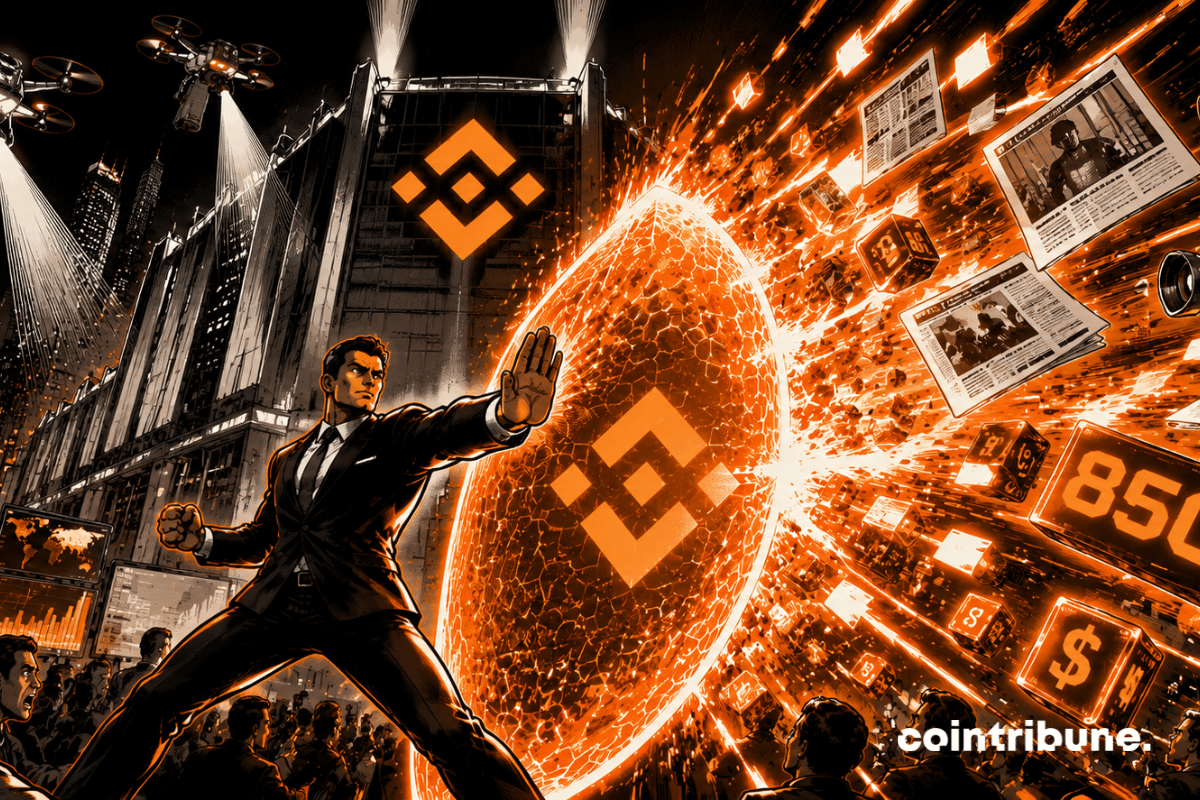
The standoff between Binance and the Wall Street Journal is taking on a new dimension. The world's leading crypto platform strongly rejects accusations relating to $850 million in transactions linked to Iran and entities under US sanctions. Can Binance really turn the page on its regulatory problems in the United States?
In brief
- Binance denies Wall Street Journal accusations regarding flows linked to Iran.
- Richard Teng affirms that the transactions mentioned did not concern any person sanctioned at the time of the facts.
- The filing reignites concerns around Binance's compliance following the record $4.3 billion fine paid in 2023.
Binance counterattacks against Wall Street Journal accusations
Thursday May 22, 2026, the Wall Street Journal publishes an investigation directly targeting Binance. According to the American newspaper, 850 million dollars would have passed through the platform via accounts linked to Babak Zanjani, an Iranian financier placed under American sanctions in January 2026. Presumed final destination: the Islamic Revolutionary Guard Corps (IRGC), an organization classified as terrorist by Washington.
What is striking about the WSJ investigation is the level of detail. Zanjani would have operated through his company Zedcex, but also via the accounts of his sister, his partner and a director, all connected from the same devices. An architecture that is difficult to attribute to simple chance.
Even more embarrassing for Binance: the Journal claims that its own compliance teams detected a connection attempt from Tehran at the end of 2024. More than a dozen internal alerts would then have followed. Its investigators reportedly recommended the immediate closure of the accounts and their reporting to the authorities. However, the accounts remained open for more than a year.
The WSJ goes even further. It claims that Iran's central bank transferred $107 million in crypto to Binance accounts in 2025, and that a foreign law enforcement agency traced approximately $260 million in direct transactions between Binance and financiers linked to Iranian terrorism.
Regulatory pressure that still threatens the crypto industry
Faced with these revelations, Richard Teng did not wait. The next day, Friday May 23, he published a direct rebuttal on X, calling the article “fundamentally inaccurate.” His line of defense is based on three arguments:
- Binance has never authorized transactions with individuals under sanctions.
- The suspicious activities identified would have occurred Before that these individuals are not punished.
- Binance would have launched its own investigation even before being contacted by the WSJ, and its conclusions would not have been included in the article.
The context, however, complicates this defense. In 2023, Binance pleaded guilty to money laundering and sanctions violations, paying a record $4.3 billion fine with a promise to completely reform its compliance system. According to the WSJ, the flow of alleged Iranian funds resumed shortly after this settlement.
It should also be remembered that this is not the first skirmish between the two parties. In February 2026, the Journal had already claimed that Binance had closed an internal investigation into nearly a billion dollars linked to Iranian armed groups. Binance then denied this.
In March, the US Department of Justice reportedly opened a new investigation into the use of Binance to circumvent Iranian sanctions. The platform responded by filing a defamation suit against the WSJ, seeking damages and a jury trial.
This conflict goes beyond simple media disagreement: it reveals the limits of compliance in a crypto sector in the midst of regulatory construction. If Binance brandishes its “zero tolerance” policy towards illicit activities, the repeated allegations from the WSJ and the growing interest from the DOJ suggest that the case is far from closed. The credibility of the world's largest crypto exchange is at stake.
Maximize your Tremplin.io experience with our 'Read to Earn' program! For every article you read, earn points and access exclusive rewards. Sign up now and start earning benefits.