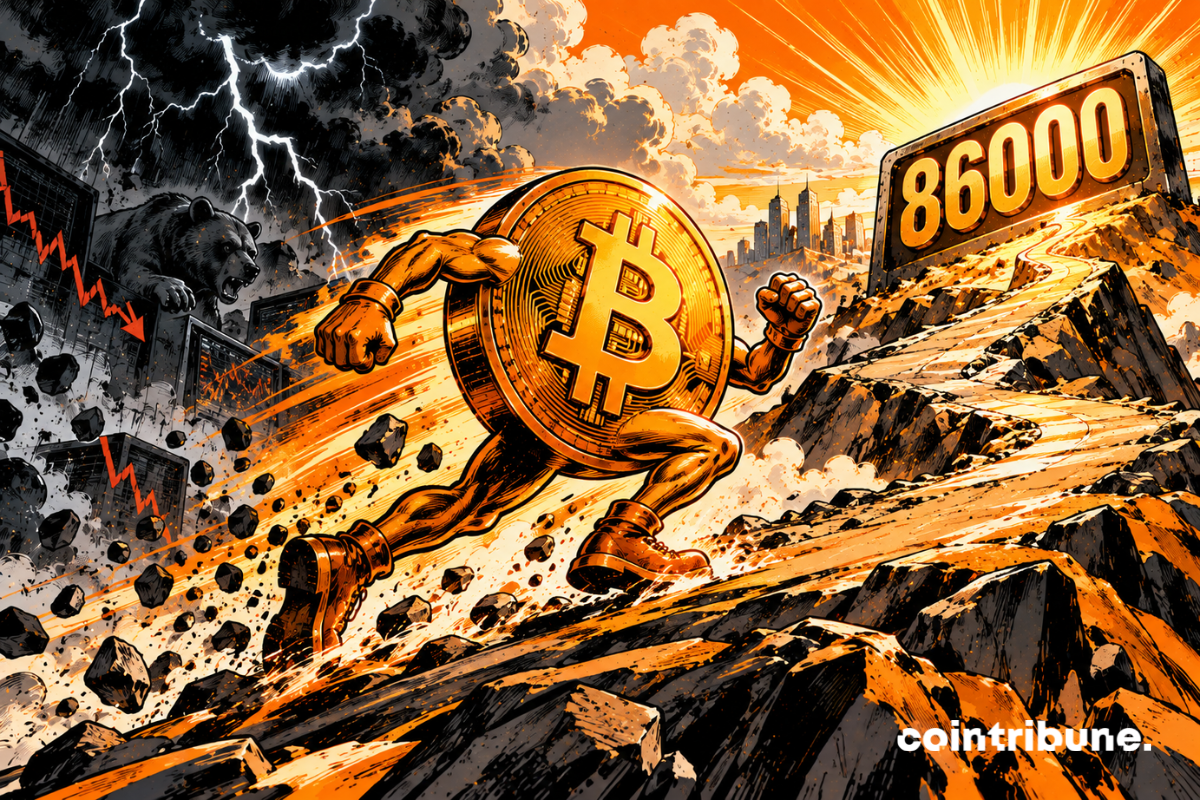
On October 2, bitcoin exceeded $86,000. It also briefly approached $87,100, driven by the resumption of inflows into ETFs and the liquidation of short positions. Then the price fell back to around $85,400, which indicates the favorable start to October does not yet guarantee a sustainable increase.
In brief
- Bitcoin rose above $86,000 and approached $87,100 before falling back.
- Liquidations of short positions accelerated the price increase.
- US Bitcoin ETFs have returned to net inflows.
- Expectations around the Fed also supported risky assets.
- The scenario of a new “Uptober” will mainly depend on ETF flows and spot purchases.
Bitcoin crosses $86,000 before falling back
Bitcoin gained around 3% during the session to approach its highest level in a week. Its rebound above $85,000 accelerated the movement by forcing some traders who were betting on a fall to repurchase their positions.
Of multiple data allow us to have a better understanding of this recovery:
- The price hit an intraday high near $87,100;
- More than $120 million in short bitcoin positions liquidated in 24 hours;
- US spot bitcoin ETFs received $102.7 million on 1er october ;
- US bond yields fell on expectations of a Federal Reserve pause;
- Bitcoin remains well below its record high of around $126,200 reached in October 2025.
It should be noted that a liquidation of a short position can occur as soon as the price rises sufficiently to force a trader to close his bearish bet. This forced acquisition then consolidates demand and can accelerate the increase. In this case, the passage of resistance zones located between 85,000 and 86,000 dollars caused this cascade effect.
ETFs return to a positive balance
Since 1er October, US Bitcoin ETFs recovered with inflows. Thus, their daily balance reached $102.7 million, after a net outflow of $148.7 million on September 30, according to Farside data.
Through its IBIT fund, BlackRock raised $195.6 million. These inflows therefore offset the withdrawals observed at Fidelity, Bitwise, Ark Invest, Invesco, VanEck and Grayscale.
However, this recovery remains modest compared to the flows in September. Thus, Bitcoin ETFs captured $2.65 billion over the month, after $3.52 billion in August. As for the third quarter, it totals $6.34 billion in net inflows.
The threshold of 86,000 dollars also has a technical dimension. Glassnode presents it as an average zone from which investors in American ETFs find their equilibrium price. Maintaining above this level could therefore reduce the number of institutional investors with unrealized losses.
Bitcoin benefits from Fed pause hopes
This increase was also favored by the macroeconomic context. Philip Jefferson, vice chairman of the Federal Reserve, plead for more patience before a new decision on rates. Expectations of an increase from the next meeting were revised downwards after these comments.
Low rates can therefore support bitcoin in two ways. They can reduce the relative attractiveness of bond investments and facilitate the return of capital to risky assets. In addition, they can also weigh on the dollar, which tends to favor assets denominated in the American currency.
Thus, bitcoin has progressed with technology stocks and crypto-related companies. Strategy stock gained around 4%, while Coinbase and Robinhood also moved.
However, this relationship remains fragile. Strong US employment statistics would reignite fears of rate hikes, lift bond yields and strengthen the dollar. These three factors could therefore exert contrary pressure on cryptos.
Uptober remains a statistical trend
This start of the month then fuels the story of Uptober, the nickname given to October given the historical performance of bitcoin. According to Stephen Wundke, Algoz’s chief strategy officer, bitcoin rose an average of 18% in October and 46% in the last quarter over the previous decade.
He therefore declares:
Traders currently believe that the upside potential is greater than the downside risk.
However, this average hides significant differences between years. It does not specify that bitcoin systematically rebounds in October. The current rise depends mainly on the continuity of spot acquisitions, while part of the movement comes from liquidations in the futures markets.
The rapid return below $86,000 confirms this caution. To turn this rebound into a stronger trend, bitcoin will need to stay above this zone with high spot volumes as well as sustainable ETF flows. Without this support, the effect of buying back short positions would remain temporary.
Maximize your Tremplin.io experience with our ‘Read to Earn’ program! For every article you read, earn points and access exclusive rewards. Sign up now and start earning benefits.