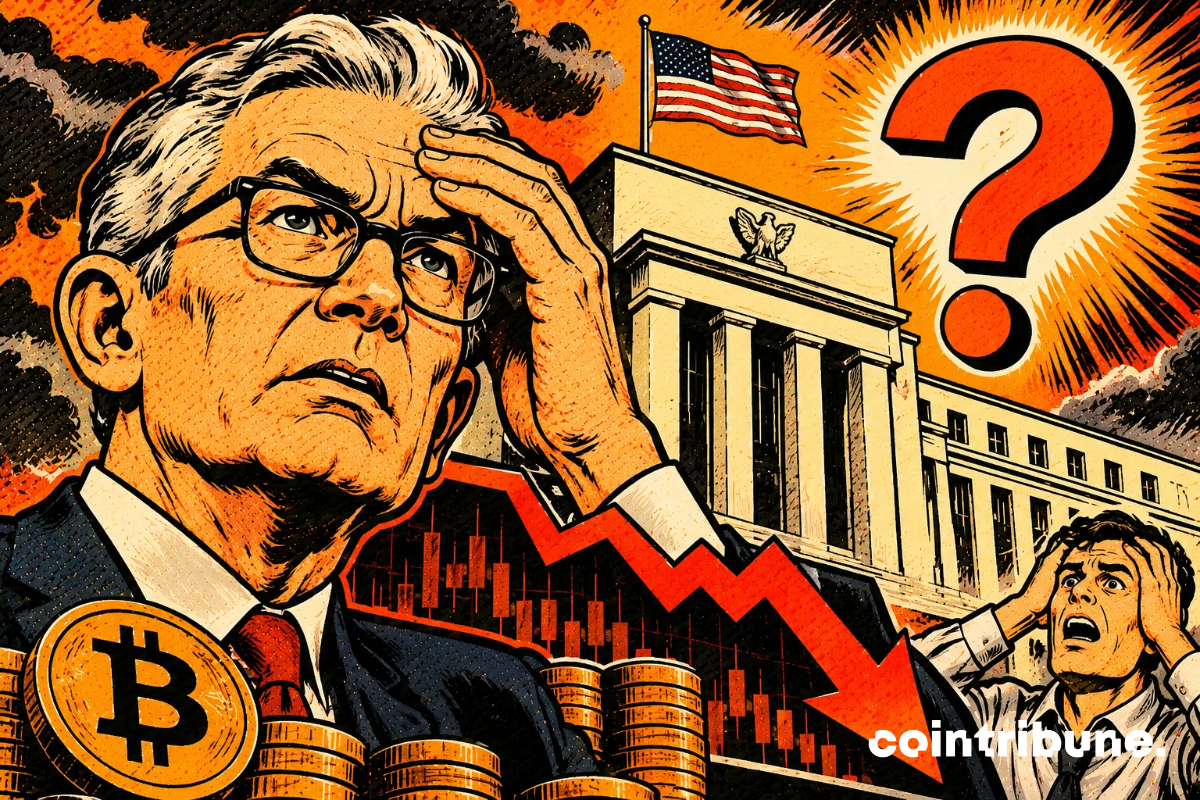
The US Federal Reserve is considering further rate hikes to contain inflation, as energy prices begin to decline sharply. This discrepancy between official statistics and advanced market indicators is of concern. Is the central bank likely to raise rates when inflationary pressures are already starting to ease?
In brief
- The Fed is considering further rate hikes to bring inflation back toward its 2% target.
- Gasoline prices and refinery margins are falling sharply.
- This energy easing could herald a slowdown in inflation that official statistics do not yet reflect.
- Prolonged monetary tightening could put more pressure on bitcoin and other risky assets.
Energy markets are sending signals the Fed can’t ignore
US Federal Reserve officials continue to favor a restrictive monetary policy. Minutes from their Oct. 27-28 meeting show that almost all participants believed further rate hikes might be necessary to bring inflation back toward the 2 percent target. Two officials even mentioned an increase of more than 25 basis points in December if the next economic data proves unfavorable.
This position is based in particular on the latest American inflation statistics. However, these indicators have a limit. They describe an economic situation that has already happened and do not necessarily reflect the most recent changes.
However, energy markets are showing signs of easing. Several indicators testify of this reversal:
- Wholesale gasoline futures lost nearly 20% in three weeks;
- The average price of gasoline at the pump in the United States fell to $3.75 per gallon, a drop of 12.8% in one month.
This decline comes after several months of tensions linked in particular to the war against Iran, launched in March 2026. The rise in energy costs then fueled household spending and business costs.
The dynamic now seems to be reversing. If the drop in wholesale prices continues, it could gradually ease consumer spending and contribute to a slowdown in inflation. The next statistics could therefore present a less worrying picture than that observed in October.
The decline in refinery margins confirms the change in dynamics
Another indicator reinforces this hypothesis: the crack spread, which measures the theoretical margin of refineries when they transform crude oil into gasoline and diesel.
The 3-2-1 indicator, based on the theoretical transformation of three barrels of crude oil into two barrels of gasoline and one barrel of diesel, fell 36% in six weeks. It fell from $65.56 to $41.90 per barrel as of November 18.
This contraction reflects in particular the increase in the supply of refined products. High margins had encouraged refineries to increase production. The abundance of supply is now putting pressure on wholesale prices, likely to gradually be reflected at the pump.
For James E. Thorne, chief strategist at Wellington Altus, this development reflects a significant shift in the balance of the energy market. It could herald a slowdown in inflationary pressures that traditional statistics cannot yet measure.
This outlook does not mean that American inflation is under control. Tensions may persist in services and other sectors less directly exposed to energy fluctuations. The decline in oil and gasoline prices alone therefore does not guarantee, in itself, a sustainable return to the 2% objective.
The Fed’s dilemma is nevertheless obvious. By favoring retrospective datait risks underestimating the speed of the reversal of certain price components. An overly restrictive policy could then unnecessarily slow down economic activity.
Bitcoin exposed to uncertainties over rate trajectory
This divergence between economic indicators and the Fed’s speech complicates investors’ expectations. Christopher Waller notably defended a 50 basis point increase in December. Michael Barr also said higher rates might be needed, while Mary Daly argued for a more measured approach.
As of November 19, futures markets were anticipating increases of 25 basis points in December and January, followed by a further increase by April.
This prospect could weigh on risky assets, particularly cryptos. High rates make bond investments more attractive, increase the cost of financing and reduce the capital available for speculative investments.
Bitcoin remains particularly sensitive to these liquidity conditions. A Fed determined to extend monetary tightening could therefore maintain pressure on the crypto market.
James Lavish, co-chair of the Bitcoin Opportunity Fund, however, puts forward another interpretation. According to him, the restrictive statements of certain officials could also prepare the markets for a possible pause in rate increases. This hypothesis remains speculative, but it illustrates the uncertainties surrounding the central bank’s communication.
The next economic publications will be decisive. They will make it possible to verify whether the decline in energy prices signals more general disinflation or masks persistent tensions.
For the Fed, the challenge now consists of avoiding two mistakes: relaxing its vigilance too early or maintaining high rates while inflationary pressures begin to ebb. For bitcoin and other risky assets, this arbitrage could determine financial conditions in the coming months.
Maximize your Tremplin.io experience with our ‘Read to Earn’ program! For every article you read, earn points and access exclusive rewards. Sign up now and start earning benefits.