We don't spit venom on bitcoin as we want, even if we are on the side of the European Central Bank (ECB). Indeed, the ECB recently attacked bitcoin in a controversial report, arguing that the flagship crypto should be regulated or even banned. This attack did not go unanswered: BTC defenders responded by denouncing the methodological shortcomings and biases of the authors, who, according to them, had only one objective in mind.
Bitcoin: A disturbing crypto asset?
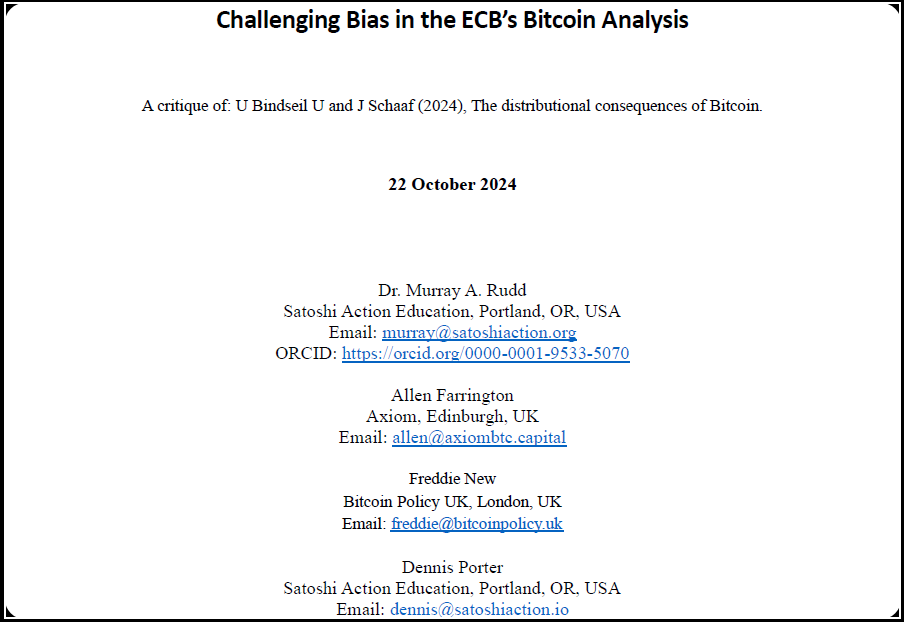
The ECB report published on October 12 violently attacked BTC, qualifying the asset as volatile, unproductive and concentrated in the hands of a privileged few. However, the response from crypto experts was not long in coming. According to Murray Rudd of the Satoshi Action Fund, the authors of the report, Bindseil and Schaff, failed to understand the very essence of bitcoinwhich they reduce to simple speculation.
Worse still, their analysis deliberately ignores BTC's significant technological advances in scalability and efficiency.
Criticisms of the volatility of the bitcoin price, according to Rudd, ignore the fact that it isa common feature in emerging technologies. In summary, a report which is mired in an ideological war more than in an objective evaluation.
- More than 50% of major bitcoin addresses are actually crypto exchange wallets holding the assets of millions of users.
- More than 40% of growth in active wallets has occurred in recent years thanks to increased adoption.
- Around 30% of criticisms focus on technical limitations that are now obsolete.
The crypto community fights back
Faced with attacks from the ECB, the crypto community mobilized to dismantle the arguments put forward. Allen Farrington, co-author of the reply, points out a blatant conflict of interest : Bindseil and Schaff are actively engaged in the development of a central bank digital currency (CBNC).
“ It is obvious that they prefer extolling the merits of the future digital euro instead of recognizing the virtues of Bitcoin », says Farrington.
Critics of the ECB also do not take into account the role of bitcoin in financial inclusionespecially in regions with unstable local currencies. If we also consider its innovations in energy efficiency, BTC could even outperform traditional financial systems.
Bitcoin, mirror of inflation
The ECB did not hesitate to attack the bitcoin wealth distributionarguing that it was hardly more equitable than in the traditional financial system. However, BTC supporters counter that this criticism misses the heart of the problem.
Murray Rudd specifies:
“ By ignoring the impact of inflation on purchasing power, the ECB refuses to see what is happening in the real world. »
Indeed, bitcoin, with its limited supply, can be perceived as ano response to the loss of value of traditional currenciessuch as the US dollar, constantly subject to the erosion of inflation.

Thus, beyond speculation and ideological debates, the question remains open:a Is the BCE really trying to protect the public, or rather to exclude a potential competitor from its future digital euro?
To conclude, the ECB, a strong supporter of the MNBC, does not take a dim view of the possible ban on bitcoin if this could favor its digital euro project.
Maximize your Tremplin.io experience with our 'Read to Earn' program! For every article you read, earn points and access exclusive rewards. Sign up now and start earning benefits.