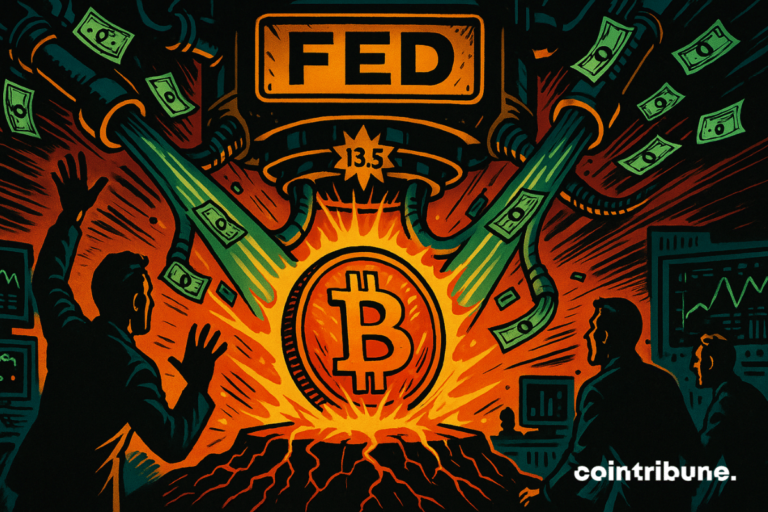
Michael Saylor, emblematic figure of bitcoin, reveals a silent revolution: the largest American banks are now integrating loans guaranteed by bitcoin. Massive adoption that could redefine traditional finance. What are the key figures, the macroeconomic implications, and what future for bitcoin in the face of global monetary policies?

In brief
- The 8 largest US banks now offer loans backed by bitcoin, according to Michael Saylor.
- Interest rates (4-6%) and LTV ratios (50-70%) are more advantageous than those of DeFi, marking a historic turning point for the institutional adoption of bitcoin.
- The Fed's rate cut and upcoming rate hikes in Japan could strengthen bitcoin's appeal as a major financial asset.
Eight of the ten largest US banks now integrate bitcoin-backed loans
In a recent speaking engagement, Michael Saylor claims that eight of the ten largest US banks, including Citibank, Bank of America, JPMorgan and Wells Fargo, now offer loans backed by bitcoin. Crypto lending volumes reached $150 billion annually in Q4 2025, with 40% of the market captured by traditional banks, compared to 60% for DeFi protocols.
Additionally, Loan-to-Value (LTV) ratios range between 50% and 70%, with interest rates between 4% and 6%, much lower than DeFi alternatives. JPMorgan even launched a $10 billion bitcoin-backed credit facility in October 2025. Saylor highlights a rapid transition. According to him, banks went from complete hostility towards bitcoin to mass adoption in less than a year. This trend reflects a growing recognition of BTC as a legitimate financial asset, marking a historic turning point for crypto.
The Fed cuts rates again: a catalyst for the adoption of bitcoin loans?
On December 10, 2025, the American Federal Reserve (Fed) further lowered its interest rates, despite uncertain economic data. The move could boost banks' appetite for risky assets like bitcoin, reducing the cost of credit and encouraging financial innovation. Indeed, low rates encourage investment in alternative assets, thus offering banks new growth opportunities.
However, some experts wonder: does this policy not create speculative bubbles? Banks, now more open to bitcoin through loanscould well become key players in its mass adoption. But this trend will also depend on global economic stability and future regulation.
BTC facing rising rates in Japan: towards an inevitable victory?
While the Bank of Japan (BOJ) is considering a rate hike this December, a first in years, BTC is positioning itself as a potential refuge against inflation. This monetary divergence between the United States and Japan could strengthen the appeal of bitcoin, seen as a hedge against economic risks.
Institutional investors, increasingly present in the bitcoin market, see this cryptocurrency as an essential asset, even in periods of monetary tightening. For analysts, bitcoin has become a pillar of the global financial system, capable of withstanding monetary tensions. If BTC emerges victorious from this divergence, it could confirm its status as a safe haven asset, attracting more institutional capital and consolidating its place in banks.
Are traditional banks becoming the new dominant players in the crypto market? This massive adoption of bitcoin by financial institutions marks a historic turning point according to Michael Saylor. But it also raises questions about decentralization and systemic risks.
Maximize your Tremplin.io experience with our 'Read to Earn' program! For every article you read, earn points and access exclusive rewards. Sign up now and start earning benefits.