

The NFT, these authentic digital goods, no longer shine as in 2021. Despite the recent Bitcoin peaks and other cryptocurrencies, the craze was largely out of breath. Formerly celebrated by celebrities and collectors, they see their market collapse. The assessment is alarming, as Dappradar reveals: volumes in free fall, dramatic drop in NFT loans and massive decline of activity. However, the emergence of real tokenized assets (RWA) brings new hope, offering stabilization and recovery prospects for this crypto industry.

In short
- NFT loans have dropped 97 % since their peak in early 2024.
- Real assets tokenized could stabilize and restart the NFT market.
- The average size of NFT loans has dropped drastically to $ 4,000.
- Gondi now dominates the market with 54 % of NFT loan volumes.
NFT Blood Market: Diving in the NFT loans debacle
The NFT market undergoes A deep crisis By posting a fall of 63 % in the first quarter of 2025, and NFT loans are no exception. According to Dappradar, the Total loans volume has passed of a billion dollars in January 2024 to 50 million in May 2025or a fall of 97 %. The activity follows the same trend: the number of borrowers decreased by 90 %, that of lenders of 78 %. Sara Gherghelas, analyst at Dappradar, says:
2025 has not yet brought sufficient catalysts to relaunch NFT loans.
There Average loan size fell 71 %, passing From $ 22,000 in 2022 to $ 4,000 in May 2025. The average length of loans has also decreased, from 40 to 31 days. These developments reflect a more frequent recourse to short loans, a sign of a more cautious approach in the crypto universe.
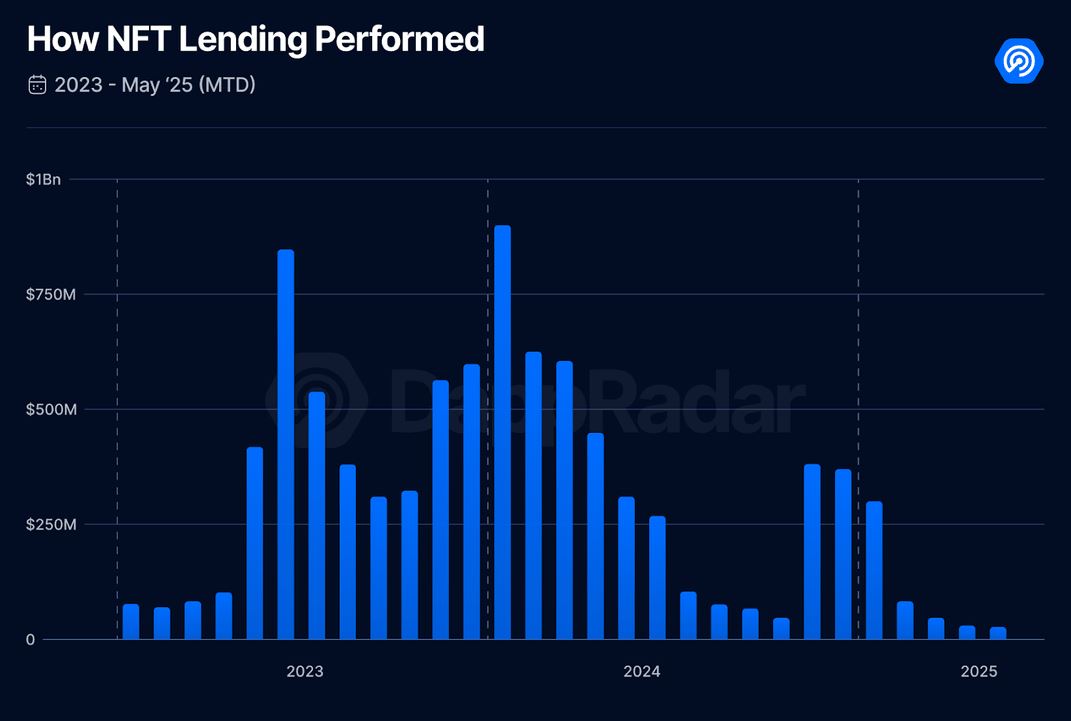
On the side of collections used as collateralPudgy Penguins dominate with 40 % of loans, followed by Azuki and Béyc. On the Gondi platform, in full ascent, it is the cryptopunks and the art NFTs that capture attention. This trend marks a displacement to assets deemed more stable and culturally relevant.
In short, The crypto community seems to move away from speculative models towards a more reasoned approach. However, without major innovation, the sector may stagnate.
Tokenized active assets: a gamechanger for NFT and crypto industry
THE Real-World Assets (RWA)or real tokenized active ingredients, could reverse the trend. These NFT linked to tangible assetslike real estate or financial instruments, bring stability and confidence. According to Dappradarthey represent One of the few catalysts capable of reviving the NFT loans market. Sara Gherghelas explains:
NFTs backed by real assets could unlock more stable and trustworthy collateral sources.
These innovations allow Getting over the limits of purely digital NFToften too volatile. By integrating RWA, the crypto universe can create pHybrid financial trunks Offering security and liquidity. This development also opens the door to a broader adoption by traditional investors.
Protocols are starting to explore these possibilities, developing smart infrastructure. For example, Sub-collateralized loans, credit scores and artificial intelligence are envisaged to improve the user experience. Thus, the tokenization of real assets stands out as a fundamental lever for the future of decentralized finance.
NFT loans in the crypto universe: operation, issues and perspectives
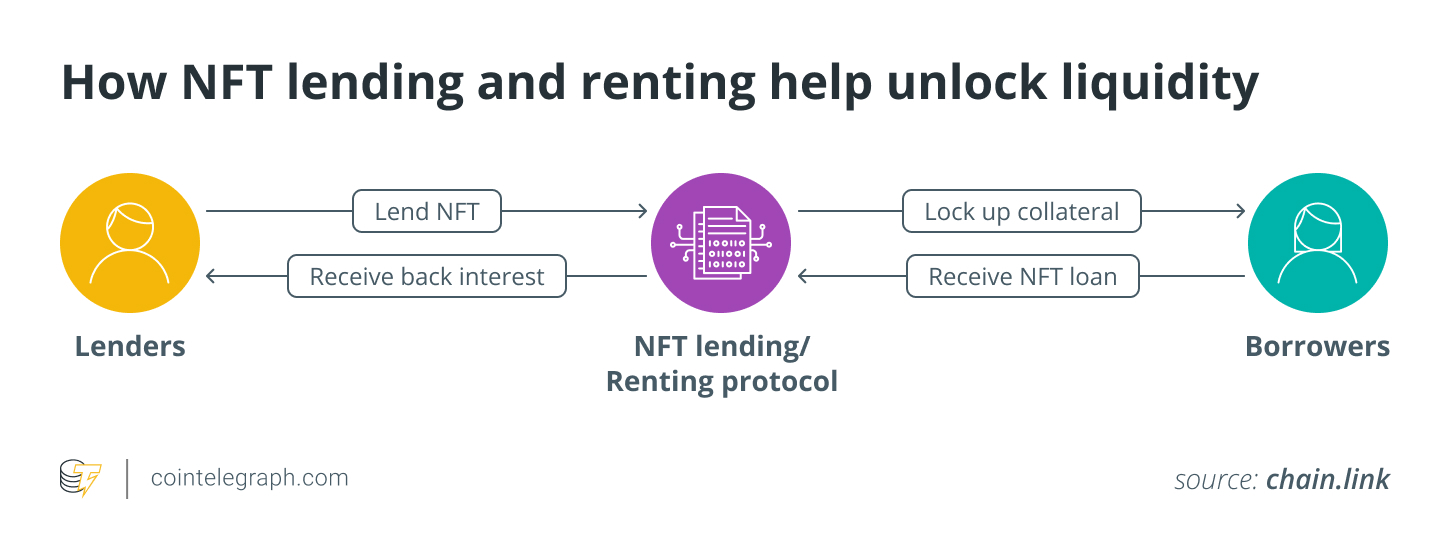
The NFT loan allows holders of unique tokens ofobtain liquidity without selling their assets. These loans can be peer-to-peer, via NFT platforms, or Peer-to-Protocol, directly with smart contracts. A striking example is the use ofan NFT representing a luxury watch as guaranteedfacilitating A loan of $ 35,000 In the DEFI.
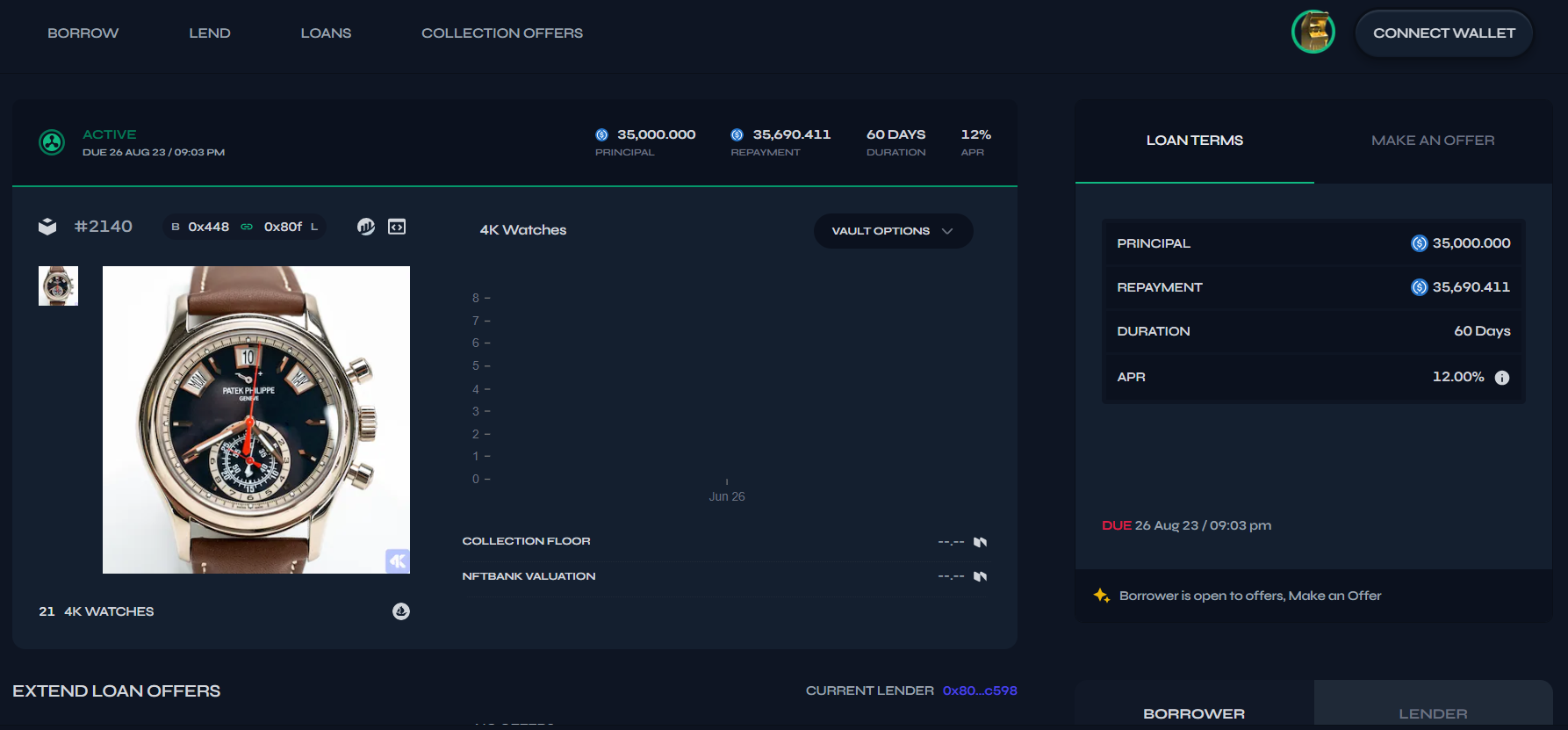
The interest of NFT loans lies in thelack of traditional credit controlopening the door to greater inclusion in the Crypto universe. However, the volatility of NFT and regulatory uncertainty represent major risks. In the event of a defect, the NFT is transferred to the lenderwhich can liquidate it or keep it.
The fractionalization of NFT comes to enrich this market, by making expensive assets accessible to a wider community. Combined with RWA, this technology offers a new dimension to decentralized finance.
Some key figures summarize the current situation:
- Volume of NFT loans down 97 % since January 2024;
- Number of borrowers reduced by 90 %, lenders of 78 %;
- Average size of loans spent from $ 22,000 to $ 4,000;
- Average duration of loans reduced from 40 to 31 days;
- Gondi now holds 54 % of the NFT market.
This mutation shows that the crypto industry is restructuring, seeking more solidity and maturity.
NFTs backed by real assets (RWA) and NFT Bonds open new investment horizons, depending on Cointribun. These innovations could offer a second life to the NFT market, combining utility, security and extended access to the Crypto community.
Maximize your Cointribne experience with our 'Read to Earn' program! For each article you read, earn points and access exclusive rewards. Sign up now and start accumulating advantages.


