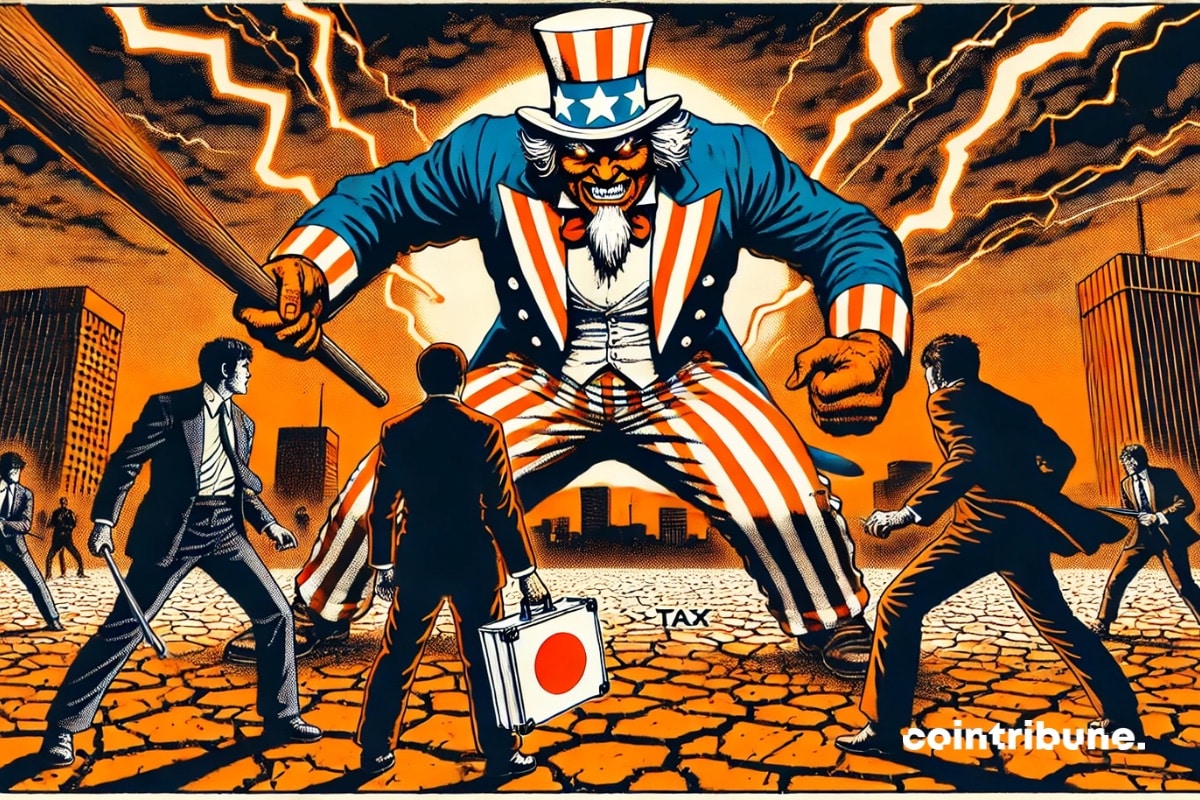
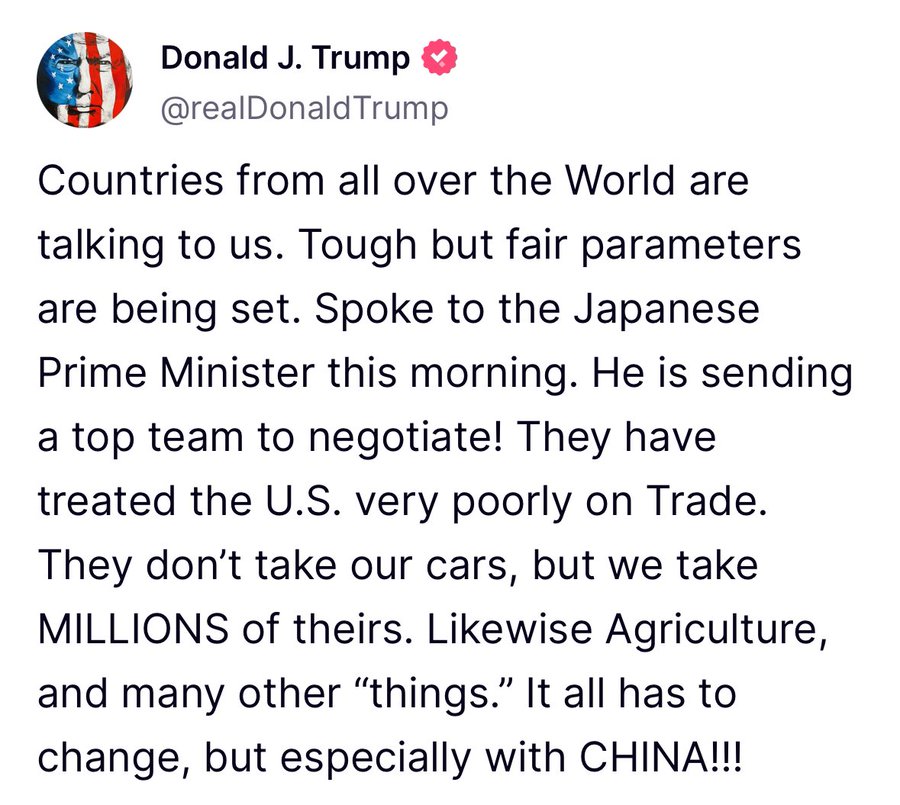
New trade tension is agitating relations between Washington and Tokyo. Donald Trump's recent decision to impose massive customs duties on Japanese products causes a shock wave. Japan reacts, sets up a delegation and tries to contain the crisis before it worsens.

Donald Trump: a unilateral decision that strikes Japan
The White House announced a tax of 25 % on imports of Japanese vehicles, with additional rights of 24 % on various products. This measure, presented by Donald Trump as a gesture of protecting the American market, could, according to the first estimates, deprive Japan of 0.8 point of growth. This customs pressure comes at a delicate moment for the Japanese economy, faced with persistent inflation and stagnation of domestic consumption.
Faced with this offensive, Japanese Prime Minister Shigeru Ishiba immediately requested an interview with the American president. During this call with Donald Trump, he firmly asked for a revision of these commercial sanctions, stressing that a balanced economic partnership remained essential for regional stability. This approach reflects a clear will of Tokyo to avoid an escalation similar to the Sino-American trade war.
Tokyo vs Washington: an asymmetrical diplomatic duel!
To control talks, the Japanese government has appointed Ryosei Akazawa, Minister of Economic Revitalization. Although a close ally of Ishiba, his profile questions: her career is essentially turned towards internal affairs, far from the arenas of world trade. He will face Scott BessentSecretary of the Treasury, supported by Jamieson Greer, American representative to trade, seasoned figures of strategic negotiation.
Beyond the bilateral quarrel, this showdown with Donald Trump illustrates the rise of protectionist tensions. It highlights Japan's dependence on ever more unpredictable outdoor markets. The stake exceeds the figures: it is a question of testing the diplomatic resilience of Tokyo and its ability to preserve its industrial interests in an unstable international environment.
As Donald Trump imposes tariffs of 104 % on China because the latter refuses to yield, Japan prefers to adopt a more diplomatic approach. The meeting between Tokyo and Washington could well become the scene of an ideological confrontation on the future of world trade. Who will be the biggest loser in the event of a conflict?
Maximize your Cointribne experience with our 'Read to Earn' program! For each article you read, earn points and access exclusive rewards. Sign up now and start accumulating advantages.