
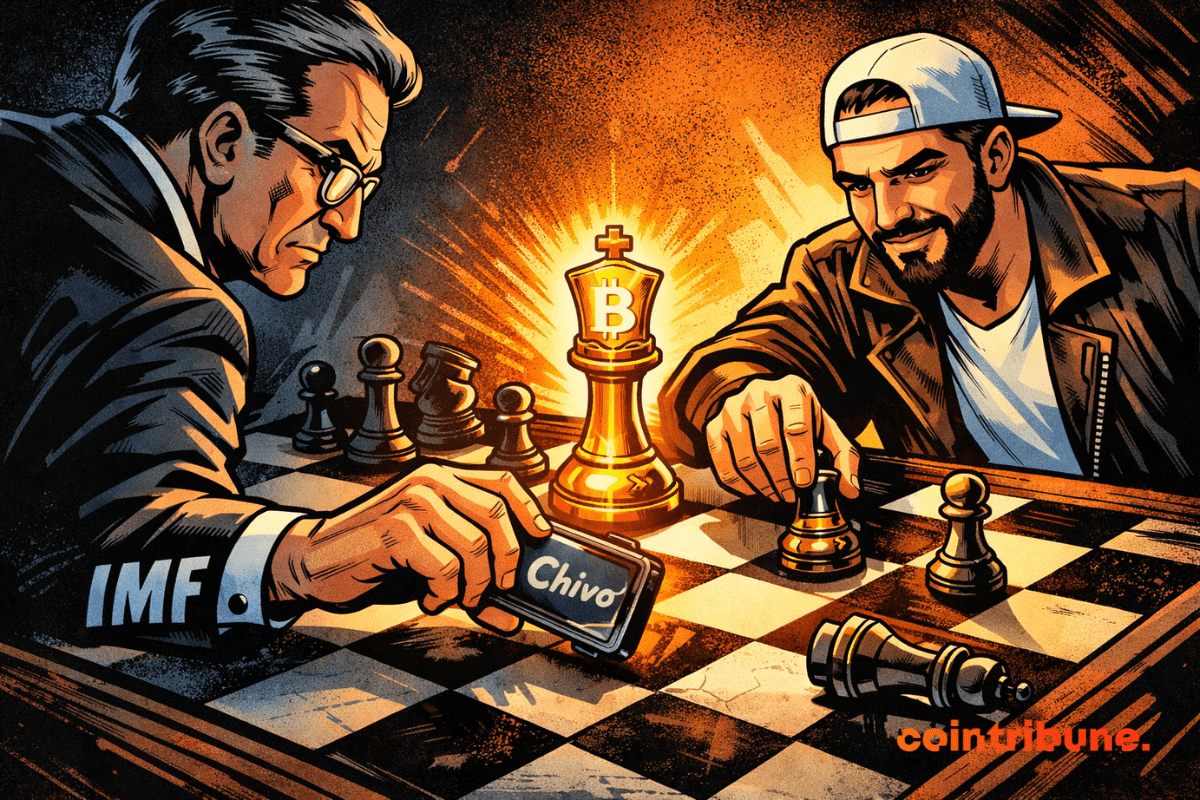
El Salvador is once again under scrutiny as discussions with the International Monetary Fund progress around its bitcoin strategy. Although negotiations to sell state-run bitcoin wallet Chivo are close to completion, disagreements persist over continued government purchases of BTC. President Nayib Bukele's public statements thus continue to contradict the conditions set by the IMF as part of a major loan agreement.
In brief
- The IMF has confirmed that negotiations for the sale of the Chivo wallet are nearing completion, as part of a $1.4 billion loan deal with limits on bitcoin.
- Conflicting information has emerged: IMF data indicates no recent BTC purchases, while El Salvador's Bitcoin Office reports new acquisitions.
- The terms of the agreement provide for limited public use of bitcoin, voluntary private adoption, and a reduction in state involvement in Chivo.
- President Bukele insists on continued daily bitcoin purchases, putting IMF conditions and future funding under stress.
IMF confirms advanced discussions to sell El Salvador's Chivo portfolio
IMF officials have confirmed that negotiations to sell Chivo, the bitcoin wallet backed by the government of El Salvador, are at an advanced stage. As noted in a statement released Monday, the IMF mission chief said authorities remain engaged with the institution's teams on the broader bitcoin agenda, including public sector participation. At the same time, separate discussions are underway regarding the continuation of theacquisition of bitcoin by the country.
These discussions follow a financing agreement reached in May, under which the IMF approved a disbursement of $120 million as part of a larger loan package, totaling $1.4 billion for 2024. The agreement set limits on government bitcoin activity and recorded a commitment to reduce state involvement in the Chivo wallet.
Questions remain about whether the Salvadoran government will comply with these conditions. Data released by the IMF in July indicated that no BTC purchases were made after December 2024. In contrast, updates communicated by the El Salvador Bitcoin Office report continued acquisitions. These disclosures include a purchase of 1,090 BTC in November, worth an estimated $100 million at the time.
Bitcoin purchases remain a sticking point in negotiations
These conditions continue to structure the discussions between the two parties:
- public sector BTC activity must remain limited;
- private companies can accept bitcoin on a voluntary basis;
- government participation in the Chivo portfolio must be reduced;
- the exact terms of the sale of Chivo remain confidential;
- Monitoring of future BTC purchases continues.
Bitcoin became legal tender in El Salvador in 2021, making the country the first state to adopt the cryptocurrency. President Nayib Bukele supported this policy and directed public funds towards regular purchases. On Bitcoin Day, authorities added 21 BTC to national reserves, attracting attention despite restrictions imposed by the IMF.
Government data indicates that El Salvador held 7,509 bitcoin as of Monday, worth an estimated $659 million at the time of publication. Meanwhile, Nayib Bukele reiterated in March that the country would continue to buy at least one BTC per day.
This political position raises questions about the sustainability of the agreement concluded with the IMF and the future pace of disbursements. Tensions rose in July, when the IMF criticized El Salvador for circumventing its non-accumulation commitment through the Chivo portfolio. As negotiations around the sale of the wallet continue, the future direction of the country's bitcoin policy remains uncertain.
Maximize your Tremplin.io experience with our 'Read to Earn' program! For every article you read, earn points and access exclusive rewards. Sign up now and start earning benefits.


