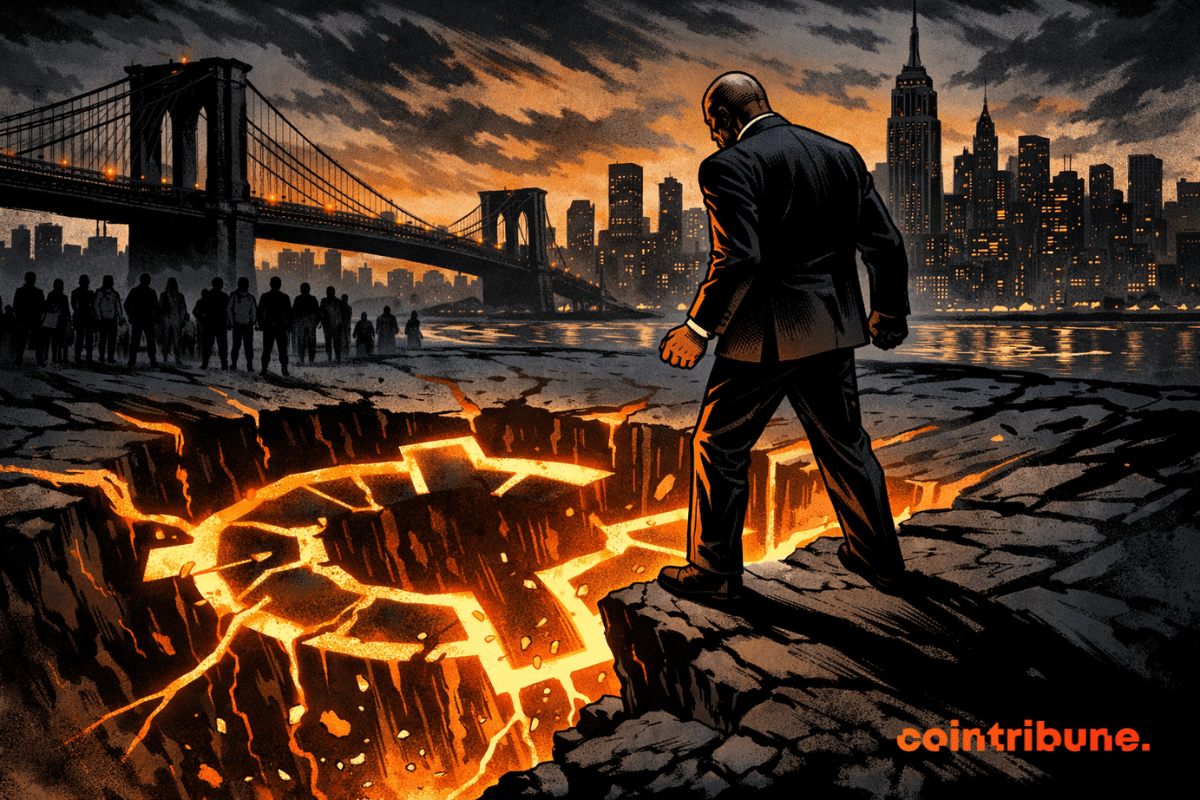
Former New York City Mayor Eric Adams unveiled a new memecoin project on Monday, quickly attracting attention from local media and crypto industry analysts. Called NYC Token, the project was presented at a press conference in Times Square shortly after Adams officially left office on January 1. Within hours, on-chain data began to raise concerns about the token's liquidity structure and risk profile.
In brief
- On-chain data shows that several million dollars were withdrawn from NYC Token liquidity within hours of its launch, triggering concerns about the risk and structure of the project.
- Analysts have reported highly centralized ownership, with deployer-linked wallets controlling large capital flows soon after trading begins.
- The NYC Token lost more than 60% of its value before some liquidity was reintroduced, reminiscent of patterns seen in previous contested launches.
- Project documents indicate that 70% of the total token supply is locked in a reserve, with no clearly disclosed governance or oversight framework.
Early Liquidity Withdrawal Raises Questions About Token Structure
According to local reports, Eric Adams introduced the NYC Token alongside a dedicated website, describing it as a blockchain initiative linked to civic causes. However, just hours after the launch, blockchain observers reported unusual activity within the token's liquidity pool. Notably, crypto monitoring account Rune Crypto reported that approximately $3.4 million was removed from liquidity shortly after trading began.
Independent analysts quickly confirmed these concerns. Crypto commentator StarPlatinum warned that the token seemed highly centralized and presented a high level of risk for traders. For its part, the on-chain analysis platform Bubblemaps has highlighted other irregularities involving wallets linked to the creator of the token.
Data from Bubblemaps shows that a wallet associated with the deployer, identified under the label 9Ty4M, withdrew approximately $2.5 million in USDC near the token's price peak. After a more than 60% drop in value, approximately $1.5 million in liquidity was subsequently reinjected. Bubblemaps compared this sequence to controversial launch of the LIBRA token, during which similar liquidity movements had already alerted market participants.
Based on publicly available on-chain data, several patterns emerge:
- Liquidity was withdrawn within hours of the token's public launch.
- A wallet linked to the deployer controlled significant capital flows.
- Ownership of the token appears highly concentrated.
- The price fell sharply following the withdrawal of liquidity.
- Liquidity was only partially restored after the price drop.
The NYC Token targets civic causes while centralizing the majority of the supply
Project documents indicate that the NYC Token runs on the Solana blockchain and is based on a total supply of one billion tokens. Seventy percent of this supply is allocated to the “NYC Token Reserve” and excluded from circulation. No detailed governance framework or oversight mechanism has been communicated regarding this reservation.
During the press conference, Eric Adams affirmed that the revenue generated by the token would be used to finance initiatives aimed at combating anti-Americanism, anti-Semitism and other related issues that he has already mentioned in the past. He said the funds would be distributed through a non-profit organization, without disclosing the name. In an interview with the New York Post, Adams compared the project to uses of blockchain in business, citing Walmart as an example of operational transparency.
In the same way that Walmart uses blockchain to manage its supply chain and increase transparency, cities can function better too. By using this New York City token, we will continue to invest in making our city safer.
Eric Adams
Zohran Mamdani succeeded Eric Adams as mayor on January 1. During his mandate, Adams was publicly supportive of cryptocurrencies and blockchain technologies, notably promising to make New York a global crypto hub. While several of these initiatives did not come to fruition, he nevertheless oversaw the city's first crypto summit, created the Office of Digital Assets and Blockchain, and received his first three mayoral salaries in bitcoin and ether.
Eric Adams clarified that he will not receive any salary related to NYC Token and declined to identify possible co-founders at the event. Separately, federal corruption charges against him were dropped last year following a request from the Justice Department.
Maximize your Tremplin.io experience with our 'Read to Earn' program! For every article you read, earn points and access exclusive rewards. Sign up now and start earning benefits.