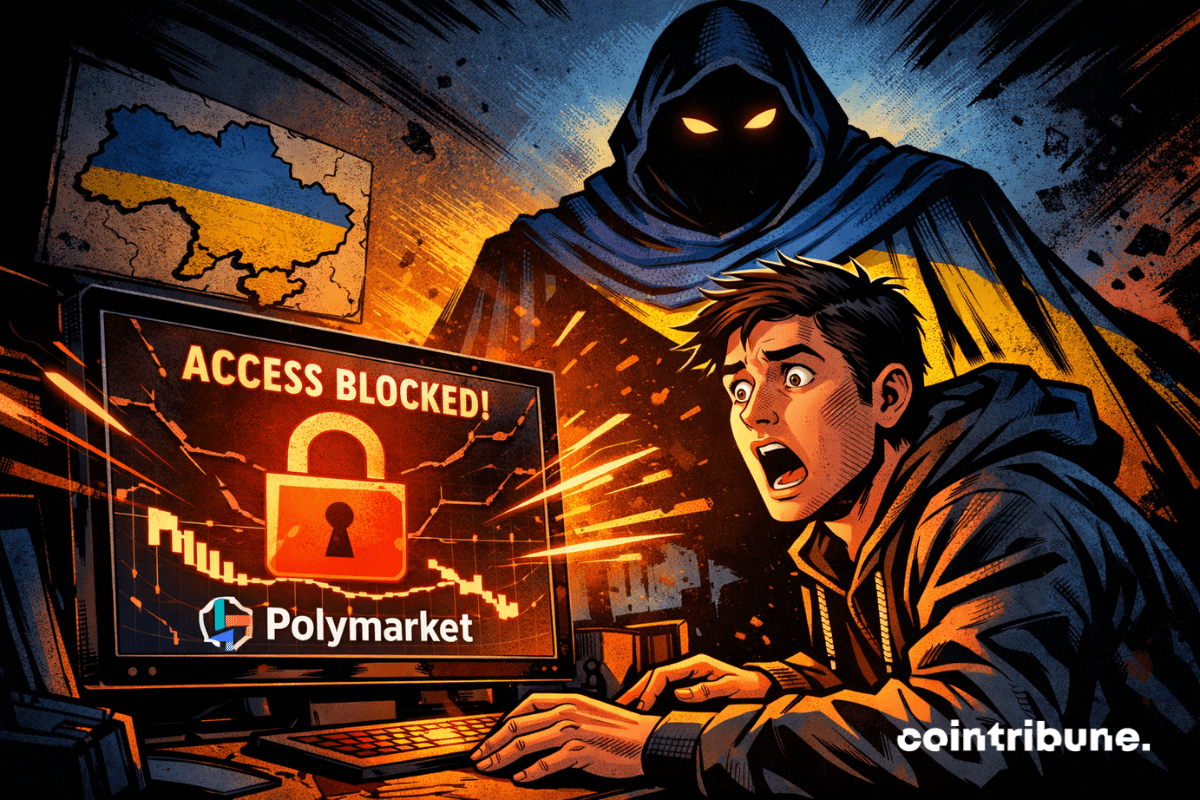
Ukraine has just blocked access to Polymarket, a crypto prediction market platform. Authorities believe the service is similar to unlicensed online betting. This decision does not only target one site. Above all, it reminds us that as soon as there is a bet and a possible gain on an uncertain event, the line with gambling becomes very fine. And crypto doesn't offer automatic immunity.

In brief
- Ukraine ordered the blocking of Polymarket, considering that its activity resembles unlicensed online betting
- The regulator mainly remembers the fact that users bet money on uncertain events to hope for a gain
A clear blockage on Polymarket, with licensing logic
Ukraine ordered ISPs to block Polymarket, while Tennessee ordered sports prediction markets to be stopped on the said crypto platform. Ukraine considers the activity to be unauthorized gambling. The decision is based on a resolution dated December 10, 2025 and targets sites that organize or facilitate betting without a recognized license.
Concretely, the polymarket.com domain was added to a public register of prohibited resources. This doesn't sound like a simple warning. However, it is an administrative gesture which results in DNS filters and network restrictions among operators.
In practice, the application of blocking is not perfectly uniform. Indeed, some Internet users in Ukraine say that they do not have access to the crypto platform of predictive markets. On the other hand, others still have access to it, depending on the operator or the tool used. It's classic in this type of decision. Indeed, the order is centralized, but the execution is fragmented.
Predictive market or disguised bet: the heart of the malaise
Polymarket presents itself as a market. We “buy” shares on an event, and the price reflects an implicit probability. The rhetoric is clever, because it borrows the vocabulary of finance and price discovery.
But the Ukrainian regulator retains that if the user commits money to an uncertain outcome to hope for a gain, the mechanics resemble gambling. And, in many countries, this word triggers a chain of constraints including licensing, control, prevention, compliance.
The context makes the decision even more sensitive. Polymarket has hosted markets related to Ukraine, including around the war. Even without going into morality, we understand the political embarrassment: allowing “bets” to flourish on burning national subjects, without a local framework, seems like a too comfortable gray zone.
Ukraine is not alone in reacting. Other European countries have already treated Polymarket as an unauthorized gambling offering, with restrictive measures. And the logic repeats itself: crypto innovation does not cancel local law on games and betting.
We also see a convergence of concerns. The authorities don’t just look at “the product”. They look at the ecosystem: user protection, advertising, fight against addiction, and anti-money laundering systems. Even when the platform is “decentralized” in its discourse, the entry points remain very real.
Maximize your Tremplin.io experience with our 'Read to Earn' program! For every article you read, earn points and access exclusive rewards. Sign up now and start earning benefits.