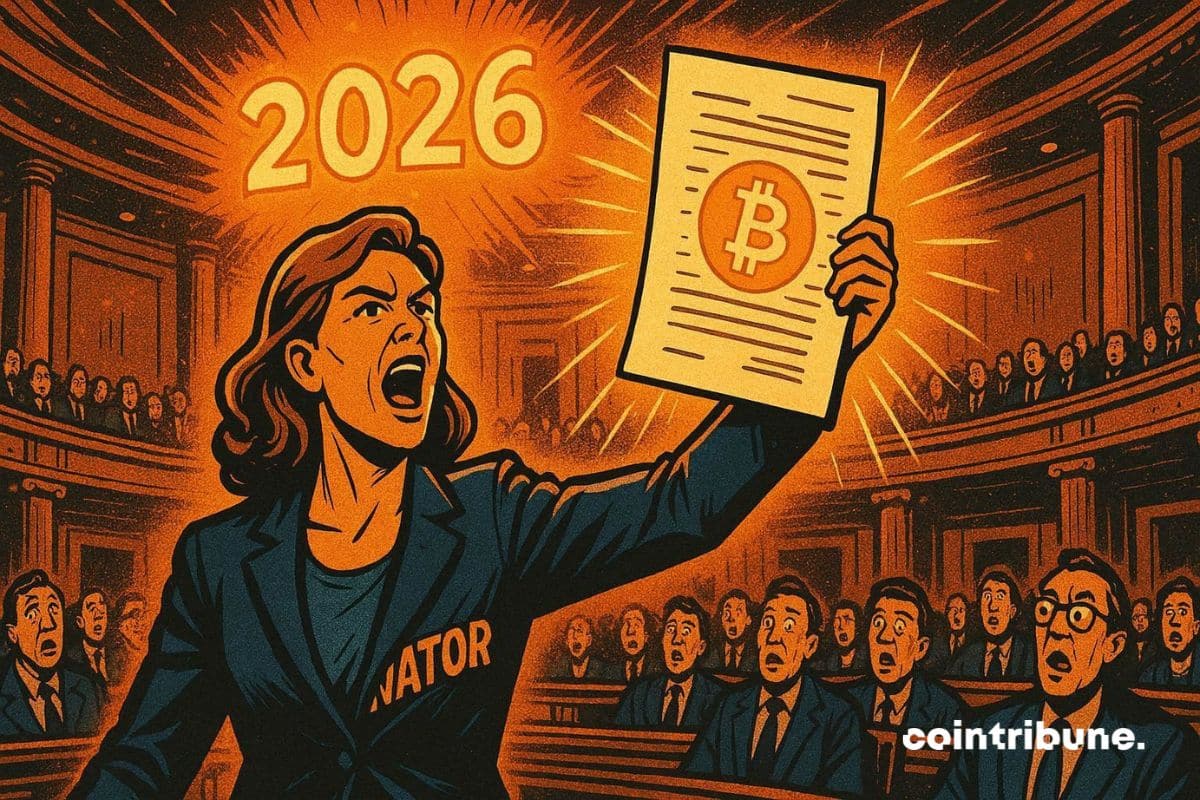
The US Senate is preparing to consider the Responsible Financial Innovation Act in January 2026, a major step for the regulation of cryptocurrencies. This bill could redefine the rules of the sector, with global repercussions. Let's analyze together the issues, the key figures and the consequences for the crypto market.

In brief
- In January 2026, the US Senate will examine the Responsible Financial Innovation Act, a major law to regulate cryptos.
- This piece of legislation aims to clarify the jurisdictions between the SEC and the CFTC, promoting institutional adoption of bitcoin.
- Successful adoption could lead to a 10 to 15% increase in the price of BTC and reassure investors.
The American law on cryptos enters a decisive phase in January 2026!
The U.S. Senate Banking Committee is scheduled to meet in the second week of January 2026 to consider the Responsible Financial Innovation Act. This markup, or amendment session, is crucial for the adoption of the text, after months of postponements due to political disagreements and the prolonged government shutdown in 2025.
Senators Cynthia Lummis and Tim Scott play central roles in this process. Lummis, who will not run again in 2026, was one of the main promoters of the text. The project, supported by the Republicans, however requires a bipartisan consensus to succeed. This step is essential to clarify the regulatory framework for digital assets in the United States! A major issue for investors and businesses in the crypto sector.
Responsible Financial Innovation Act: causes and consequences on the crypto market
Crypto observers estimate a 50-60% chance that the text is adopted in 2026a probability which will depend on negotiations between Democrats and Republicans. The disagreements mainly concern the regulation of decentralized finance (DeFi) and the distribution of powers between the SEC and the CFTC.
The consequences for the crypto market are multiple. Adoption of the text would clarify the legal framework, thus attracting institutional capital. Conversely, a failure or further postponement could prolong uncertainty, slowing down innovation. Sector players emphasize that 70% of them are waiting for this regulation to secure their investments.
Bitcoin (BTC), the favorite crypto of the Responsible Financial Innovation Act?
Bitcoin, considered a commodity, would be directly favored by this law. The CFTC, which regulates commodities, would see its authority strengthened, which would benefit BTC as a flagship digital asset. Analysts anticipate an increase of 10 to 15% in its price in the weeks following the adoption of the markup, thanks to an influx of institutional capital.
This clear regulation could reassure reluctant crypto investors and stimulate demand. However, short-term volatility remains possible due to political uncertainties, particularly with the midterms of November 2026. Bitcoin, already perceived as a safe haven, would see its position strengthened, consolidating its status as leader in the crypto market.
The January 2026 markup marks a turning point for the regulation of cryptocurrencies in the United States. If the text is adopted, it could transform the crypto landscape, with winners like bitcoin. However, negotiations in the Senate and market reactions in the coming weeks will be decisive. One question remains open: will this law be enough to reassure investors and stabilize the crypto market?
Maximize your Tremplin.io experience with our 'Read to Earn' program! For every article you read, earn points and access exclusive rewards. Sign up now and start earning benefits.