
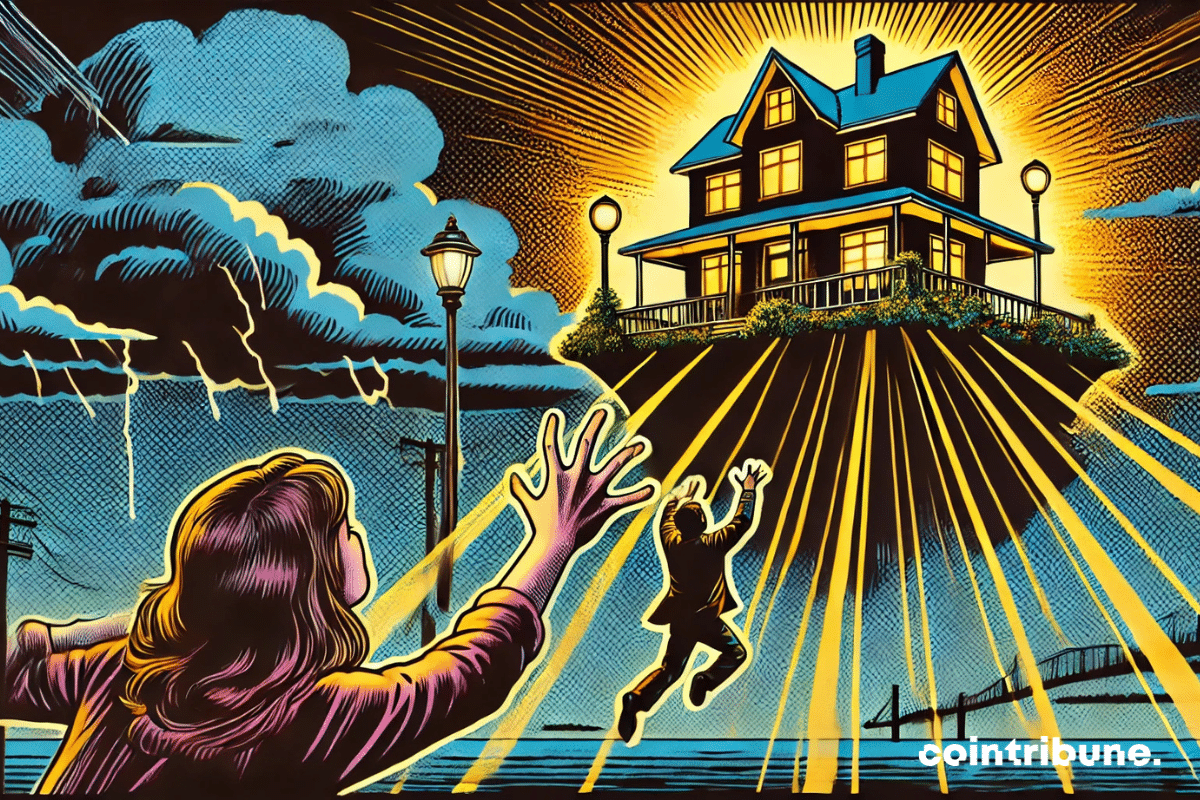
The dream of owning a detached house with a garden, shared by nearly 80% of French people according to a recent study, could soon become inaccessible. In question, a reform introduced by the Climate Resilience Law which aims to reduce the artificialization of land to preserve natural, agricultural and forestry areas. By 2050, this measure aims to achieve “zero net artificialization”, which radically transforms urban planning rules. This project, although ecological, is already causing a surge in the price of building land and limiting their availability, which is causing concern among future owners and professionals in the real estate sector.

A reform with immediate consequences
In 2021, the government adopted the Climate Resilience Law with a clear objective: to preserve natural spaces and slow down the artificialization of land. This measure, designed to protect agricultural, forest and natural lands, plans to halve the rate of artificialization by 2031. In the longer term, the ambitious objective is to achieve “zero net artificialization” of here 2050. To achieve this, municipalities must compensate for each new concrete surface area by creating an equivalent natural space, a constraint which complicates the granting of building permits.
This limitation in the supply of building land is putting increasing pressure on the real estate market. At the end of 2023, the average price per building square meter in France stood at 90 euros, a notable increase compared to previous years. Regional disparities accentuate these tensions: in Île-de-France, the cost reaches 233 euros per square meter, while in Normandy, it remains more moderate at 65 euros. This surge in prices, aggravated by inflation which also affects construction materials, makes access to property increasingly difficult for middle-class households. Experts agree that this situation could permanently transform the real estate landscape in France, where the dream of the individual house is becoming less and less realistic.
Towards a new balance: perspectives and controversies
Although the reform is part of an essential ecological approach, it generates major challenges for housing and urban development. The reduction in the supply of building land, combined with a surge in prices, could accelerate the transition towards a predominance of collective housing. This model of densification gradually relegates the idea of the individual house to a privilege reserved for the wealthiest households. Professionals in the real estate sector fear a significant slowdown in construction projects, a dynamic that threatens employment and economic activity linked to construction.
Local authorities, responsible for implementing this reform, face considerable administrative and logistical constraints. They must juggle between sometimes contradictory objectives: preserving the environment and meeting the demand for housing. This complex equation limits their room for maneuver and accentuates geographical disparities. In rural areas, where building land is available but not in demand, the impact remains limited. On the other hand, in urban areas where land pressure is intense, tensions are exacerbated. This duality raises questions about the fairness of the deployment of the reform and its consequences on territorial balance.
Implicitly, these challenges underline the need for in-depth reflection on the urbanization model in France. As the country moves toward more sustainable solutions, the choices made today will determine the future of housing, but also how citizens access homeownership in the decades to come.
A key question arises: will the ongoing ecological transition make it possible to make housing solutions accessible to as many people as possible? To meet this challenge, it will be necessary to combine innovation, sustainable urban planning and equity in access to property. The necessary adjustments, both economically and environmentally, could profoundly transform the individual housing model in France. As market players and communities navigate this new reality, the future of housing looks uncertain, at the intersection of major ecological, social and financial issues.
Maximize your Tremplin.io experience with our 'Read to Earn' program! For every article you read, earn points and access exclusive rewards. Sign up now and start earning benefits.


