

Bitcoin miners are enjoying a short respite after several months of increased pressure. At block 919,296, the Bitcoin network recorded its first drop in difficulty since June: a decrease of 2.73% to 146.72 trillion. This adjustment provides a temporary breather after a long period of rising computational demand, which has pushed many miners to their limits.

In brief
- Bitcoin mining difficulty fell 2.73% to 146.72 T, marking the first decline since June following months of tension on the network.
- This decline follows a record of 150.84 T, capping a 29.6% increase in 2025 as competition intensified among miners.
- The hashprice has fallen 11% since mid-September, reducing margins despite a hashrate still close to 1,104.55 EH/s.
- Analysts expect an increase of 3.39% by the end of October, signaling that this respite could be short-lived if network strength continues to increase.
Bitcoin difficulty drops 2.73% after all-time high
Earlier this month, mining difficulty reached a high of 150.84 trillion, an increase of 29.6% since January. This constant progression reflected the increase in the network hashrate and increased competition between mining operations, despite a declining price of bitcoin on the market.
With this drop, it is now 2.73% easier for miners to discover new blocks than during the previous cycle of 2,016 blocks.
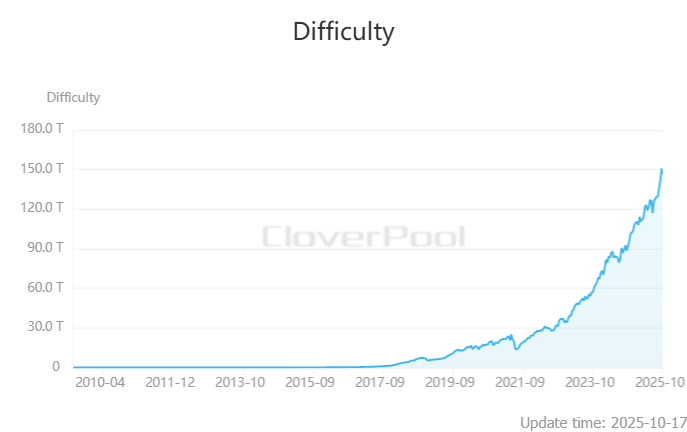
There difficulty of Bitcoin mining measures the level of complexity necessary to solve the cryptographic puzzle to add a new block to the blockchain. The network adjusts this setting approximately every two weeks in order to maintain an average block time around ten minutes.
It adapts according to the speed at which miners find new blocks: it increase when these are discovered too quickly, and decreases when they are done too slowly. This self-regulation mechanism guarantees the stability of block production and the reliability of the Bitcoin network.
Network hashrate remains near record high despite revenue decline
Even if the recent reduction in difficulty provides temporary relief for miners, mining revenues remain under pressure.
Here are some notable trends:
- As of October 16, 2025, the hashprice – estimated income by peta-hash per second (PH/s) – stands at $47.92.
- A month earlier, on September 16, it reached $53.85, a drop of 11%.
- Despite this contraction, the total computing power of the network continues to grow.
The Bitcoin network hashrate, which measures the total power engaged in the competition for block rewards, remains close to its all-time high at 1,109 EH/s, currently estimated at 1,104.55 EH/s.
Block confirmations take slightly longer, however, averaging 10 minutes 21 seconds versus the ideal goal of 10 minutes.
At the current rate, analysts predict that the next difficulty adjustment, expected around October 30, 2025, will result in an increase of approximately 3.39%. However, this estimate remains provisional: only part of the blocks in the new cycle have been mined.
In short, this drop in difficulty offers a brief respite to minors. But if network power continues to climb while the price of bitcoin remains weak, this relief could be short-lived. Unless market conditions improve, the industry will undoubtedly face a new phase of tension by the end of October.
Maximize your Tremplin.io experience with our 'Read to Earn' program! For every article you read, earn points and access exclusive rewards. Sign up now and start earning benefits.


