
In an essay published on August 10, the co-founder of BitMEX puts forward a bold thesis which is already fueling lively debates within the crypto community. Arthur Hayes indeed sees a powerful catalyst in a possible American-Japanese operation intended to support the yen. Result: the price of bitcoin could rebound quite quickly.

In brief
- Arthur Hayes believes that American support for the yen could increase liquidity in dollars.
- The envisaged mechanism would go through the Fed’s FIMA repo facility.
- The scenario remains speculative and depends on an increase in the ceiling of 60 billion dollars.
- Bitcoin would only benefit if this liquidity actually reached risky assets.
Arthur Hayes links US-Japan exchange rate policy to bitcoin price
After a surprising statement in March 2026, Arthur Hayes once again makes the crypto community react with a bold thesis. On August 10, the BitMEX co-founder published an essay titled “Yen-quake” in Substack. He states that the dollar-yen exchange rate is now both a political and economic problem.
In this context, the former manager of BitMEX favors a specific scenario. Tokyo would deposit part of its US Treasury bonds with the Fed. In exchange, Japan would receive dollars which it would then sell to buy yen.
This operation would involve there FIMA Repo Facility. The Federal Reserve describes this tool as a temporary source of dollars for foreign monetary authorities. It prevents them from suddenly liquidating their Treasuries on the market. Loans last overnight or seven days and are fully guaranteed.
For Hayes, the consequence goes beyond the foreign exchange market. Each loan would in fact inflate the Fed’s balance sheet. What would increase dollar liquidity. A part could then join risky assets, including bitcoin.
In his essay, he nevertheless clarifies an important point: it would not be a classic quantitative easing program. The funds will be lent against collateral and must be repaid.
Hayes’ reasoning is based on historical correlation
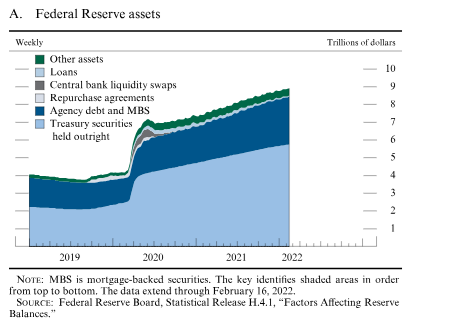
Between 2020 and early 2022, the Fed’s balance sheet grew from about $4.2 trillion to nearly $8.9 trillion. At the same time, the price of bitcoin climbed from less than $10,000 to nearly $69,000 in November 2021. This streak fuels Hayes’ bet on a new crypto rally.
The parallel, however, deserves caution. In 2020, asset purchases, fiscal checks and near-zero rates were acting together. A use of FIMA would have neither the same scale nor the same permanence. It could improve global liquidity without mechanically causing a bullish cycle of bitcoin.
The Japanese emergency is tangible. According to Reutersa coordinated intervention between Washington and Tokyo pushed the dollar down from 163.99 yen to 155.20 in early August. The effect then partially dissipated with a return to around 159.
Decryption: the market still doubts the effectiveness of one-off purchases without sustainable rise in Japanese interest rates. For the crypto market, this fragility maintains both the hope of liquidity and the risk of shock.
Bitcoin: the FIMA scenario remains a bet, not a decision
There FIMA facility is real. On the other hand, the “dollar machine” described by Hayes remains hypothetical. According to official Fed documentationits ceiling in fact amounts to 60 billion dollars per counterparty. Scott Bessent publicly wanted to strengthen this safety net. However, no massive extension has been announced by the American Monetary Committee.
Another reservation: FIMA was designed to calm dollar financing tensions, not to sustainably manage the Japanese yen. Its rate is normally higher than that of the private market when it functions properly. The tool therefore becomes especially attractive in times of stress. Limited activation would therefore probably have lesseffect on bitcoin than Hayes’ scenario suggests.
That being said, the opposite risk remains. If the Bank of Japan raises its rates sharply, the yen could rise quickly. Investors who borrowed this currency to buy more profitable assets should then unwind their carry trade. By August 2024, this mechanism had amplified sales in stocks and the crypto market. THE bitcoin can therefore gain with gradual liquidity creationbut suffer from a brutal adjustment.
One thing is certain: Arthur Hayes has just identified a credible channel between the yen, the Fed and bitcoin. What happens next will depend less on the speech than on the FIMA amounts mobilized and Tokyo’s reaction. File to follow…
Maximize your Tremplin.io experience with our ‘Read to Earn’ program! For every article you read, earn points and access exclusive rewards. Sign up now and start earning benefits.