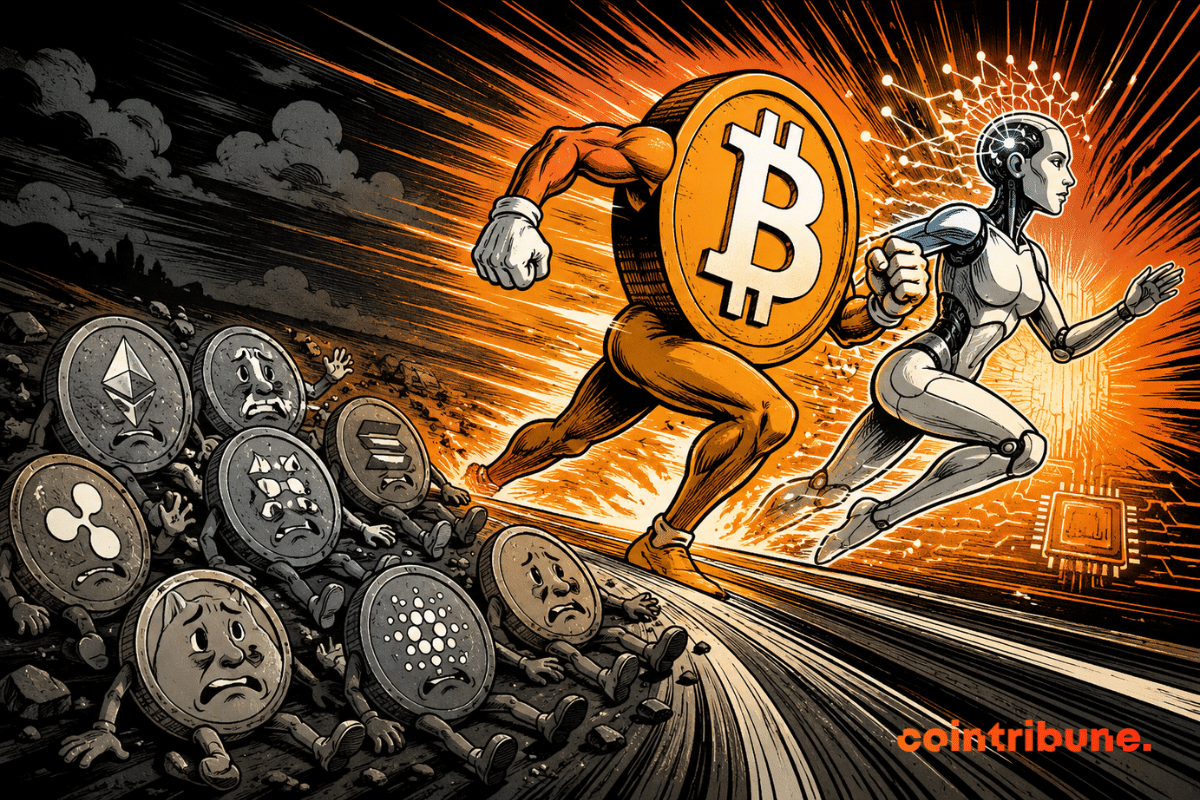
Crypto markets are experiencing a new phase of capital turnover. Altcoins are seeing a sharp decline in spot demand, as bitcoin and AI-related sectors attract more investor attention. This development shows a change in market flows, with volumes still high on certain platforms despite a decline in direct purchases.
In brief
- Altcoins see historic drop in spot demand with net sales reaching $266 billion.
- Despite this selling pressure, Altcoins remain very active in derivatives markets, representing 51% of futures volumes on Binance.
- Bitcoin retains a major place in capital flows, while stablecoins maintain a strong reserve of available liquidity.
- Investors are diversifying their positions towards artificial intelligence, stocks, metals and pre-IPO products offered by crypto platforms.
Altcoins under pressure as spot demand declines
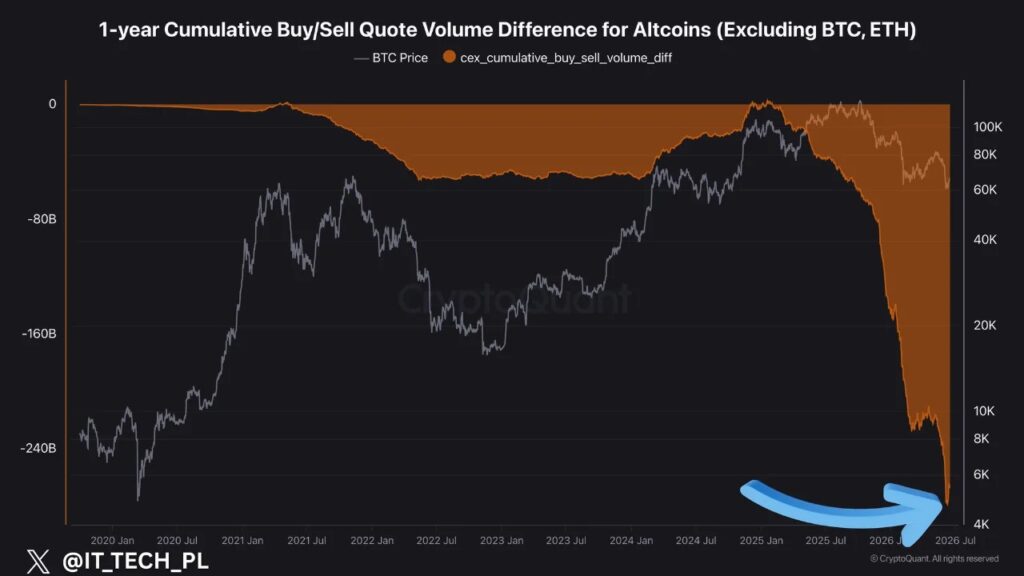
For several weeks, the altcoin market has shown signs of slowing down with increased selling pressure. Excluding Ether, these assets recorded a net sales volume of $266 billion on centralized exchange platforms, the highest level since tracking this indicator in 2020. This gap between sales and spot demand reflects a decline in immediate investor interest.
Despite this trend, trading activity remains high in derivatives. Altcoins continue to occupy a significant place in trading, with volumes higher than those of bitcoin and Ether on some platforms.
THE main figures illustrating this evolution are:
- $266 billion: net volume of sales of altcoins excluding Ether on centralized exchange platforms;
- 51%: share of altcoins in futures volume on Binance on June 16;
- 28.85%: share of bitcoin in futures contract volumes on Binance;
- 20.20%: share of Ether in these same exchange volumes;
- -$266 billion: cumulative difference over one year between purchases and sales of altcoins excluding bitcoin and Ether.
According to the data published by crypto analyst IT Tech, this cumulative difference between purchases and sales confirms prolonged selling pressure. The negative balance thus reached a new low, even if traders remained active on these markets.
This situation indicates more of an internal rotation of capital than a complete exit from the crypto sector. Investors continue to trade altcoins, but new inflows remain limited, while available capital appears to be spreading to other segments of the market.
Bitcoin attracts capital in a more selective market
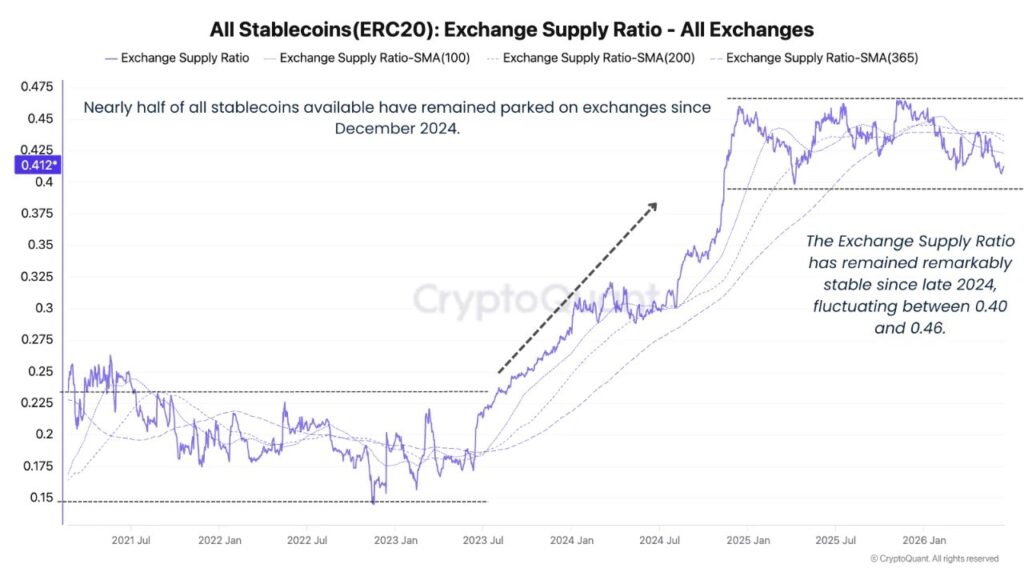
During this period, bitcoin maintains a central place in the allocation of available liquidity. Stablecoin reserves on platforms have changed little since December 2024, indicating that funds remain ready to be used, but in a more targeted manner.
The price of bitcoin has seen significant swings, with movements greater than 50% between $60,000 and $120,000. At the same time, ERC-20 stablecoins present on exchange platforms have maintained, according to data from crypto market analyst MorenoDV, a ratio between 40% and 46% of their total supply. This stability shows that liquidity has not disappeared from the market.
Furthermore, part of the capital on exchanges also seems to be moving towards other financial products. Metals futures reached nearly $500 billion in March 2026, while perpetual products tied to pre-IPO assets grew rapidly between March and June.
New flows are heading towards AI and other assets
Capital turnover does not only concern alternative cryptocurrencies. Investors are also exploring products related to stocks, commodities and technology companies associated with artificial intelligence. Exchange platforms thus broaden the trading possibilities offered to users.
Altcoins remain active in this environment, but they face increased competition for available liquidity. The volumes observed on derivative products show that traders remain present, while spot purchases favor certain sectors.
They thus show persistent activity despite the drop in net inflows. The diversification of flows confirms that investors are seeking multiple types of assets within digital and traditional markets.
Bitcoin retains a high concentration of liquidity, while AI and new financial products capture an increasing share of attention. The current trend could continue with a more selective allocation of capital between different market segments. The evolution of exchange volumes, stablecoin reserves and spot demand will make it possible to measure whether this rotation is confirmed in the coming months.
Maximize your Tremplin.io experience with our 'Read to Earn' program! For every article you read, earn points and access exclusive rewards. Sign up now and start earning benefits.