
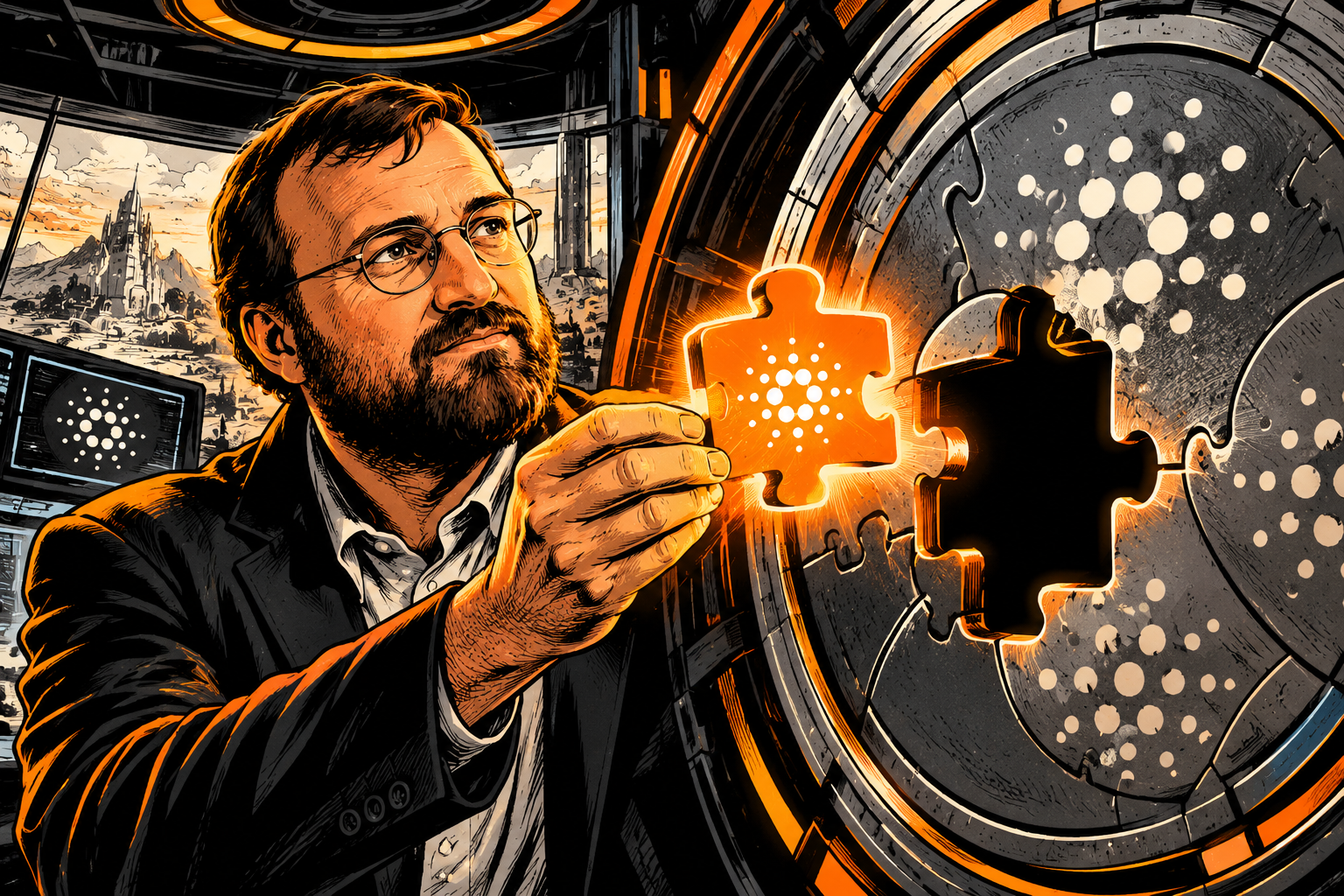
Charles Hoskinson believes that Cardano will be complete after the deployment of Leios. For the founder of the network, this upgrade must provide the processing capacity that the blockchain still lacks. But between the technical ambitions and the reality on the ground, several steps remain to be taken.
In brief
- Charles Hoskinson says Cardano will be complete after Leios, once decentralized consensus, open governance, eUTXO, Plutus and scalability come together.
- Leios aims for a processing capacity two to thirty times greater than the current one. In September, a test demonstrated throughput of around 1,000 transactions per second.
- The Musashi Dojo public testnet started in June and continues testing. Arrival on the main network remains expected this year.
Leios, the last step according to Hoskinson
It all starts from a question asked about X: is Cardano finally finished? Charles Hoskinson responds bluntly: “After Leios, yes”. In other words, he considers that this upgrade will bring together the main functionalities he wants for the network.
In his response, he cites in particular decentralized consensus, open governance, the eUTXO accounting model, the Plutus language, scalability, formal methods, several node-independent implementations and millions of ADA holders. For him, Leios therefore represents much more than a simple technical improvement.
Furthermore, the founder recently discussed a concept related to Midnight, the privacy-focused blockchain within the ecosystem. In his message onhe presents this idea as the major project of his career, without however revealing the details.
Leios promises a much faster network
Concretely, Leios must improve the throughput of Cardano without compromising its decentralization. The current protocol, Ouroboros Praos, prioritizes security. Leios plans to add approval blocks and committee validation to speed up transaction processing.
However, the announced gains vary depending on the estimates. The documentation suggests a capacity increase of two to thirty, while some statements by Hoskinson put forward more ambitious objectives. For its part, Input Output highlighted a test carried out in September, with around 1,000 transactions per second. The first steps, however, aim for more modest levels.
To monitor progress, the developers launched the Musashi Dojo public testnet on June 23. This progresses through five phases and is currently in the Fire phase. Mainnet deployment remains planned before the end of the year, subject to test results and technical decisions.
Will Cardano really be finished?
It all ultimately depends on the definition of the word “complete”. Some community members believe that Cardano cannot claim this status until Leios, Hydra, and other elements of its roadmap are operating on mainnet.
Hoskinson defends an approach based on research and progressive development. He evokes a new era of exponential growth for crypto, while prioritizing scientific advances.
However, Cardano’s success does not depend solely on its technical performance. The ADA price remains far from its highs, while token sales by large whales in early October are a reminder that investor confidence follows its own dynamics.
Ultimately, Leios could mark the culmination of Hoskinson’s initial vision. But for users, Cardano will only be truly complete if its promises translate into concrete results.
Maximize your Tremplin.io experience with our ‘Read to Earn’ program! For every article you read, earn points and access exclusive rewards. Sign up now and start earning benefits.


