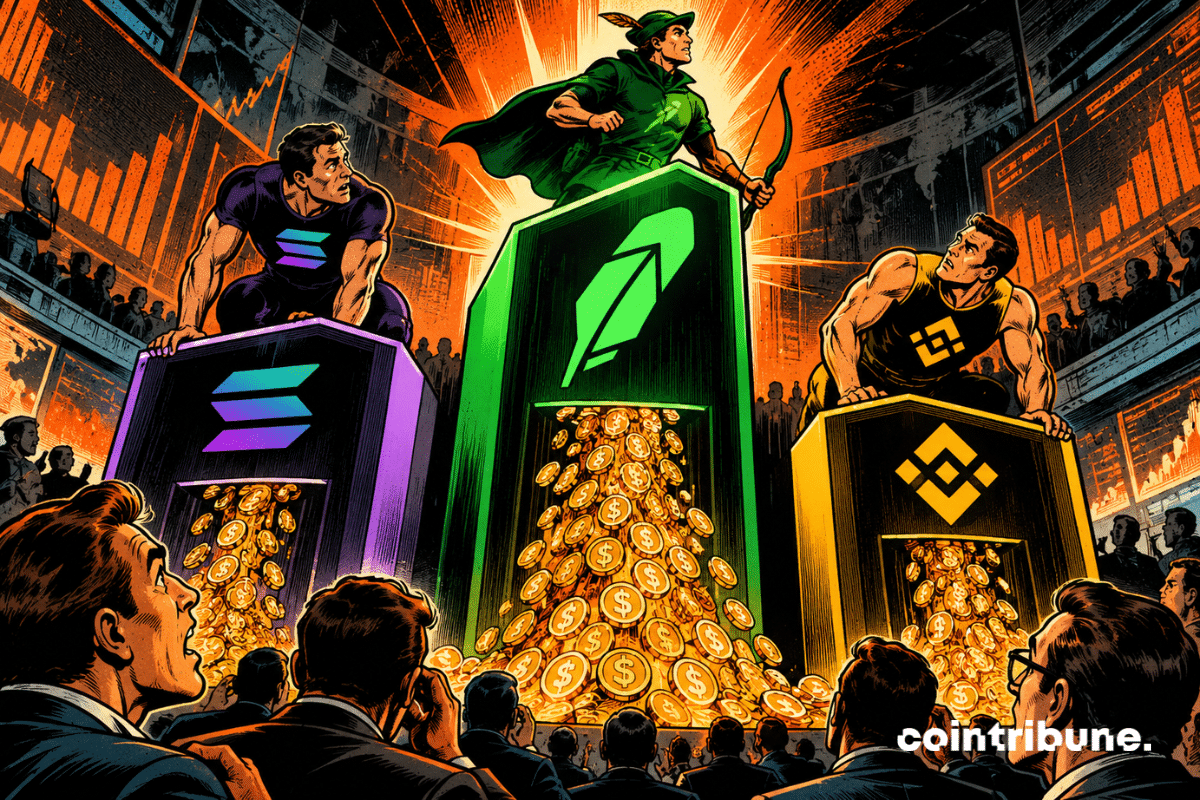
Robinhood Chain generated around $33 million in fees in two weeks, compared to $11 million for Solana and $9 million for BNB Chain over the same period. According to a note from Bernstein reported by The Block on September 8, the network launched on July 1 now produces between $2 and $4 million in daily fees. Robinhood would keep about 90%. For this new branch of its crypto business, the numbers are starting to become significant.
In brief
- Robinhood Chain generated $33 million in fees over the last fortnight.
- Solana reached around $11 million over the same period, compared to $9 million for BNB Chain.
- Bernstein estimates that Robinhood keeps about 90% of the fees produced by its network.
Crypto: $33 million in fees in two weeks
Robinhood Chain is only two months old. The network was launched on July 1 and still had everything to prove against blockchains that had been installed for several years. Tremplin.io recently detailed the rise of tokenized stocks on Robinhood Chain, BNB Chain and Solana.
Over the last fortnight studied by Bernstein, Robinhood Chain nevertheless comes ahead of its two competitors in fees generated: 33 million dollars, compared to around 11 million for Solana and 9 million for BNB Chain. The network currently turns over $2 million to $4 million in fees per day.
Since its launch, the total has reached around $39 million.
The detail is interesting: 33 million were therefore generated during the last fortnight alone. This represents almost 85% of the cumulative recorded since the launch according to Bernstein figures. Recent activity thus weighs much more heavily than the first weeks of the network.
The other indicators follow. Robinhood Chain boasts approximately $1.5 billion in TVL and over $50 billion in volume on decentralized exchanges. For a network launched at the beginning of July, the start-up is quick.
Robinhood would keep around 90% of this revenue
The $33 million would be less interesting for Robinhood if most of it went to the technical infrastructure that makes the blockchain work.
This is not the case according to Bernstein. The company would keep approximately 90% of the fees generated on Robinhood Chain. Nearly 10% would go to Arbitrum, whose technology powers the network, while less than 1% would go to Ethereum in the form of data fees. These percentages are estimates rounding reported by analysts.
Robinhood is therefore no longer content with distributing crypto products to its customers. The broker now has an infrastructure capable of directly generating revenue when users trade on its network.
This was precisely one of the challenges when Robinhood presented its layer 2 dedicated to tokenized finance in July. Bernstein goes further and estimates that Robinhood Chain could generate around $160 million in annual fees in 2028. This is a projection, not revenue already earned. The firm also maintains an “Outperform” recommendation on Robinhood stock with a target of $160.
The current figures explain this optimism, but two months of activity are obviously not enough to guarantee the pace of the next two years. Blockchain fees can vary widely with volumes, speculation, and market conditions.
Tokenized stocks and stablecoins already power the network
Robinhood Chain does not rely solely on traditional crypto trading. The value of tokenized shares held on the network increased from approximately $10 million to $140 million in two months, a fourteen-fold increase. During the week of August 30, Robinhood Chain accounted for approximately 32% of the value transferred in tokenized stocks. Only BNB Chain did better according to Bernstein.
Stablecoins are growing even faster in absolute value. Their total supply on Robinhood Chain is now around $1 billion, up from $241 million in early July. USDG represents almost 66% of this sum and USDe approximately 33%. These numbers also give some context to the $33 million in fees. Robinhood Chain simultaneously benefits from decentralized exchanges, the rise of stablecoins and the development of tokenized stocks.
The competition does not stand still. It was noted in July that Base was already seeking to respond to the rapid growth of Robinhood Chain, after the network had exceeded 230,000 daily active users. Two months later, the comparison now focuses on income. Solana and BNB Chain remain much older networks and have much broader crypto ecosystems. Bernstein’s ranking only looks at fees over the past fortnight, not the overall size or strength of each blockchain.
Maximize your Tremplin.io experience with our ‘Read to Earn’ program! For every article you read, earn points and access exclusive rewards. Sign up now and start earning benefits.