
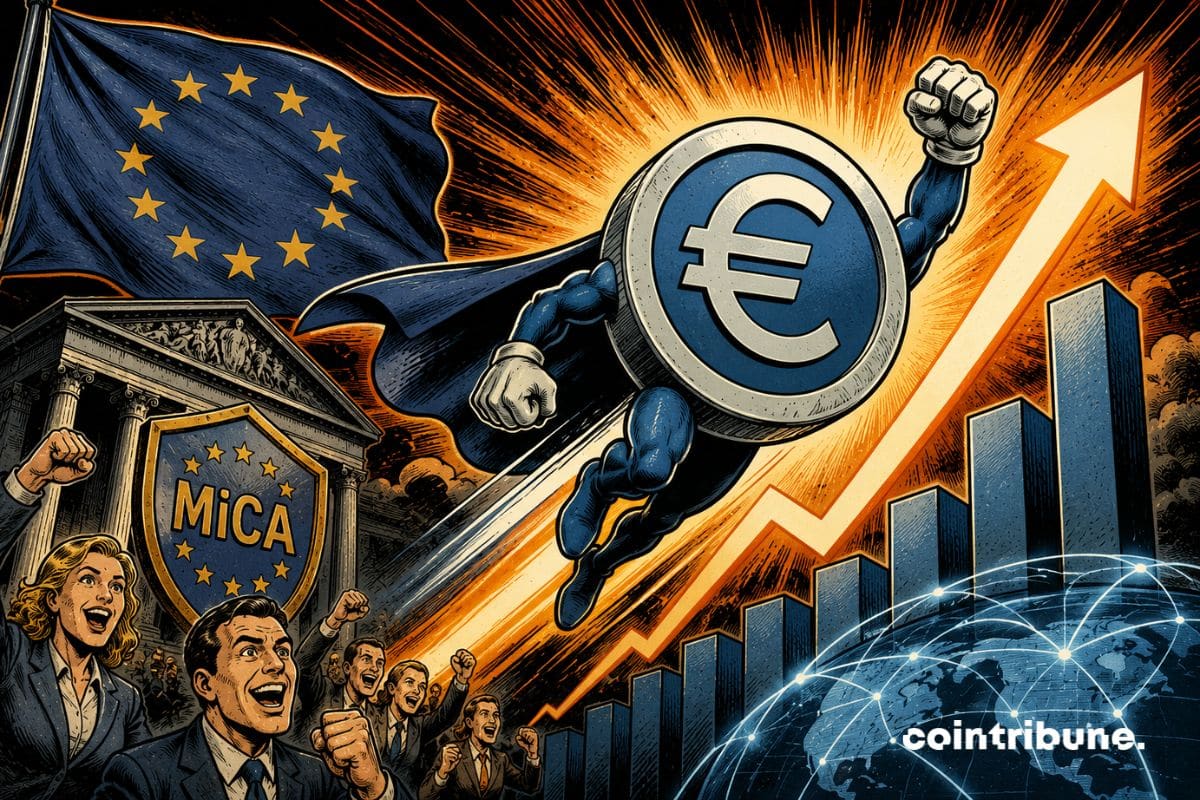
In a few days, Circle’s stablecoin EURC shattered its activity records thanks to MiCA, proof that regulation boosts adoption. But against the controversial giant Tether, the fight for Europe promises to be fierce. Who will be victorious?
In brief
- Circle’s EURC records activity records in Europe (1,760 addresses/day) thanks to MiCA.
- MiCA regulations do not recognize non-compliant stablecoins, making EURC the legal solution in Europe.
- The success of Circle’s EURC shows that compliance and transparency drive the adoption of stablecoins.
Circle’s stablecoin EURC breaks all records thanks to MiCA
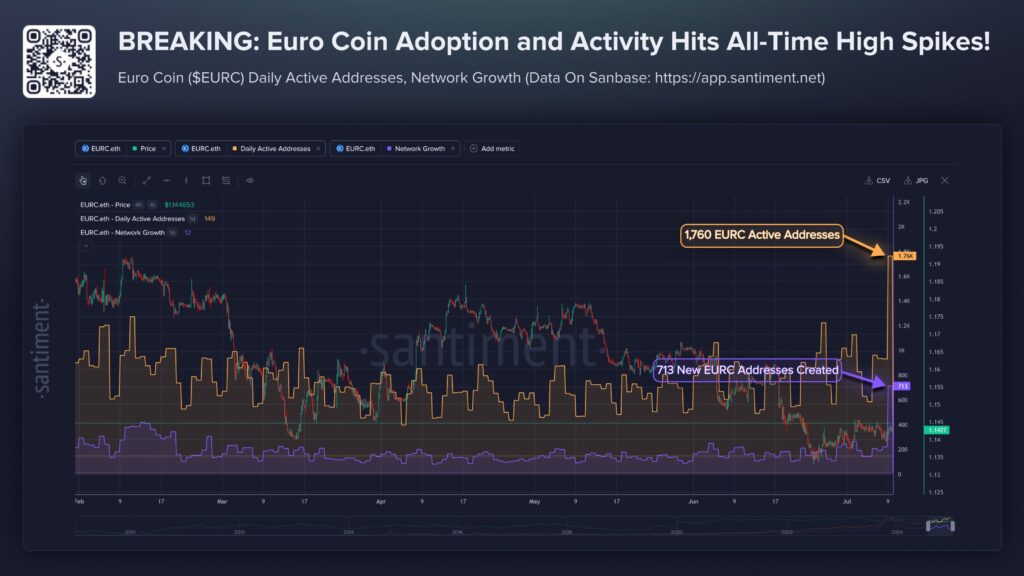
A few days after the publication of MiCA-compliant crypto platforms in Europe, Circle’s stablecoin EURC experienced a historic explosion:
- 1,760 active addresses per day;
- 713 new wallets created every day, records in 4 years.
For what? Because MiCA excluded non-compliant stablecoins from the European market, which pushed players to seek legal and transparent solutions. Indexed to the euro, the EURC is regulated and has therefore become the default solution for companies wishing to avoid legal risks.
Where cryptos are volatile, EURC growth is organic and fueled by real demand. This boom proves that regulation does not always stifle innovation… it structures it. But be careful, this dependence on Circle raises a question: what if tomorrow a problem at the issuer caused the entire European ecosystem to falter?
Circle VS Tether: has the war for the conquest of Europe been declared?
The king of stablecoins, Tether (USDT), leads the global market with more than $100 billion in circulation. But MiCA has made a radical change in Europe. Indeed, USDT being non-compliant, is therefore delisted from crypto exchange platforms (Binance, Kraken) to avoid penalties. So, Circle and its EURC are taking advantage of this void to assert themselves as the benchmark stablecoin for transactions in euros.
Tether, however, has no intention of giving up. Indeed, the giant is accelerating discussions with European regulators with a view to obtaining a MiCA license. If Tether succeeds, the fight will be fierce. On one side, Circle, transparent and regulated, on the other, Tether, flexible and already popular with traders. And who will win? In the meantime, Circle has a head start strategically while USDT remains in the waiting game. Europe is therefore becoming the playground for stablecoins.
MiCA has propelled Circle’s EURC stablecoin to the top, but the war against Tether is only just beginning. Europe has opted for regulation, but is it ready to take the risks of dependence on a single actor? In your opinion, should we put security before decentralization?
Maximize your Tremplin.io experience with our ‘Read to Earn’ program! For every article you read, earn points and access exclusive rewards. Sign up now and start earning benefits.


