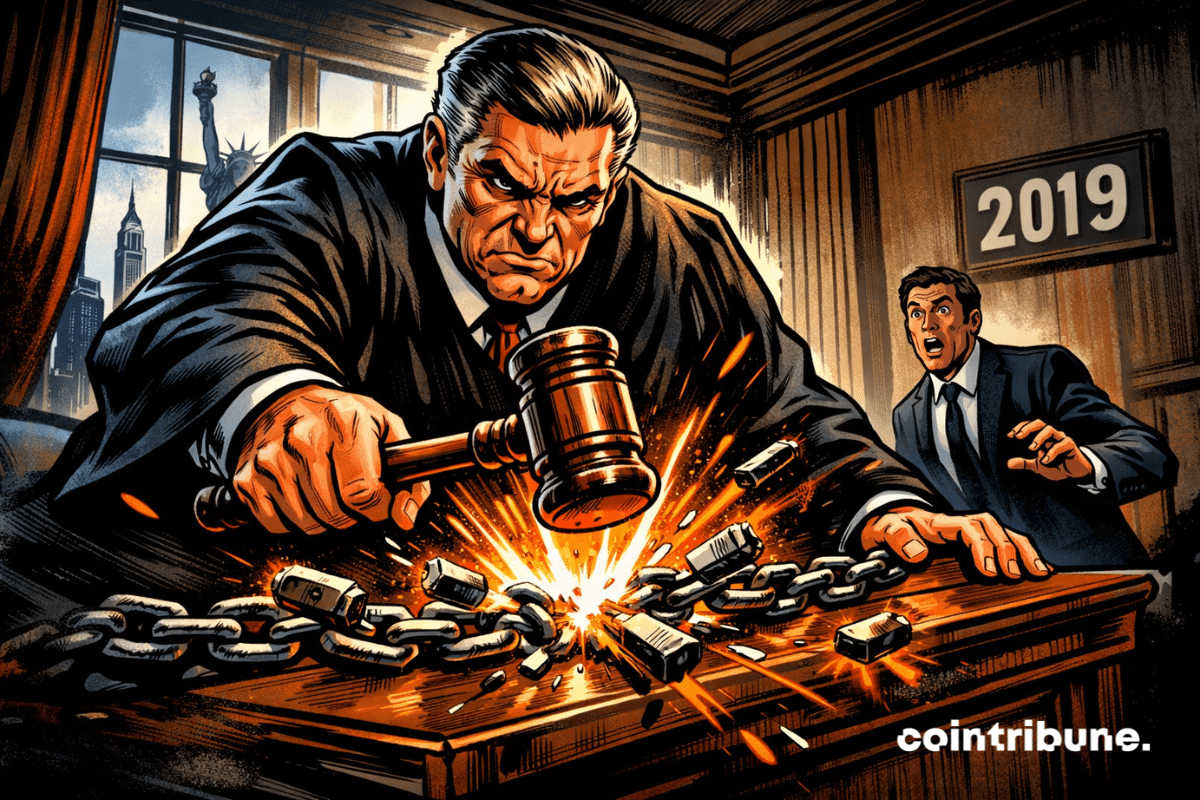
A federal judge in Manhattan blocks Binance's attempt. The crypto exchange wanted to send a dispute to private arbitration. More details below!
In brief
- New York judge denies Binance arbitration due to lack of clear notice to customers.
- Pre-February 20, 2019 crypto claims are moving forward in court, on seven tokens cited.
An arbitration clause deemed unenforceable due to lack of clear warning
On Thursday, Judge Andrew Carter Jr. (Southern District of New York) rejects Binance's request. The crypto platform wanted impose arbitration on clients. These customers are claiming losses on Binance.com. The purchases covered date from before February 20, 2019.
The heart of the reasoning lies in the instructions. The 2017 terms did not provide for arbitration or class action waiver. Binance then published conditions 2019. They add an arbitration clause. The judge finds no evidence of individual opinion. He doesn't see a clear announcement either. The fact is that simply putting it online is not enough.
The court also refuses retroactive application. According to her, clause 2019 does not cover previous facts. The judge finally notes a “class action waiver” in a title. The text seems ambiguous. In his decisionthe judge therefore considers it inapplicable in federal justice.
Seven crypto assets cited, a case relaunched after a rejection
The case, Williams v. Binance brings together five American investors. Targeting Binance and its founder Changpeng Zhao (known as CZ), they accuse the crypto platform of having sold tokens presented as unregistered securities. They also denounce the absence of warnings about significant risks.
The file cites seven tokens:
- ELF
- EOS
- FUN
- ICX
- OMG
- QSP
- TRX
The procedure has already gone back and forth. Judge Carter dismissed the suit in 2022. An appeals court then revived the case in 2024. It sent the case back to Manhattan.
The plaintiffs have agreed in November to withdraw claims arising after February 20, 2019. Binance affirms this point. The crypto exchange promises to vigorously defend the remaining grievances. The dispute therefore continues in court, over a pre-2019 scope.
In any case, this decision brings to the center a key subject for crypto: proof of consent. Exchanges could tighten notifications, version histories and traceability under legal pressure. To be continued…
Maximize your Tremplin.io experience with our 'Read to Earn' program! For every article you read, earn points and access exclusive rewards. Sign up now and start earning benefits.