
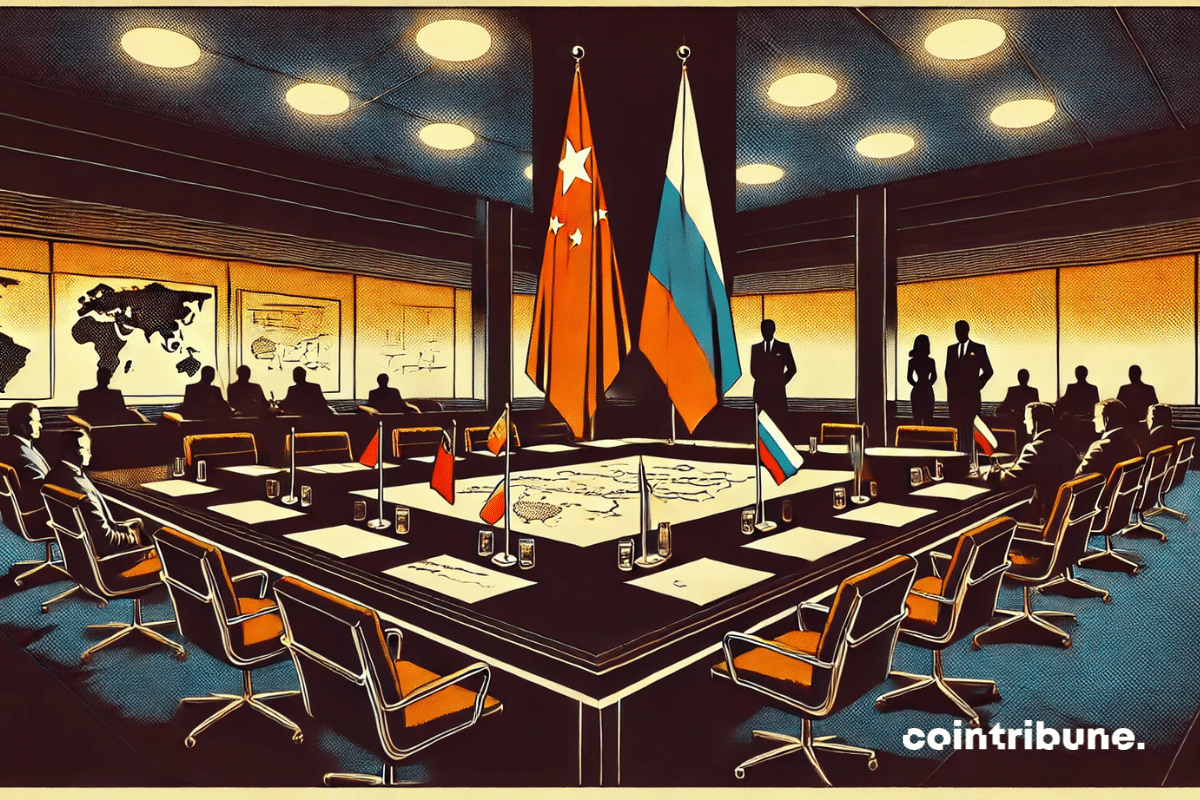
As geopolitical tensions intensify around the world, major powers are adjusting their economic strategies to confront possible crises. China, which is closely watching sanctions imposed on Russia, is developing a road map in a bid to protect its massive economy in the face of possible Western sanctions. This strategic approach takes place in a context of growing rivalries around Taiwan, a nerve center in Sino-Western relations. Thus, what might seem to be a simple economic adaptation hides a much more complex reality, which combines diplomacy, resource management and redefinition of global supply chains.
Lessons learned from Russian tactics
Beijing has formed an inter-agency group to analyze Russian experiences with Western sanctions. This work includes studying the mechanisms used by Moscow to circumvent restrictions, such as the use of “ghost fleets” to transport goods and the establishment of alternative trade circuits. Thus, these approaches, combined with a diversification of foreign currency reserves, offer China concrete avenues to prepare for scenarios of international pressure.
In this context, Chinese President Xi Jinping has placed safeguarding the $3.3 trillion in foreign reserves as a national priority. This approach is crucial because it aims to limit the effects of potential economic bottlenecksand reduce vulnerability to financial sanctions similar to those imposed on Russia. Furthermore, in-depth discussions with Russian agencies helped refine the understanding of economic resilience measures.
Challenges and prospects for Beijing
However, China faces very different challenges from those faced by Moscow. Due to its deep integration into global markets, Beijing could face far more serious consequences in the event of international sanctions. Commercial and technological interdependencies, particularly with the United States and Europe, reinforce the risks of economic isolation.
To reduce these vulnerabilities, Beijing is investing heavily in industrial self-sufficiency and seeking to diversify its trading partners. The objective is to limit dependence on external supply chains, with a view to consolidating an economy capable of absorbing external shocks. This strategy, although pragmatic, reflects a profound reassessment of its role in global trade.
The Chinese approach opens perspectives on the evolution of international relations. If these preparations strengthen the country's economic autonomy, they raise further questions about the future of Sino-Western relations and the role of economic alliances in a multipolar world. Beijing's ability to manage these balances, despite the economic crisis, could permanently redefine the rules of the global economic game.
Maximize your Tremplin.io experience with our 'Read to Earn' program! For every article you read, earn points and access exclusive rewards. Sign up now and start earning benefits.


