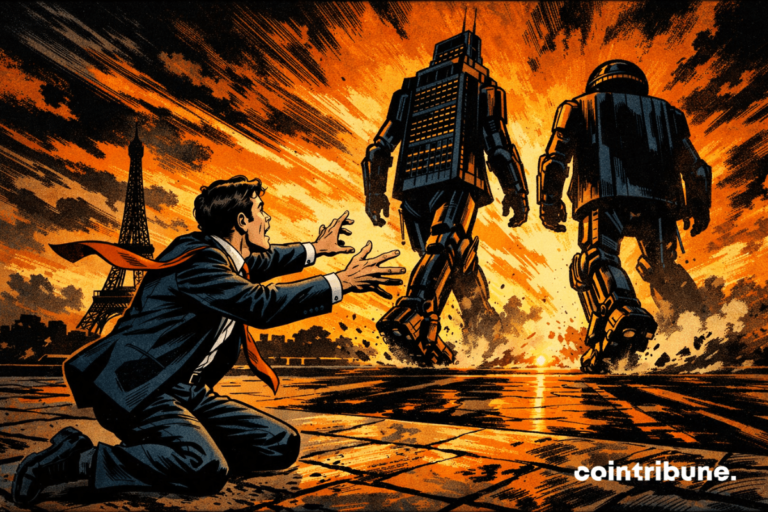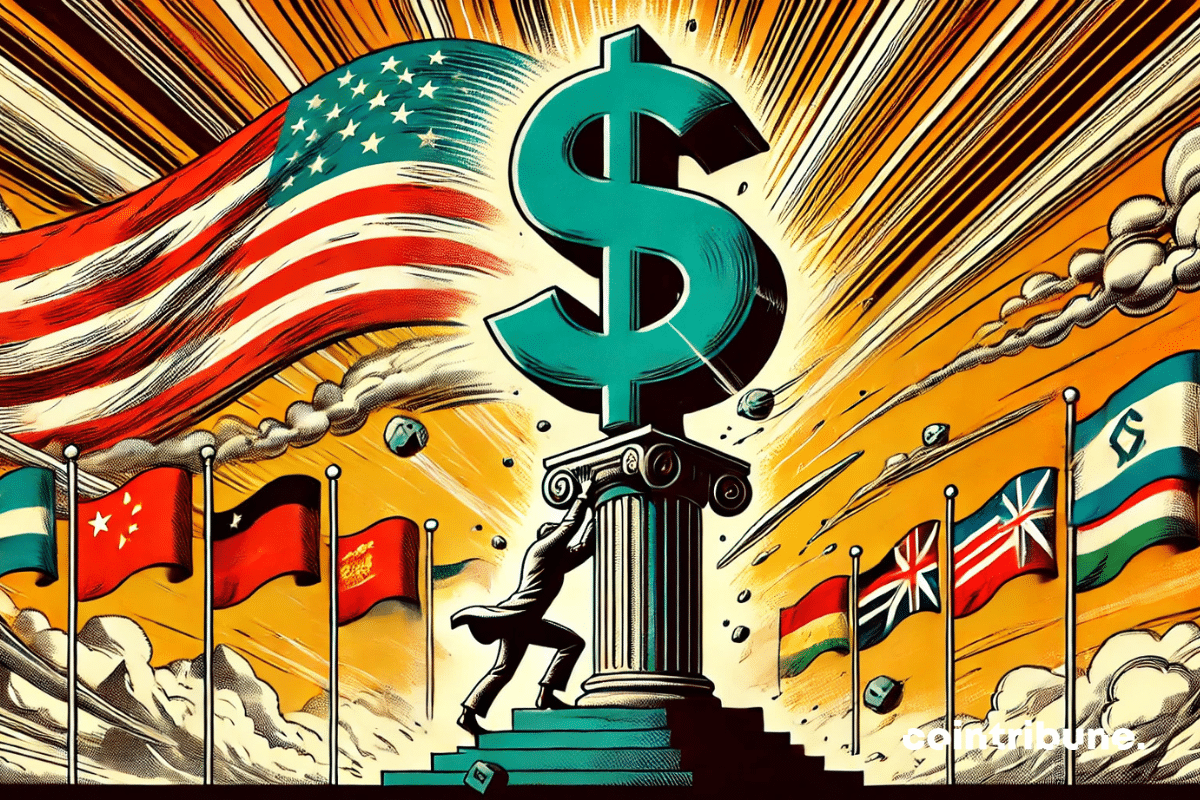
In a new verbal escalation, Donald Trump, President-elect of the United States, has shaken global markets. Indeed, the latter threatened to impose 100% customs duties on the nations of the BRICS alliance. This declaration comes in a tense economic context, where the dollar, pillar of international trade, is increasingly contested by emerging powers. Such a challenge to the monetary status quo could well reshape the global geopolitical balance, but also lead to significant economic turbulence.
Trump defends dollar supremacy
Trump used his Truth Social network to formulate a new threat. He said: “We demand that these countries commit not to create a new BRICS currency or support another currency to replace the powerful US dollar.” According to him, any attempt in this direction would result in immediate sanctions, including massive customs duties and exclusion from the American market. This position is part of an already well-known economic strategy of “America First”, which aims to protect the hegemony of the United States on the world trade stage.
The immediate implications of this statement are clear. If implemented, these trade taxes could significantly increase import costs in the United States, and lead to higher inflation and strains in global supply chains. However, observers point out that the impact could also turn against the United States, which would complicate diplomatic and commercial relations with several of its strategic partners.
The BRICS project and its challenges
The BRICS have for years sought to reduce their dependence on the dollar, seen as a tool of political and economic domination of the United States. Thus, during the recent Kazan summit, Vladimir Putin reiterated this ambition, although he tempered hopes for a common currency. He then declared that “such an initiative is not yet mature”. The project remains, for the moment, a strategic reflection rather than an operational reality.
Despite their ambitions, BRICS faces many internal challenges. Economic heterogeneity and political disputes among members complicate the coordination necessary for such a project. However, this quest illustrates a growing desire to promote a multipolar world, where the rules would no longer be dictated solely by the great Western powers. If the United States chooses to economically isolate these countries, it could accelerate this process, with unpredictable effects for the global economy.
The threat from Donald Trump constitutes a major inflection in the relationship between the United States and the BRICS. While the ambitions of the latter remain embryonic for the moment, a commercial escalation would risk destabilizing the world economy, and would reshape the balance of economic powers. The question remains: will this standoff benefit the United States in the long term or will it precipitate a transition to a new world economic order?
Maximize your Tremplin.io experience with our 'Read to Earn' program! For every article you read, earn points and access exclusive rewards. Sign up now and start earning benefits.