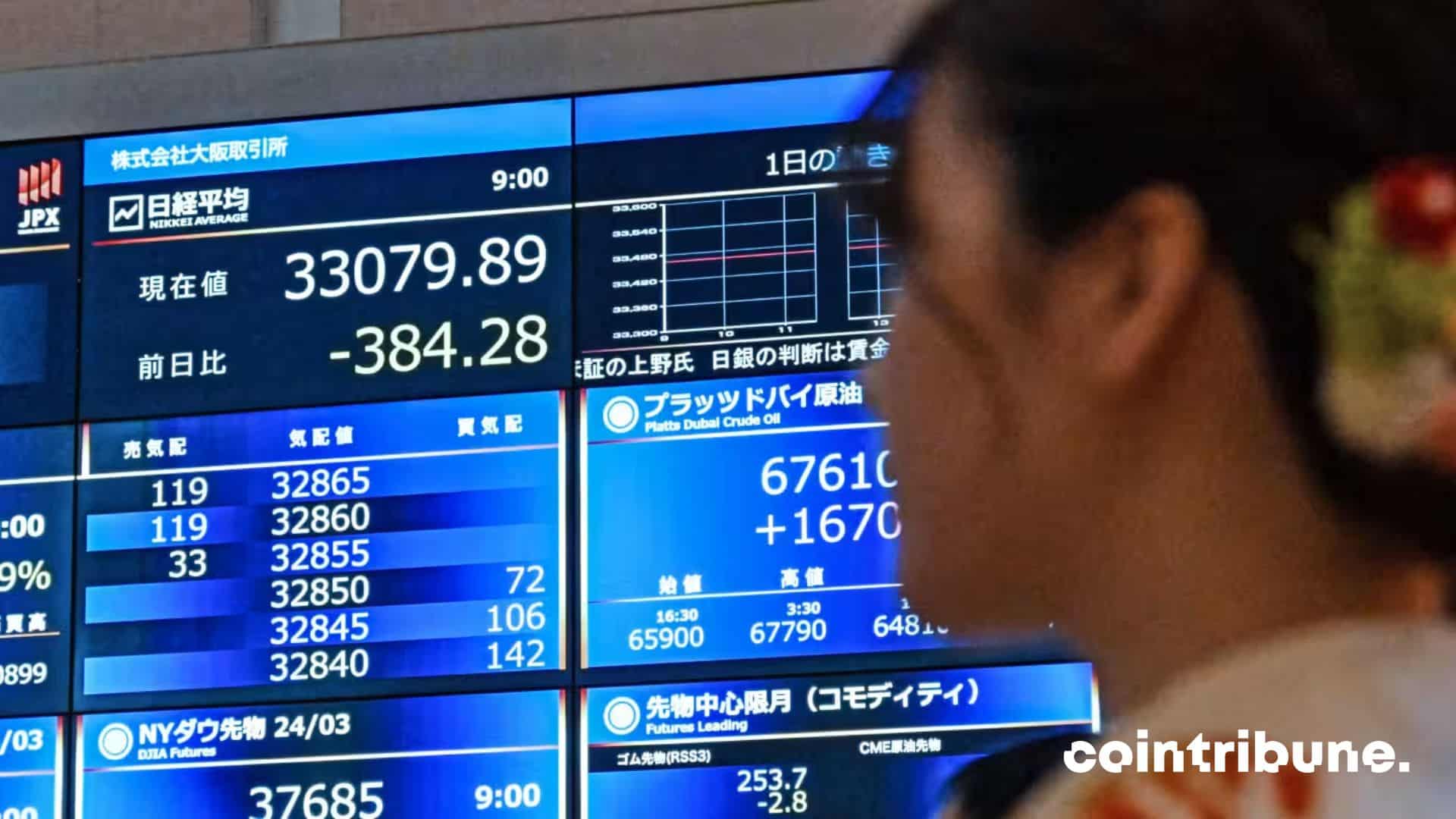
The Nikkei, the main index of the Japanese stock market, recently crossed the symbolic threshold of 36,000 points. It took more than thirty years to return to its historic highs of the late 1980s. For investors who bought at peaks, it is the hope of finally being able to sell at break-even.
Nikkei stock market, a long bear market of more than 30 years
The euphoria of the 1980s had propelled the Nikkei to very high levels, disconnected from economic fundamentals. The index has multiplied by 5 over the decade, fueled by a speculative craze and abundant cheap credit. But in 1990, the bubble burst and the index began a descent into hell. Over more than thirty years, the Nikkei has stagnated or declined, despite a few fleeting rebounds like in 2000.
This catastrophic performance is due to the bursting of the speculative bubble but also to the prolonged stagnation of the Japanese economy and finance, emptied of its substance by years of speculation. Investors are turning away from stocks, and the Nikkei stock market is sinking until it bottoms out at 7,600 points in 2009. After such a massive stock market crash, few historical investors hold on to their shares.
Hope for historic investors
However, since the low of 2009, the Nikkei has begun a slow recovery, even if the fateful threshold of 36,000 points seemed unattainable. But in 2022 and 2023, the index accelerates sharply and crosses this legendary milestone in January 2024. Several financial factors explain this spectacular rebound:
- The still very accommodating monetary policy of the Bank of Japan which massively injects liquidity into the system.
- The gradual improvement in the Japanese economic situation since the beginning of the 2010s.
- Investors’ appetite for risk in a low interest rate environment.
When inflation is taken into account, 36,000 points current stock market prices do not really compensate for the almost 40,000 points of 1989. But for the most patient investors, it is a relief after decades of waiting.
It remains to be seen whether the Nikkei will continue its momentum or whether this episode will remain a flash in the pan. After such a long bear market, it would be understandable if incumbent investors locked in their gains rather than risk further disappointments.
By freeing itself from the symbolic threshold of 36,000 points, the Nikkei of the Japanese stock market completes a downward cycle of more than thirty years, following the bursting of the speculative bubble of the 1980s. For investors who experienced this period of euphoria, the return to historic highs revives the hope of being able to break even after decades in the red.
Maximize your Tremplin.io experience with our ‘Read to Earn’ program! For every article you read, earn points and access exclusive rewards. Sign up now and start earning benefits.