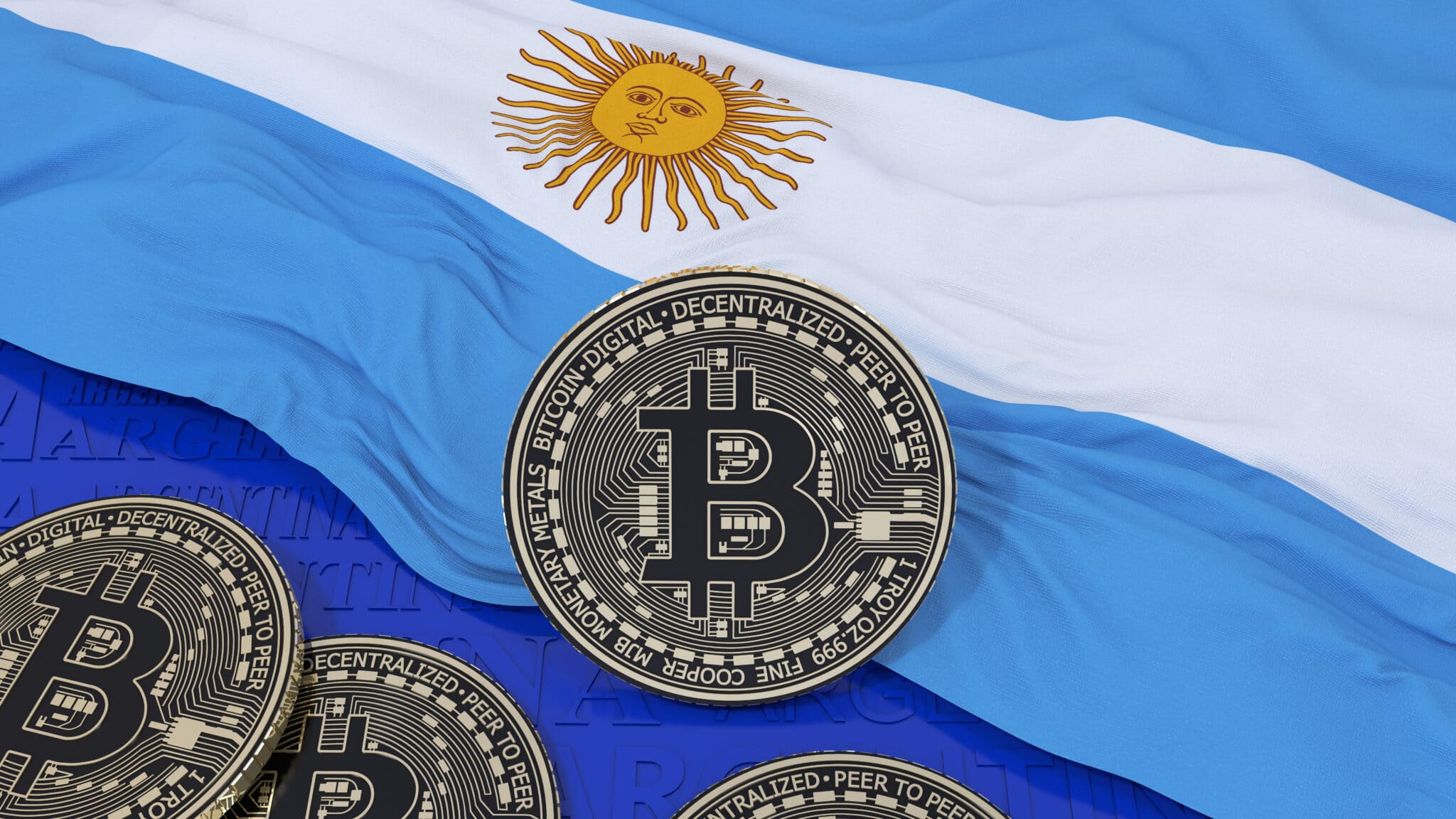
One of the big news this week remains the election of the new president of Argentina, Javier Milei. Faced with the desperation of Argentines to obtain monetary stability, one of the major projects of Mr. Milei’s political campaign was to replace the local currency (the peso) with the US dollar. But is it possible? What are the consequences? And what is the impact of dollarization on bitcoin?
What does dollarization mean?
From a technical point of view, dollarization is based on the principle of replacing the local currency with the US dollar. Therefore, the new local currency becomes the US dollar again. Why are some states attracted to the US dollar? First of all, you should know that the US dollar is the global reserve value. It is held as a reserve at more than 50%.
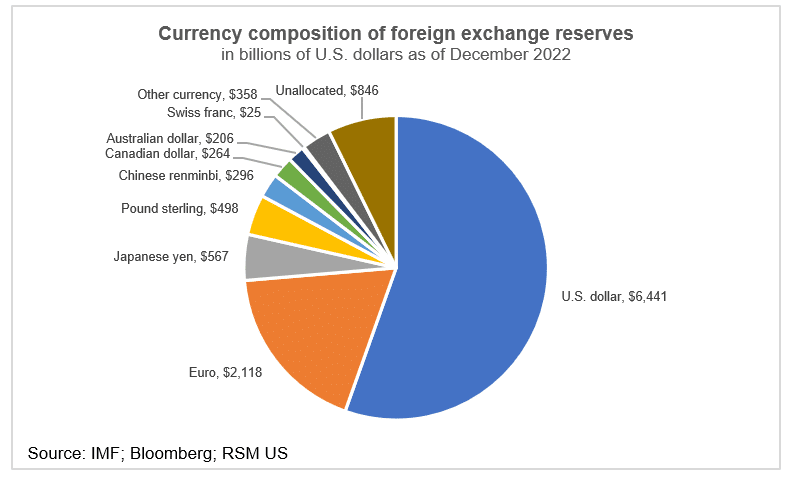
A reserve currency allows you to have financial stability, be reliable and have a reserve value. However, countries that wish to change their local currency to the US dollar (dollarization process) are generally countries that have suffered hyperinflation.
Generally, the dollarization process can take place in two forms, either partially or fully. In the first case, it involves keeping the local currency and integrating the US dollar. The second case is the complete integration of the US dollar as a local currency.
The possible consequences of dollarization
When a country decides to put an end to its local currency, this implies no longer having independence in monetary terms. As it no longer has monetary sovereignty, this will limit certain adjustments by the country regarding inflation and growth via monetary policy. For example, the country will no longer be able to print money as it wishes to stimulate economic growth.
To arrive in such a situation, it is generally necessary to have abused the central bank by printing a lot of money implying too high a level of debt. Too much liquidity injection can then give way to hyperinflation.
Hyperinflation through expansion of the money supply
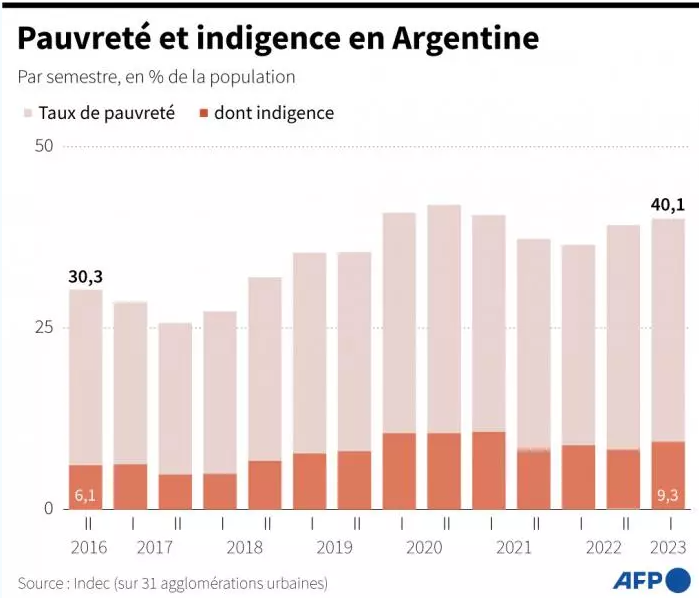
Hyperinflation is a very rapid and uncontrollable rise in prices. If we take the example of Argentina, we can see that the inflation level is more than 140%.
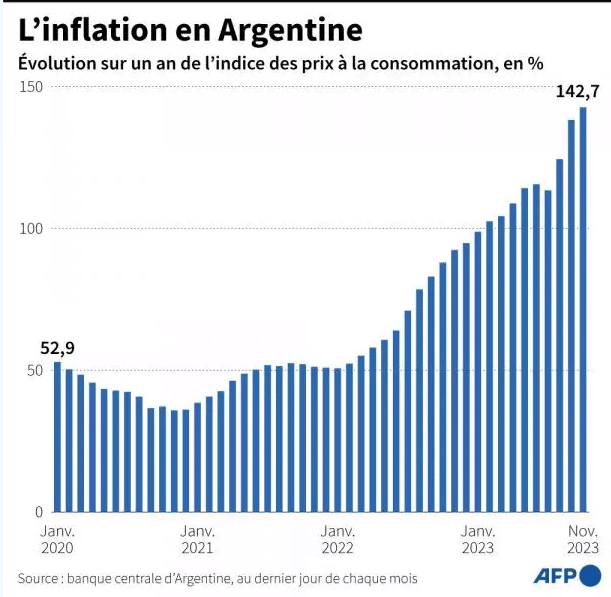
This has the direct consequence of increasing the level of poverty.
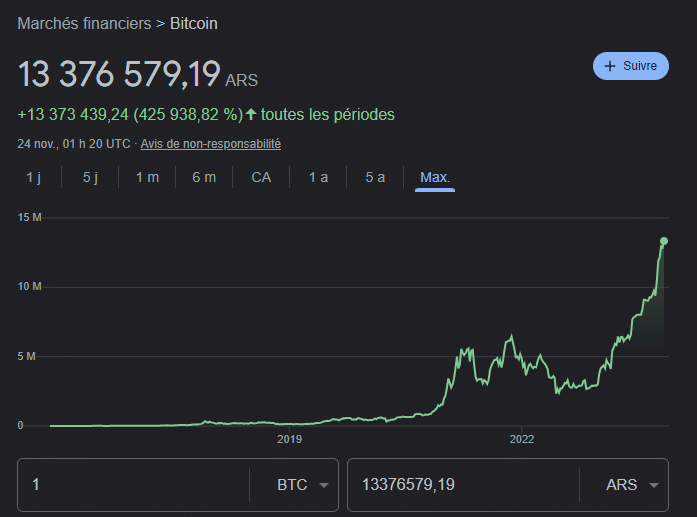
The local currency no longer has any economic value. This puts the population in a context to position itself on another, more stable external value of the country. This was also the case for bitcoin in Argentina. For example, here is the value of bitcoin in pesos. We can see that bitcoin could have been a form of protection for Argentinians:
Hyperinflation can be the result of several things. Here, we can highlight the consequence of the money supply. The greater the monetary supply via money printing (generated by central banks), the more it means that there is more money to buy the same good. As a result, there is a devaluation of the currency and the value of the asset increases. There can be several other causes that lead to hyperinflation but very often, the causes are often linked to a level of debt as well.
The advantages and disadvantages of dollarization
When a country enters a process of dollarization, it has problems that become difficult to resolve, such as inflation, for example. The advantages can vary, we can talk here about financial and economic stability, slowing inflation, stimulating foreign investments, increasing credibility towards the currency. We also have a list of disadvantages like depending on the decisions of the US central bank, losing monetary sovereignty.
Countries that have gone through dollarization in Latin America
There are three countries that followed the same dollarization process before Argentina, such as El Salvador, Ecuador and Panama. If we tour these three countries, we can make some observations. Regarding Panama (pioneer of dollarization), it has been a success from an economic point of view since it is one of the rare countries to have economic stability.
Ecuador wanted to dollarize his country to curb galloping inflation in the early 2000s to around 100%.
El Salvador followed Ecuador in 2001 in its dollarization process. This allowed El Salvador to move closer to the United States and also attract foreign investors. Today, from an economic point of view, El Salvador is stable even if the debt is significant. On the other hand, it also integrated bitcoin as a local currency in 2021. Argentina is expected to follow the same process subsequently since this was in the new president’s program.
If we look at the effects of dollarization on the 3 countries, we can agree that this has become the heart of the political programs. A dollarization process would make it possible to slow down the level of inflation, but also to increase the credibility that Argentines can give to the local currency. Dollarizing will also allow certain sectors to become quite competitive since the fear linked to the devaluation of the local currency will be less significant. Consequently, companies will be able to focus on productive competitiveness.
The election of the new president, good news for Argentina?
Obviously, there was a lot of euphoria and excitement when the new president supposedly pro bitcoin was elected. But this name is a big word because there has been no real trace of integrating bitcoin as legal tender in Argentina yet. The new president’s program focused more specifically on replacing the local currency with the US dollar. That said, out of context, the new president had already clarified his positive and laudatory opinion about bitcoin. Therefore, it could follow in the footsteps of El Salvador and participate in democratization as well as the adoption of bitcoin. However, one should not connect the character’s sometimes limited ideas to the image of bitcoin as well. This is particularly the case for one of the ideas in his program to put an end to abortion for women.
Dollarization, good news for bitcoin?
Bitcoin should remain an external alternative to all currencies, whether the dollar or another fiat currency. I don’t think dollarizing anything should have a negative impact on bitcoin. It is true that dollarizing remains the priority before authorizing bitcoin as legal tender, but the new Argentine president seems open to the idea of bitcoin and he could take inspiration from El Salvador. Until then, Argentinians had already shown interest in the world of cryptocurrency because the sector has become an escape from the local currency. Moreover, Argentina remains one of the largest users in Latin America in terms of crypto:
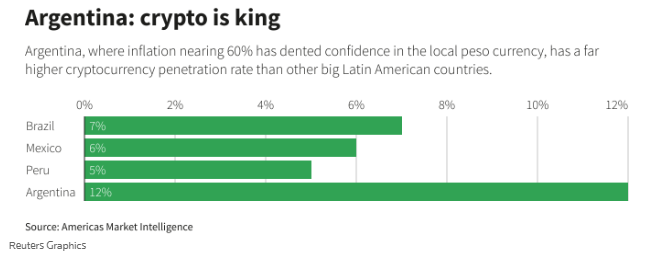
Therefore, those who have been able to protect themselves against hyperinflation have already had a positive experience with bitcoin, which is always likely to strengthen public opinion about bitcoin. The simple fact that the population voted to change the monetary system is also a sign that they are ready to face these changes. Therefore, there is little chance that dollarization will have a negative impact on the evolution of bitcoin. We must not forget that the US dollar remains under the control of a central bank and that it can print unlimitedly while bitcoin has a limited supply.
CONCLUSION
Dollarization may be a final solution to achieve a certain financial stability but he agrees that the Argentine people could lose their monetary sovereignty. Bitcoin has captured the hearts of many Argentines during this context of hyperinflation by having guaranteed a store of value. One of the major elements surrounding a currency is the trust and credibility that we bring to it. In this context, bitcoin was able to prove itself.
Maximize your Tremplin.io experience with our ‘Read to Earn’ program! For every article you read, earn points and access exclusive rewards. Sign up now and start earning benefits.