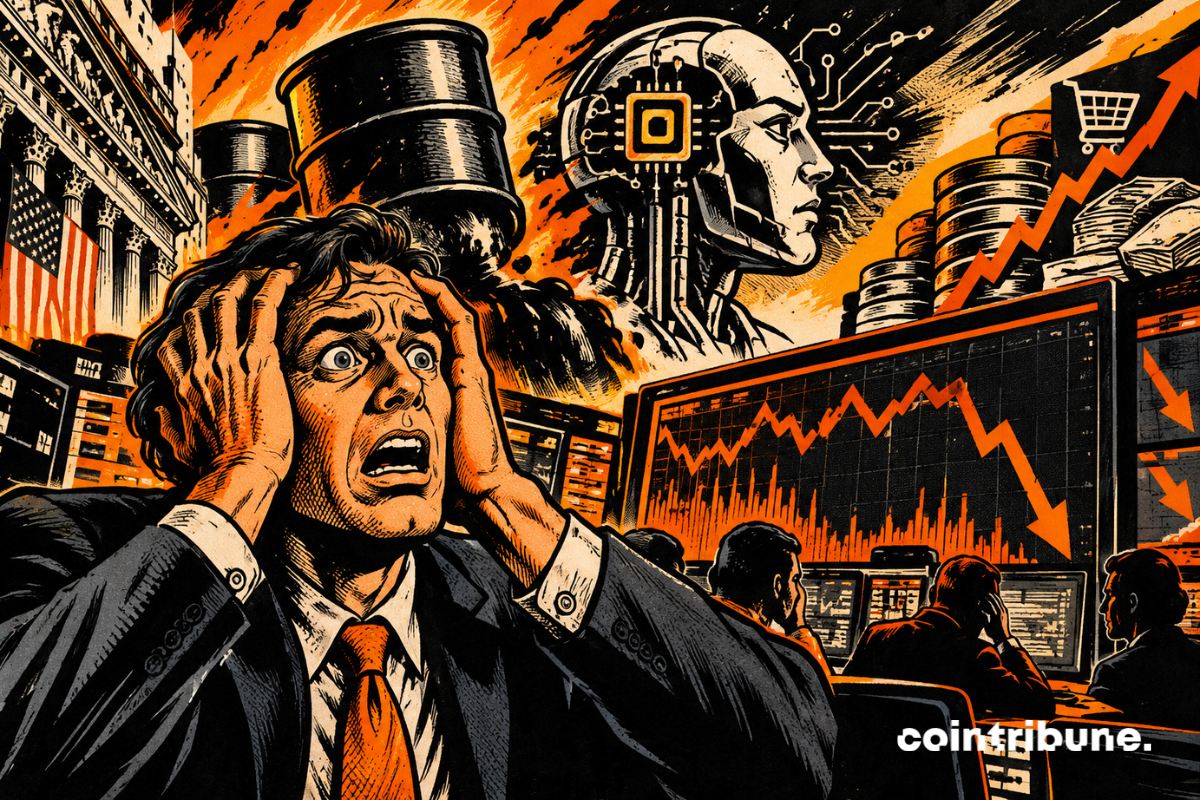
October 19, 2026 falls on a Monday, just like in 1987, when Wall Street had one of the worst days in its history. Between expensive oil, doubts about artificial intelligence and persistent inflation, some investors fear a new collapse. However, markets today have protections that did not exist then.
In brief
- On October 19, 1987, the Dow Jones fell 22.6% in a single session, a record still unmatched.
- On Friday, October 16, 2026, the S&P 500 closed at 7,659.44 points, while the Nasdaq fell approximately 2.2%.
- Since the 1987 crash, Wall Street has implemented trading suspension mechanisms to limit panic movements.
1987-2026, why this date worries investors
The coincidence of the calendar fuels speculation. Especially since investors are turning to safe havens in a climate of uncertainty.
THE October 19, 1987the Dow Jones had lost 22.6% in one day, erasing around $500 billion in US market capitalization. At the time, automated trading strategies and portfolio insurance mechanisms had amplified sales.
Thirty-nine years later, concerns resurface. On Friday, October 16, the S&P 500 lost 1.09%, while the Nasdaq lost around 2.2%. On social networks, some are already announcing a “Black Monday”. However, an anniversary date is not enough to predict a crash.
Oil, AI and inflation, three sources of tension
The economic context doesn’t help anything. Brent came close to $110 per barrel, while WTI exceeded $100, amid tensions around the Strait of Hormuz. This surge in energy complicates the fight against inflation, which reached 3.7% year-on-year in September.
Furthermore, the Federal Reserve raised rates in September, raising its target range between 3.75% and 4%. At the same time, the VIX volatility index has risen to around 20.
Another source of concern is artificial intelligence. CoreWeave fell nearly 12% on Friday, reigniting doubts about funding the infrastructure needed for AI. Some of the company’s debt securities even show yields close to 15%.
For its part, bitcoin moved between $80,400 and $81,000 over the weekend, despite the turbulence in the technology sector.
Why a new Black Monday cannot be declared
Since 1987, Wall Street has strengthened its defenses. Today, a 7% or 13% decline in the S&P 500 triggers a temporary trading suspension. From 20%, the markets close for the rest of the session.
These safeguards do not eliminate risk, but they can curb panic selling. Current tensions nevertheless remain real: expensive financing, expensive energy and valuations linked to AI.
Ultimately, the calendar does not dictate the direction of the markets. The real question concerns the financial strength of the companies driving the rise of artificial intelligence. If their promises do not materialize, investors could pay the price.
Maximize your Tremplin.io experience with our ‘Read to Earn’ program! For every article you read, earn points and access exclusive rewards. Sign up now and start earning benefits.