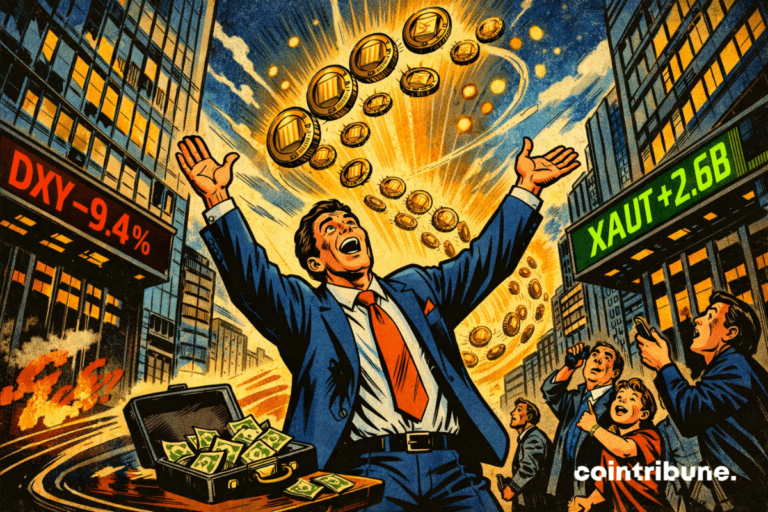
The shadow of an economic storm hovers, tinged with bright red and unpredictable pragmatism. The “Trumpcession” – this neologism which sounds like a warning – sums up the growing concern in the face of a trade war with unforeseen consequences. Between revival and restriction, the Fed and the Bank of England remain stuck between rates to be adjusted and threatening inflation. How to avoid the domino effect? The answer requires more than an economy manual: a tactical audacity.

Trumpcession: When protectionism becomes an economic boomerang
The promises of Donald Trump's aggressive customs tariffs are not a simple rhetoric. They act as a catalyst, transforming fears into tangible realities.
In February 2025, the Conference Board purchase intentions index plunged, revealing unprecedented distrust for four years. American consumers, a historic growth engine, slow down their expenses. An alarming signal: when confidence vacillates, the recession is watching.
However, the most pernicious effect could come from import costs. High prices on foreign products would increase prices, feeding already tenacious inflation.
Nigel Green, Devere, sums up the dilemma: “Inflationist pressures and economic slowdown creates a vice. The Fed, accustomed to juggle the cycles, finds itself faced with a fragile balance. Lower the rates to stimulate borrowing? Risk a pricing? The choice is Cornelian.
In parallel, the Trump administration seems indifferent to stock market shocks. Worse, a drop in production is sometimes perceived as a necessary evil to “rebalance” exchanges.
A dangerous logic, according to experts: prolonged trade war could suffocate whole sectors, from the manufacture to logistics. The Fed, by announcing its decision on the rates on Wednesday, will have to decide between emergency and prudence.
Banque of England and Fed: A Pressure Balancingist game
Threadneedle Street and the Fed share a common scenario, but not the same tools. At the end of 2024, the Bank of England anticipated controlled inflation and rates under 4 % in 2025.
Today, the British master rate stagnates at 4.5 %, slightly exceeding that of the Fed (4.25 % – 4.5 %). A minimal, but revealing gap: the two institutions must deal with weakened labor markets and employers on the defensive.
In the United Kingdom, the construction and manufacture sectors see unemployment climbing, while layoffs are increasing. A similar situation across the Atlantic, where vacancies are becoming scarce.
The difference? The impact of Trump prices on the American economy is more direct, exposing the Fed to a risk of overheating. The Bank of England fears a training effect: an increase in British import costs if the EU replies to American measures.
However, a glow persists: borrowing. Lower rates could relieve households and businesses, but at what price? “Take the lead, not follow,” insists Green. A proactive approach would involve gradual declines now, rather than drastic measures later. However, taking a break would assess the real impact of the prices. On Thursday, the Bank of England will return its verdict, under the anxious gaze of investors. Even Elon Musk could be a victim, with Tesla at stake.
Maximize your Cointribne experience with our 'Read to Earn' program! For each article you read, earn points and access exclusive rewards. Sign up now and start accumulating advantages.