
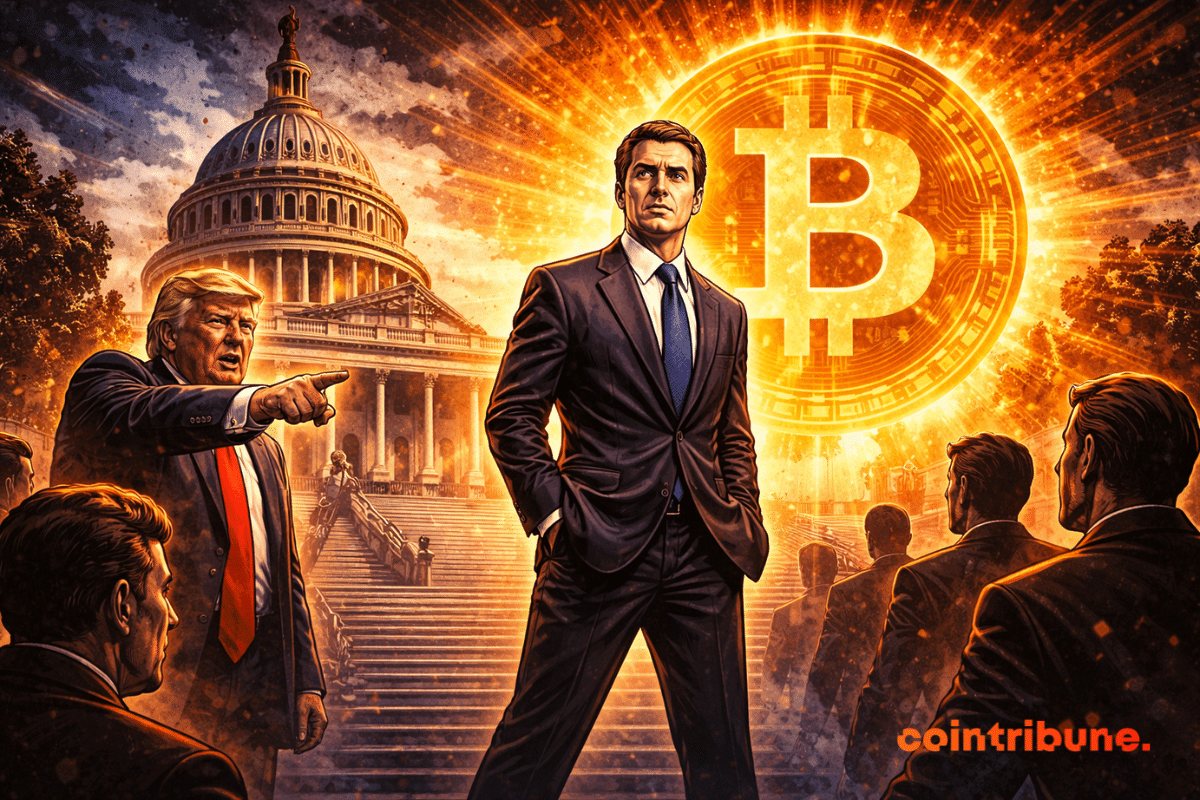
Since his return to business, Donald Trump has applied his method wherever he goes. In the corridors of American finance, his “disengagement” has made serious waves. Gary Gensler, the man who tensed up the crypto-sphere, was the first to leave. Other figures not in favor of digital assets followed suit. That left Jerome Powell, the anti-rate cut, the one who resisted again and again. Today, Trump sends his successor to the Senate. Kevin Warsh, an outspoken pro-Bitcoin, will have to pass the legislative test of fire.
In brief
- The Senate Banking Committee must consider the nomination of Kevin Warsh before any vote in plenary session.
- Republican Senator Thom Tillis is blocking the process until the DOJ investigation into Powell is resolved.
- Elizabeth Warren leads the Democratic opposition in calling Warsh “Donald Trump's puppet at the Fed.”
- Chuck Schumer demands that Warsh solemnly swear to preserve the total independence of the monetary institution.
Trump's bet: Kevin Warsh, first pro-Bitcoin at the head of the Fed
First, the gesture of replacing number 1 of the Federal Reserve is eminently political. Trump officially forwarded the nomination by Kevin Warsh in the Senate on March 4, 2026. Four years as president of the Fed, fourteen years as governor. The objective is clearly stated: to replace Jerome Powell on May 15, the deadline for his mandate.
Then, Warsh's profile is decidedly out of the ordinary for central bankers. A lawyer by training, he served at the Fed from 2006 to 2011 under Bush then Obama. He went through the subprime crisis alongside Ben Bernanke without ever losing his footing. Now a researcher at Stanford, he frequents conservative circles without making waves in the media.
But his statements on bitcoin are attracting the attention of crypto investors around the world. In 2021, on CNBC, he said a phrase that became famous in the industry: “ If you're under forty, bitcoin is your new gold “.
In 2025, during an interview at the Hoover Institution, he drove the point home with quiet and determined confidence:
Bitcoin doesn't make me nervous. I view it as an important asset that can help inform policymakers when they are doing things right or wrong.
Never has a central banker spoken like this about the queen of cryptocurrencies.
The Senate, a battleground between Republicans and Democrats
However, the Warsh's path to the Fed resembles an obstacle course strewn with pitfalls. The Senate Banking Committee must first hear him at length, then vote on his confirmation before the assembly. But the obstacles are piling up in front of him at a worrying speed.
On the Democratic side, the hostility is frontal and without any concession. Elizabeth Warren, Washington's most feared senator, once called him “Donald Trump's puppet at the Fed.”
Chuck Schumer, minority leader, demands that he solemnly swear to preserve the independence of the monetary institution. Even more surprising, a Republican is putting obstacles in his way. North Carolina's Thom Tillis threatens to block any nomination until DOJ's investigation into Powell is closed. This investigation concerns renovations of the Fed building, for 2.5 billion dollars.
Without Tillis' precious vote, the Republican majority no longer carries much weight. The commission meeting promises to be particularly explosive.
Rates, inflation and geopolitics: the puzzle that awaits the next boss of the Fed
Beyond political quarrels, Warsh will have to face a complex and changing economic reality. He wants to lower rates, as Trump has been insistently calling for for months. Its main argument is based on artificial intelligence and its promises. According to him, productivity gains linked to AI will reduce costs without reviving inflation.
But Fed economists do not share this overflowing and risky optimism. They consider AI too slow to produce concrete effects on the real economy. Furthermore, the conflict in Iran, five days old, is causing oil prices to soar. A real bomb for inflation, already recalcitrant and closely monitored.
The markets are no longer betting on a rate cut before July at the earliest. Warsh will also have to manage Powell's cumbersome legacy: $6.5 trillion in assets on the balance sheet. That's $4 trillion more than in 2011, when he left the Fed. He who hates quantitative easing could sell assets.
But lowering rates while selling means pulling left and right simultaneously. No one has ever tested this hazardous combination in monetary history.
Key figures from the game-changing appointment
- May 15, 2026: deadline for the end of Jerome Powell's mandate as head of the Fed;
- 6,500 billion: assets held by the Fed, or 4,000 billion more than in 2011;
- $72,425: current price of BTC, wait-and-see in the face of political uncertainties;
- 2.5 billion: amount of renovations to the Fed building at the heart of the DOJ investigation.
To optimize the current situation, Trump's political promises are no longer enough. A former advisor to the president believes that we must now take concrete action on the economy. The appointment of Warsh is only a first step, certainly important and symbolic. But without tangible results, market enthusiasm risks fading away.
Maximize your Tremplin.io experience with our 'Read to Earn' program! For every article you read, earn points and access exclusive rewards. Sign up now and start earning benefits.


