Since the creation of bitcoin during the 2008 financial crisis, there have been several debates between those in favor and those against. As for the majority of novelties, there is always a time of adoption which often passes through a phase of rejection of the majority at the beginning of the phase. However, bitcoin’s rise in popularity over the past decade has ended up attracting institutions. Now we want to understand the effects of institutionalization on bitcoin.
What is institutionalization in general?
In theory, institutionalization is the process of adopting something within an organization or at the social level. In this case, more specifically for bitcoin, it is both the adoption of a technology but also a financial asset by large financial institutions. Currently, there is the option to buy bitcoin from a cryptocurrency brokerage platform. But beyond that, there are now other products that will depend on the variation of bitcoin. For example, futures, ETFs, Trusts, options… When we talk about institutions, this concerns organizations that have large financial capacities to introduce and market products. This concerns banks, hedge funds, pension funds…
The institutionalization of bitcoin has mainly taken place in North America. For example, the first bitcoin ETF was released in Canada. ETFs have been very popular with investors since the early 2000s. It has become one of the most widely used products in the investment universe. Following the release of the ETF in Canada, the US subsequently followed suit by also offering a bitcoin ETF.
In terms of technology, even if the principle of blockchain has existed for longer than the creation of bitcoin, it is mainly the latter that has popularized it. And given the emergence of this technology in recent years, it has been a source of inspiration for central banks to develop CBDCs (centralized digital currency).
The positive effects of the institutionalization of bitcoin
The fact that large institutions are increasingly involved in the integration of bitcoin within society, this gives more credibility and confidence in bitcoin. They open up more opportunities to access bitcoin through different types of products and this paves the way for bringing more money into bitcoin. Even if we have not yet reached full adoption. We can still point to some progress. Here is the position of bitcoin adoption currently. We are still at the beginning of the curve.
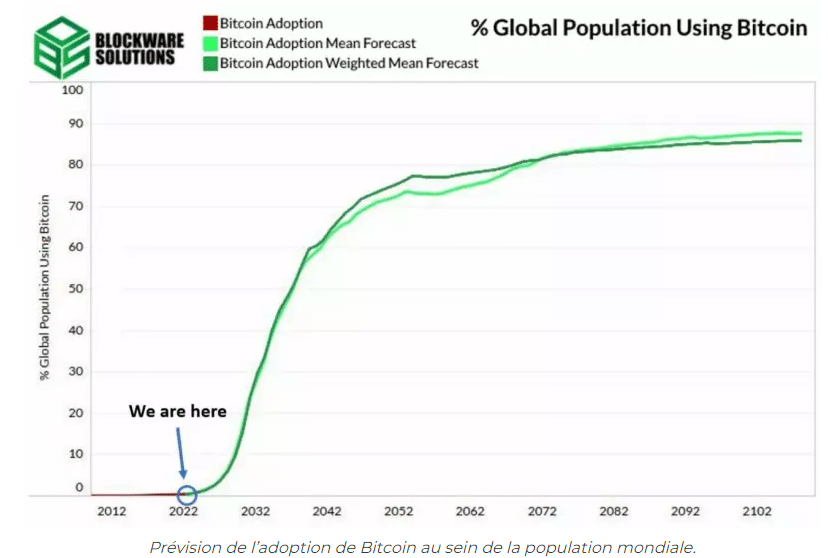
As bitcoin was created in 2008, we can also add that there are generations who grew up with bitcoin and who will become potential future investors when they come of age. Therefore, the rise of its popularity will continue to grow with the next generation.
In another register, the principle of institutionalizing bitcoin is also to increase the liquidity of the asset. The more capitalized bitcoin is, the less volatile it becomes over time.
The other positive point of the institutionalization of bitcoin is the democratization of payment in bitcoin. More and more companies are making payment in bitcoin available. This was particularly the case with PayPal. Just being able to transact bitcoin directly is a huge step forward. Starting from there, we can even go further, it is to make it an official currency. This is the case of El Salvador for example.
The negatives of the institutionalization of bitcoin
First, there is also a monetary interest in making products related to bitcoin available or serving as a trading desk (for futures, for example). As demand grows, institutions must align to keep making money. How can they make money? Here is an example :
When ETFs are made available, there are management fees associated with the ETF that the investor must pay. In the case of futures, there is the spread between the bid price and the demand price (bid and ask). As the popularity of cryptocurrency grows, institutional interest remains inevitable in making money through this new asset class. It’s the same practice as making money with other types of assets.
However, there is a big downside to this. The more bitcoin is institutionalized, the more it is possible to manipulate it via derivative products such as options, futures, etc. There may also be several trade-offs between the different products.
Bitcoin was created with the aim of breaking away from all regulations. Consequently, the more the ways of institutionalizing multiply, the further it moves away from one of its basic uses, which is decentralization. So yes, even if the principle of institutionalizing makes it possible to popularize the asset even more, bitcoin can move away from one of its basic principles which is decentralization.
Institutions help price stability
We know that individuals have fairly high levels of leverage available via trading platforms to speculate on cryptocurrency. This simple fact makes the crypto market even more volatile, especially when going through liquidations since there is less cash to redeem shares. The fact of having more and more institutions which are the biggest bearers in parallel will make it possible to deal with this. Therefore, this is going to have a direct impact on the volatility of bitcoin over time.
The impact of the institutionalization of bitcoin
It has been noted that the more bitcoin is institutionalized and the more it is popularized, the more it is correlated with American stock market indices such as the S&P500. We can see that its correlation becomes more and more important on the graph below:

To explain this, it must be understood that the factors that influence the variation of bitcoin are similar to those studied for indices. Here are a few :
- The US dollar
- Growth accelerations
- Monetary policy of central banks (liquidity)
- Inflation
- The halving (specific to bitcoin)
This is an aspect which can be interesting but which can also become problematic in the management of diversified portfolios. If the correlation is positive between the two asset classes, it also means that if one goes up, the other shows and vice versa. In general, you will often hear about the two major asset classes like stocks and bonds. We often talk about a 60/40 portfolio, i.e. 60% stocks and 40% bonds. The basic principle and forward returns versus risk are interesting:
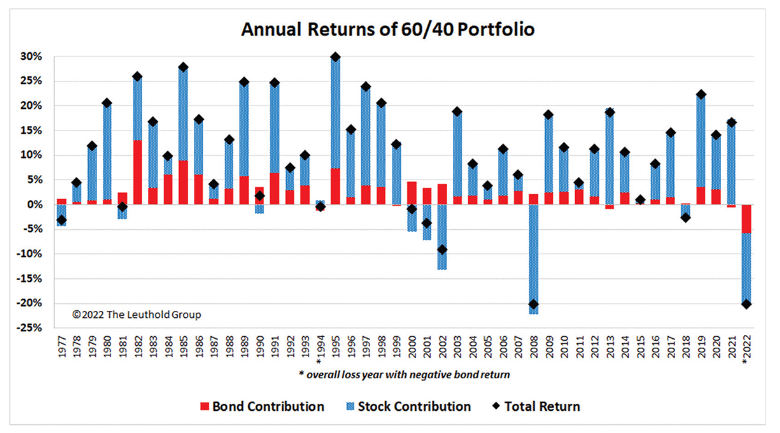
However, if you want a diversified portfolio, you have to take into account that bitcoin has a significant positive correlation with the major indices. As a result, bitcoin allocation will remain light in large institutional portfolios. For what ? It remains an asset with a high beta (measure of volatility) for now and it is also positively correlated with equity indices. This is why the allowance should remain light. That said, the simple fact that the big carriers are adding an allocation for this asset class is a big step. The more bitcoin is capitalized, the less volatile it will be.
Bitcoin, a hedge that is both anti-institutional?
Initially, we know that bitcoin was created in order to break away from institutional regulations. For example, this is the case to deal with the expansionary monetary policy of central banks. The more they inject liquidity, the more it makes the US dollar lose value (unlimited supply) and makes bitcoin gain, which has a limited supply in the long term (21 million). Therefore, bitcoin is aided by central bank actions and it can be considered an anti-institutional hedge. This was the case with the problems within the banks recently (March 2023). We have seen the positive reaction of bitcoin to the bankruptcies of regional banks. The immediate intervention of central banks was very positive for bitcoin. And at the same time, regional banks have struggled to recover.
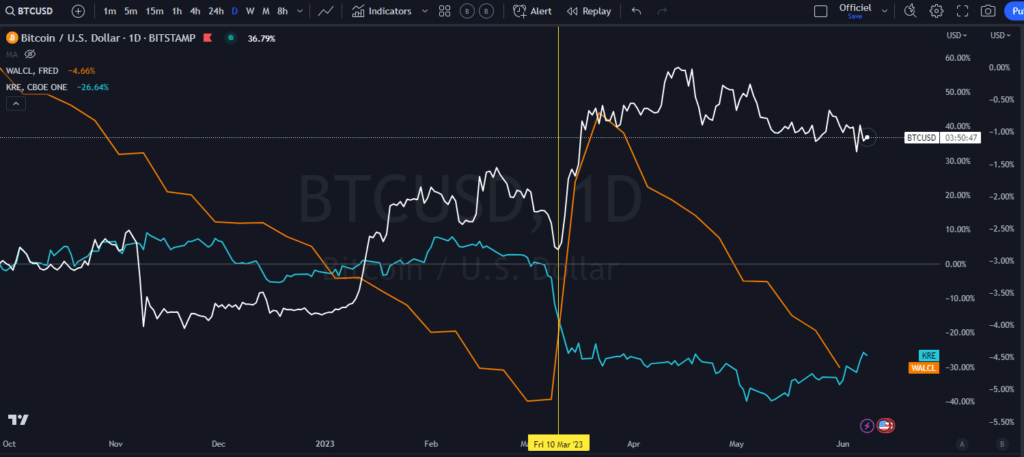
This is also why it is increasingly considered virtual gold. Like gold, its supply is limited, and bitcoin can be used as a currency on a few platforms.
Conclusion
In general, there are really positive points to the institutionalization of bitcoin, particularly in terms of popularity, credibility and liquidity. We are still far from total adoption, which therefore still leaves a lot of potential for the evolution of bitcoin. Even if institutionalization can take it away from its basic use (being decentralized via derivative products), it still retains several advantages specific to it, in particular its limited supply or the halving process which reduces production per mined block every 4 years old.
Receive a digest of news in the world of cryptocurrencies by subscribing to our new service of daily and weekly so you don’t miss any of the essential Tremplin.io!