

Stablecoins, these cryptos indexed to stable assets, are experiencing meteoric growth. With a market estimated at $300 billion, their massive adoption worries the European Central Bank (ECB). Why do these digital assets represent a danger for Europe and the Euro?

In brief
- The ECB is concerned about the rise of stablecoins which could weaken the EURO and reduce the ability of banks to finance the European economy.
- Regulations such as MiCAR in Europe and the Genius Act in the United States aim to regulate these cryptos to preserve financial stability.
- The developing digital euro project could offer a secure alternative to private stablecoins, while protecting bank deposits.
Europe: the ECB considers stablecoins a threat to the Euro
Stablecoins, often backed by the US dollar, could weaken the position of the Euro on the markets. According to the ECB, their growing adoption threatens European monetary sovereignty, as more than 95% of these assets are denominated in dollars. As a result, a massive migration of bank deposits to stablecoins could reduce the ability of banks to finance the real economy.
The numbers speak for themselves. Indeed, bank deposits in the euro zone amount to 17,000 billion euros. If a significant portion of these funds were converted to stablecoins, banks could lose a major source of funding. With an estimate of $300 billion, the ECB fears that stablecoins, if dominated by non-euro denominated instruments, will further weaken the position of the single currency.
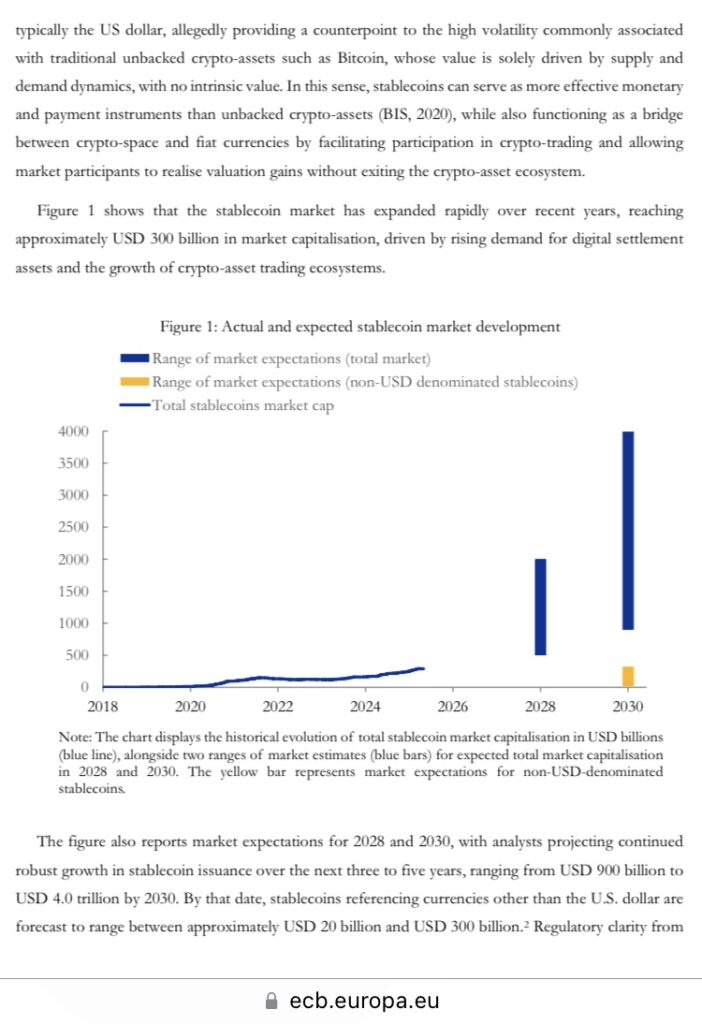
Finally, stablecoins offer fast and inexpensive transactions, attracting more and more users. However, their dependence on the dollar poses a major challenge for European monetary policy, which could lose effectiveness in the face of a foreign digital currency, according to the recent ECB document.
Crypto: what regulations to regulate stablecoins and protect the Euro?
Face the risks posed by stablecoinsEurope designed the MiCAR regulation, which imposes strict limits on assets denominated in electronic money. This regulatory framework aims to preserve financial stability while enabling innovation. In the United States, the Genius Act proposes a similar approach, requiring stablecoins to be backed by liquid assets, such as the dollar.
In addition, the ECB is working on a digital euro project, a dematerialized version of the European currency. This project, still in development, could offer a secure alternative to private stablecoins like Tether. With holding ceilings per person, the digital euro aims to protect bank deposits and strengthen the monetary sovereignty of the Euro zone.
Stablecoins raise major questions about the future of monetary sovereignty in Europe. Between financial innovation and systemic risks, their growth forces regulators to act. The ECB, with the digital Euro, will have to find a balance between supervision and freedom to preserve the stability of the Euro. In your opinion, are stablecoins a revolution or a threat to the European economy?
Maximize your Tremplin.io experience with our 'Read to Earn' program! For every article you read, earn points and access exclusive rewards. Sign up now and start earning benefits.


