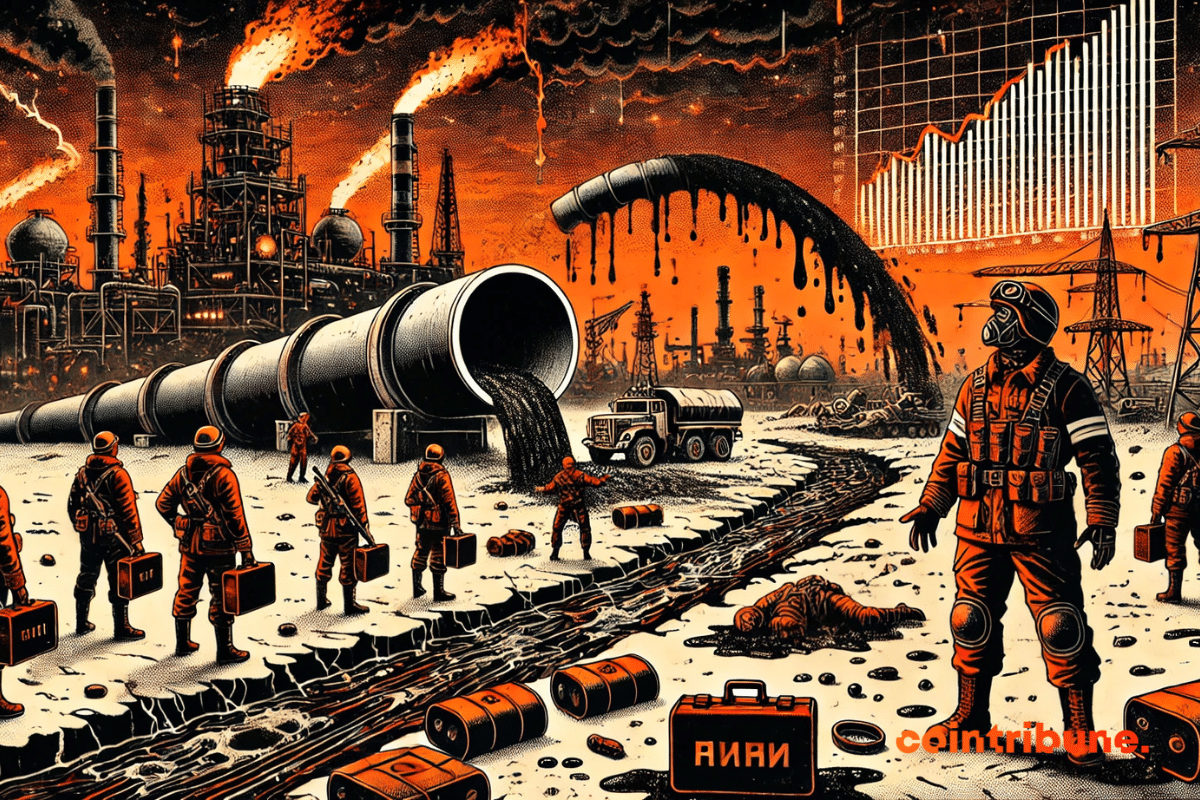
Russia is at a major economic turning point, overwhelmed by rising increased military spending and an increasing energy crisis. While financial resources are scarce, the cost of the conflict in Ukraine becomes unbearable. In 2025, the increase in military spending and the fall in energy income put the country in the face of an unprecedented economic challenge.
An explosion of military expenditure and a rapidly growing deficit
Since the start of the conflict in 2022, Russia has concentrated its economic resources on its military spending, and has thus fundamentally modified the structure of its economy. The absolute priority given to military expenses has had direct consequences on state finances. Here are the key elements that summarize this reversal:
- An explosion in military spending: in three years, defense expenses have jumped by 90 %. They went from 3.58 % of GDP in 2021 to 6.68 % in 2024.
- Insufficient oil revenues: in 2025, for the first time, the revenues coming from oil and gas (10,900 billion rubles) will no longer be enough to finance military spending (13,600 billion rubles), which thus represents a historic imbalance in the state budget.
- The impact of international sanctions: economic sanctions and the reduction of foreign investments in the Russian energy sector have reduced the country's ability to take full advantage of its natural resources.
- Hidden debt: to hide this financial gap, Russia has accumulated a hidden debt, estimated between 207 and 249 billion dollars since the summer of 2022, by manipulating certain economic indicators to maintain the resilient image of its economy.
This financial imbalance illustrates the growing impossibility of maintaining a long war, and to seek to maintain economic stability in the face of external pressures.
The effect of sanctions and erosion of energy income
Russia, historically dependent on its hydrocarbon exports to finance its economy, sees today its strongly eroded energy income, a direct consequence of international sanctions and the fall in oil and gas prices.
Currently, oil and gas exports are no longer able to cover the extent of military spending, which creates unprecedented pressure on Russian finances.
This situation highlights the fragility of the economic model of the Kremlin which is largely based on the income of an energy sector whose profitability is now undermined by external constraints.
The drop in exports and the stagnation of world prices for raw materials place Russia in a delicate position, where economic diversification becomes more and more urgent but difficult to achieve, given the intensification of the military conflict.
The repercussions of this economic crisis are deep and multiple. Experts stress that without a geopolitical return to stability or a rapid conflict resolution, Russia could find itself in a hyperinflation spiral, which would lead to a deterioration in quality of life for its citizens and a potential collapse of the domestic economy. The strengthening of sanctions and the growing fragility of the energy market are likely to extend this period of stagnation, with possible consequences for the social cohesion and the legitimacy of the government.
Maximize your Cointribne experience with our 'Read to Earn' program! For each article you read, earn points and access exclusive rewards. Sign up now and start accumulating advantages.