In the ruthless universe of cryptos, being listed on a platform like Binance can propel a project towards success. However, Pi Network comes up against a categorical refusal of the exchange giant, which challenges its transparency and viability. This decision provokes doubts about the future of the project and provides information on the growing requirements of platforms in the face of new cryptos.
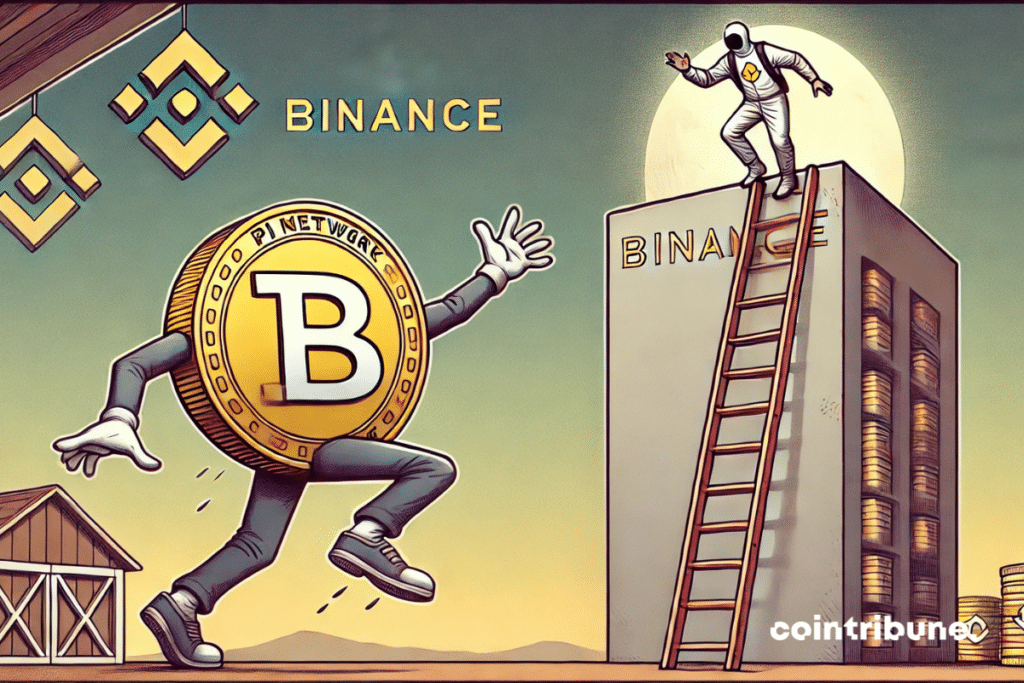
A refusal justified by concerns on decentralization
Binance officially announced that he would not list Pi Network. Indeed, the Exchange advances reasons related to transparency and the current structure of the project.
The network still operates in testnet and has not yet launched its Public Mainnet, which prevents users from freely transfering their tokens outside the internal ecosystem.
According to Binance, this situation poses a serious problem of decentralization and liquidity, essential criteria to be listed on a leading exchange platform.
The reasons put forward by Binance are based on several elements:
- Absence of Public Mainnet: PI Network is still in the test phase, which limits transactions and triggers doubts on the viability of the project;
- Lack of transparency: the PI Network team did not communicate a clear calendar on the official launch, which feeds market distrust;
- Governance problems: the lack of clarity on network management and centralization of the transactions validation process are major brakes;
- Strict listing criteria: Binance requires a certain degree of compliance and security to integrate a crypto, elements that Pi Network does not yet seem to guarantee.
Beyond technical aspects, The choice of Binance Send a strong message: without transparency or solid infrastructure, a crypto project is struggling to gain legitimacy.
In the absence of an operational Mainnet and sufficient guarantees, the platform does not take the risk of integrating an asset whose viability remains uncertain.
What impact on price forecasts and the community?
The refusal of Binance de Lister Pi Network has immediate repercussions on investors' expectations and the evolution of the price of the crypto. Some analysts estimated that registration on Binance could propel Pi to new heights, with price forecasts oscillating between $ 1.99 and $ 73 by 2025.
But without access to large exchange platforms, the liquidity of the asset remains limited, which reduces the perspectives of adoption and valuation.
Despite this decision, the Network PI community remains active and committed. Many tokens holders hope that the publication of the Mainnet Public will reverse the trend and attract new support.
But this putting into service is slow to come, which feeds concerns about the credibility of the project. In addition, the lack of clear communication on a precise launch date reinforces doubts and leaves an uncertainty over the future trajectory of the network.
The rejection of Binance provides information on the structural challenges that Pi Network must face to convince large platforms and, more broadly, the market. Indeed, the absence of functional Mainnet, doubts about governance and lack of clarity on listing prospects slow down its adoption. If the project manages to solve these problems, integration on large platforms could still be possible, which would offer PI holders a favorable outcome. On the other hand, a prolonged delay or an inability to meet market requirements could relegate the crypto to a secondary role in an ecosystem where confidence and transparency remain the keys to success.
Maximize your Cointribne experience with our 'Read to Earn' program! For each article you read, earn points and access exclusive rewards. Sign up now and start accumulating advantages.