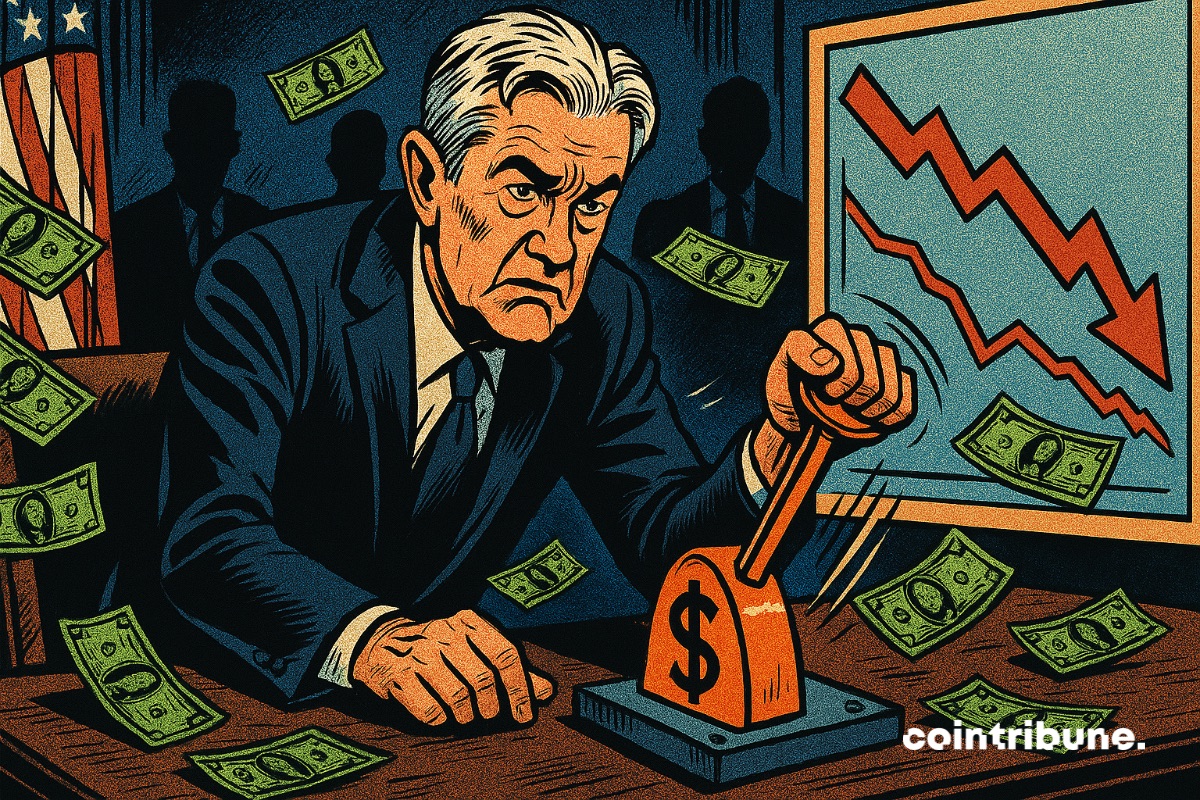
The Fed met in June 2025 in an uncertain economic context. Persistent inflation, robust labor market and trade tensions complicate the decision on interest rates. What choices will the central bank make? What impacts for the economy and the financial markets?
In short
- The Fed hesitates between maintaining high rates and considering decreases, depending on the evolution of inflation and the labor market.
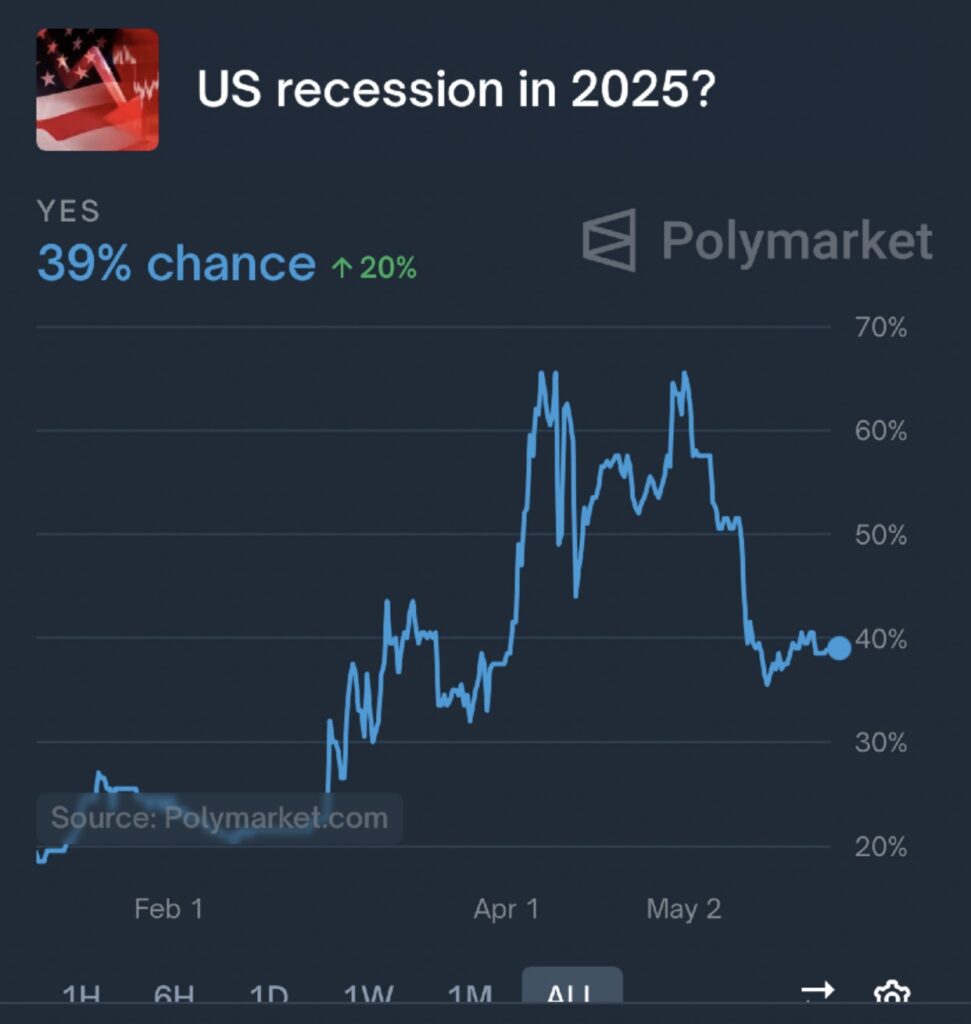
- Trade tensions and the risk of recession, estimated at 39 %, weigh strongly on upcoming monetary decisions in June.
- This uncertainty pushes certain investors to Bitcoin, given as protection against inflation.
Economy: why the labor market and inflation will weigh on the Fed's decision in June
Peter Schiff warns a bill that will cause the loss of the dollar, and could worsen pressure on monetary policy. This alert joins the concerns of the Fed which is preparing to assess the American economy in June. In particular: the labor market and inflation. Several key factors could also weigh on its decision.
- The unemployment rate remains low, at 3.7 %, in April 2025testifying to a dynamic labor market which creates around 200,000 jobs per month;
- Salary growth, controlled around 4 %, limits for the moment the risk of inflationary runaway linked to the increase in income.
However, the underlying inflation, measured by the consumer price index excluding food and energy, remains at a high level, around 3.2 %, well above the target set by the Fed at 2 %. Thus, the next report on the consumer price index (ICC), expected for June 11, will be a decisive indicator for the orientation of economic and monetary policy.
A Fed in “observation” mode before the June meeting
Jerome Powell recently said ::
We remain attentive to data evolution before modifying our policy.
This prudence reflects the complexity of the context. The dilemma is clear: lowering rates could stimulate employment, but relaunch inflation. Maintaining or increasing rates would slow growth, with a risk of unemployment increase and a slowdown in the economy, already estimated at moderate growth.
What it means for markets and the real economy
This waiting posture will have concrete repercussions:
- A status quo would reassure the financial markets on the stability of monetary policy. But would limit the growth potential in the short term;
- Borrowers, especially in real estate, would continue to deal with high costs, slowing down certain purchasing projects;
- A moderate drop in rates would be a strong signal for stock markets, often sensitive to accommodating measures;
- It could relaunch the sectors dependent on credit, such as real estate and consumption;
- On the other hand, prolonged inaction in the face of inflation could worsen pressure on purchasing power! Thus slowing down consumption and increasing the risk of recession.
The Fed's waiting posture, with high rate and risk of recession, could push certain investors to Bitcoin, perceived as protection against inflation and an alternative to traditional markets.
Scenarios for June: status quo or surprises?
In the end, What to expect for the interest rates of the Fed June meeting ? The Fed consensus favors the maintenance of rates, stable between 5.25 % and 5.50 %. Susan Collins insists on prudence, given an inflation still above 3 % over a year, rejecting the precipitated drops.
However, several elements could modify this trajectory. An unexpected drop in inflation, an observed slowdown in American GDP (+1.8 % in annual shift According to the Bureau of Economic Analysis), or a appeasement of trade tensions, especially with China, could encourage the Fed to announce a first monetary relief, possibly from June.
The Polymarket platform illustrates the perception of the market on a possible American recession in 2025, with around 39 % of opportunities evaluated. This feeling of uncertainty reflects the economic and monetary tensions that weigh on the decisions of the Fed.
US economy: external factors to monitor
Negotiations between the United States and China are decisive:
- A significant advance would strengthen business confidence and encourage investments;
- Conversely, without progress, uncertainties would persist, slowing down economic growth.
The meeting of June 2025 therefore promises to be a crucial moment, where the Fed will have to find the balance between prudence and reactivity. Closely monitor key indicators – inflation, employment, growth – as well as the evolution of trade tensions will be essential to anticipate the trajectory of interest rates and their concrete repercussions on the economy and markets. Pending this fateful date, European markets benefit from the current prudence of the Fed.
Maximize your Cointribne experience with our 'Read to Earn' program! For each article you read, earn points and access exclusive rewards. Sign up now and start accumulating advantages.