
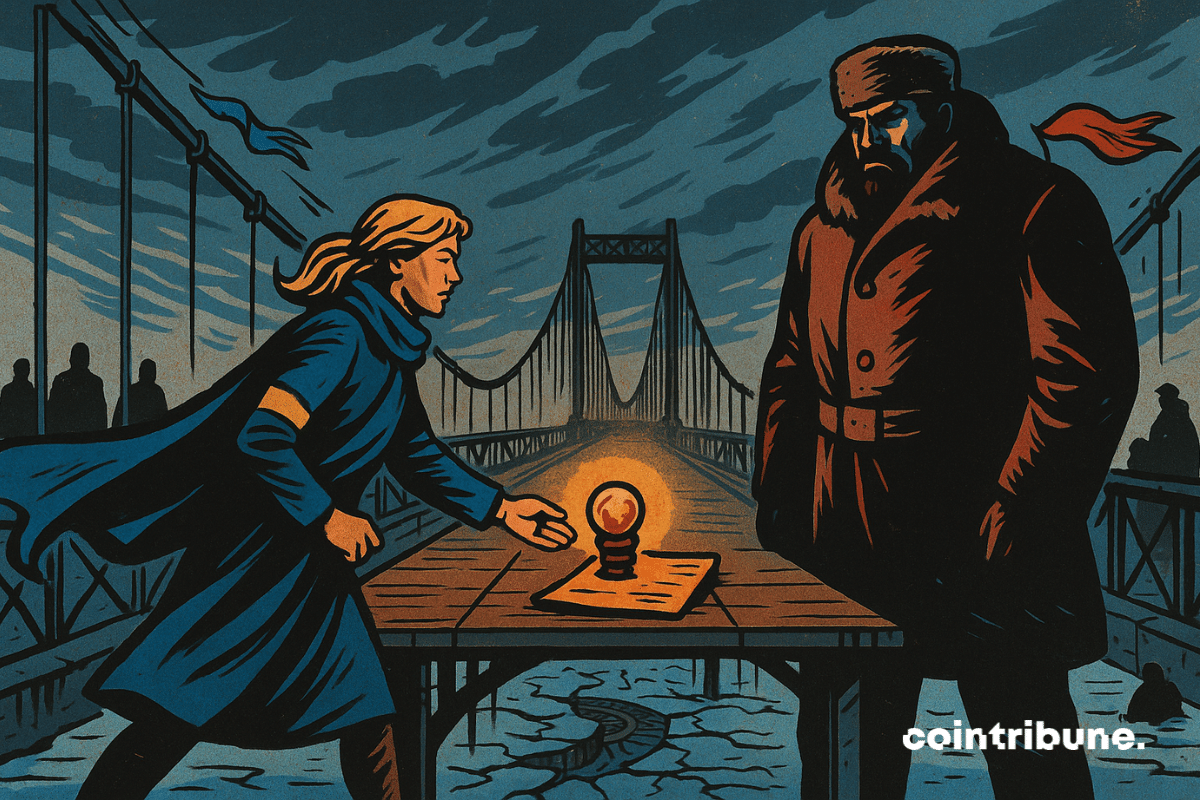
While the conflict in Ukraine crosses a critical course, kyiv and his Western allies advance a proposal for a ceasefire of 30 days, integral and without conditions. Supported by Washington and the major European capitals, this initiative aims to open a breach towards talks. However, beyond the call for truce, a question dominates: will Russia see a real outstretched hand or a tactical maneuver hiding a strategic advantage for Ukraine? The answer could redraw the balance of forces on the diplomatic level.
In short
- Ukraine, supported by its Western allies, offers Russia a total ceasefire of 30 days.
- This truce, scheduled to start on May 12, would apply to all fronts: land, air and sea.
- Russia has not yet given a favorable response, demanding the cessation of arms deliveries to Ukraine as a prerequisite.
- Vladimir Putin offers direct negotiations in Istanbul in parallel, but under strict conditions.
A daring European diplomatic initiative
On May 10, 2025, in kyiv, Ukraine and its Western allies presented a proposal for a total and unconditional ceasefire. This 30 -day truce, which should start on Monday, May 12, would be valid on all fronts: land, air and sea. Here are the main elements of this initiative:
- A 30 -day truce proposal: the truce is total and unconditional, including all fronts (land, sea, air);
- The support of European leaders: the presence in kyiv of European leaders, Emmanuel Macron (France), Friedrich Merz (Germany), Keir Starmer (United Kingdom), and Donald Tusk (Poland) to support this initiative;
- Volodymyr Zelensky at the forefront: the Ukrainian president launched the cease-fire offer, and stressed the importance of opening a path to peace negotiations;
- Donald Trump's support: the American president expressed his support by calling for a total cease-fire of 30 days, and insisted on the importance of this break for a de-escalation.
- American-European discussions: Emmanuel Macron has clarified That discussions between the United States and Europe were underway to set up a common plan to guarantee the ceasefire.
The blockages on the Russian side: the question of guarantees
While the ceasefire offer seems to have found a large echo within the West, Russia has not yet reacted favorably to this proposal. Moscow has, in the past, rejected such initiatives, arguing that a firm guarantee was needed first with regard to the stop of arms deliveries to Ukraine before being able to consider a cease-fire.
According to analysts close to the Kremlin, the demand for an unconditional 30-day ceasefire represents Western pressure which aims to weaken Russian military capacities. The acceptance of a truce at this period could give a strong symbolic and media dimension to the West, which is badly perceived by Russia, an influential member of the Alliance of the BRICS.
On the other hand, Vladimir Putin, in a later declaration, proposed new direct negotiations between the belligerents in Istanbul, but under specific conditions: Ukraine should first recognize certain Russian achievements on its territory.
These negotiations would be a way for Russia to save time while consolidating its positions on the ground. The outcome of this proposal remains uncertain, and diplomats wonder about the reaction of other international actors. On the one hand, American and European diplomacy pushes for an immediate compromise, but on the other, the Kremlin seems to play the strategic waiting card, hoping for more important concessions over time.
Maximize your Cointribne experience with our 'Read to Earn' program! For each article you read, earn points and access exclusive rewards. Sign up now and start accumulating advantages.


