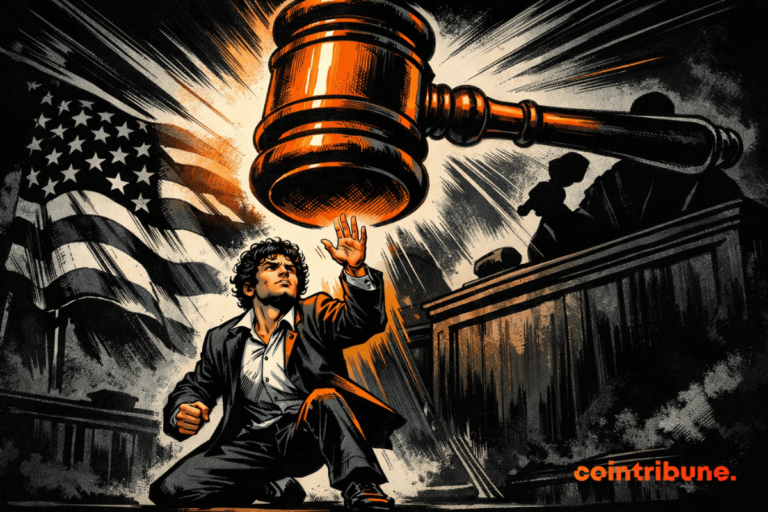
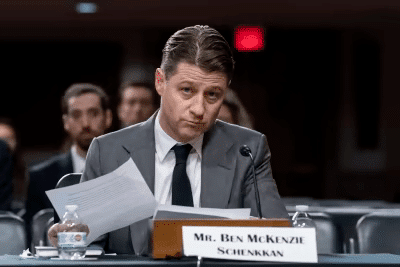
The FTX-Alameda scandal enters a new phase after a major decision by the SEC. For the first time, the American authority strikes hard by confirming 8-10 year management bans against former executives involved in one of the largest financial frauds in crypto history. However, will these sanctions be enough to restore confidence in a sector still marked by impunity?

In brief
- The SEC officially banned Caroline Ellison from management for 10 years, and Gary Wang and Nishad Singh for 8 years, after their role in the FTX scandal.
- Caroline Ellison will benefit from early release in February 2026 thanks to her cooperation with the justice system, while Sam Bankman-Fried is serving a 25-year sentence.
- Injured investors will not be reimbursed at the current price of bitcoin, but according to its value at the time of bankruptcy, which worsens their financial losses.
Crypto: SEC confirms bans for Alameda executives
The SEC has officially banned Caroline Ellison, Gary Wang and Nishad Singh from leading or serving on boards of directors for 8 to 10 years. An unprecedented decision in the crypto world, aimed at protecting investors after the fall of FTX and the disappearance of billions of dollars. These bans send a clear message: the era of impunity is over.

However, some question the real effectiveness of these measures. The sentences, although heavy, remain symbolic for actors who participated in one of the largest crypto frauds in history. Ellison, Wang and Singh cooperated with the courts, testifying against Sam Bankman-Fried. Did their collaboration mitigate their responsibility? The SEC is showing its teeth, but will it be enough to restore confidence in a sector still perceived as a Wild West?
Early release for Ellison, hope of pardon for SBF: double standards?
Despite banned from running businesses for 10 yearsCaroline Ellison, former CEO of Alameda Research, is scheduled to be released in February 2026, after only 11 months in prison. Transferred to community detention in October 2025, she received a reduced sentence for good behavior and cooperation. A favorable treatment which contrasts with the fate reserved for crypto magnate Sam Bankman-Fried, sentenced to 25 years in prison.
Bankman-Fried, for his part, is banking on an appeal and rumors of a presidential pardon, after having financially supported the Democratic Party. A risky strategy, when his refusal to cooperate with justice sealed his fate. Why such a disparity? Does the American justice system reward those who “play the game” ? Judicial cooperation certainly reduces sentences, but it does not provide justice to the victims. For many, Ellison and Bankman-Fried should be equally accountable for their actions.
Bitcoin at the heart of the FTX dispute – will wronged investors pay twice?
FTX victims will not recover their funds at the current bitcoin price. According to the liquidation rules, reimbursements will be based on the value of BTC at the time of bankruptcy, in November 2022. A decision which could cost investors dearly, while the price of the crypto queen has changed significantly since then.
For example, an investor who deposited 1 BTC at $60,000 in 2021 will only recover the equivalent of $16,000, the price of bitcoin on the date of bankruptcy. A dead loss, which raises questions about the fairness of the process. Victims' lawyers denounce a system that penalizes investors twice: the first time through crypto fraud, the second through reimbursement rules.
The FTX-Alameda affair and the banishment of Caroline Ellison reveal the inequalities of a justice system where cooperation can mitigate sentences, but where victims often remain forgotten. As the SEC attempts to restore order, one question remains: how do we protect investors in an ever-changing crypto world?
Maximize your Tremplin.io experience with our 'Read to Earn' program! For every article you read, earn points and access exclusive rewards. Sign up now and start earning benefits.