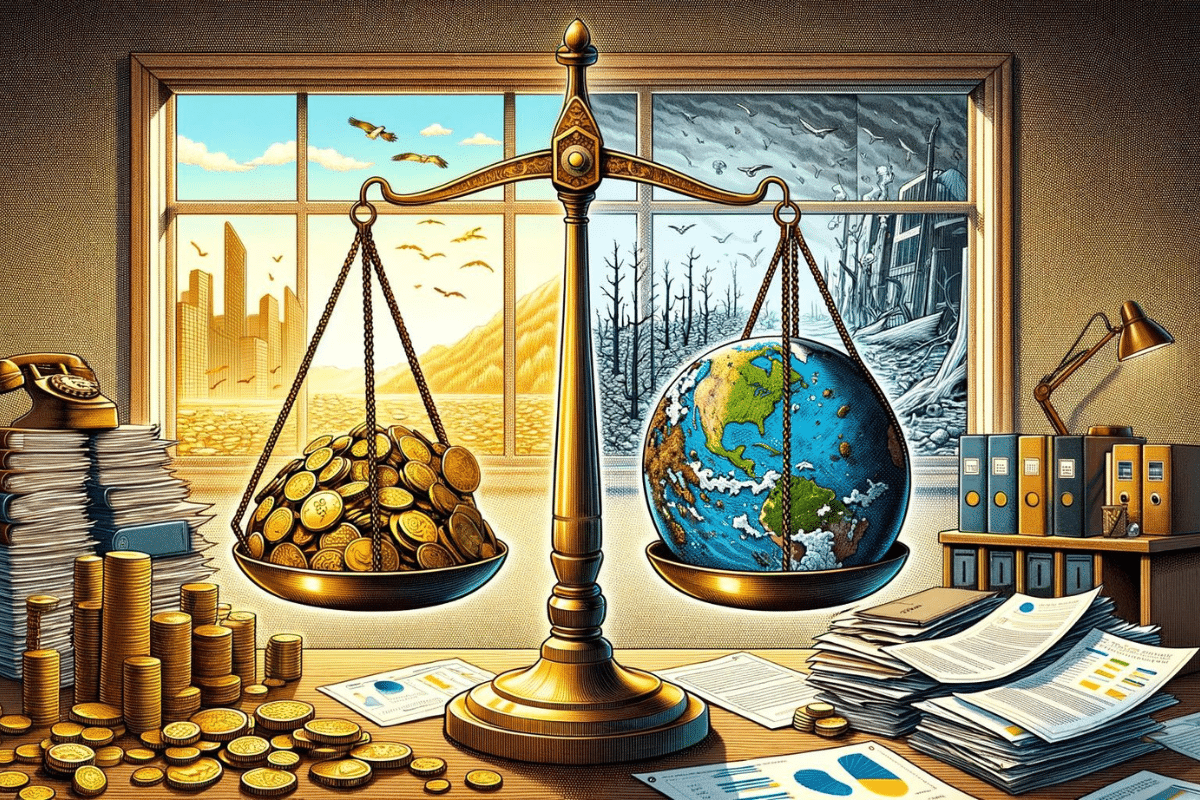
In these troubled times when the planet seems to be wobbling on its axis, both financially and ecologically, the Court of Auditors, like a lookout scanning the horizon, is sending us a double warning. Through its latest report, it draws up a harsh assessment of the current situation in France, highlighting issues that go far beyond the usual frameworks of finance and climate.
The fragility of public finances
From the outset, the observation of Pierre Moscovici, first president of this venerable institution, is enough to make the most optimistic people turn pale. With an approach that oscillates between the benevolent advice of a wise man and the harsh criticism of a political opponent, Moscovici points to a financial trajectory that is audacious, to say the least, even perilous, chosen by the government. This is happening as the CAC 40 braves regulatory uncertainties.
France, according to the report, is navigating choppy macroeconomic waters, with a 2024 scenario considered too optimistic and a reduction in the public deficit planned on a horizon that always seems to be moving further away.
Efforts to control expenses, announced as unprecedented, seem to come straight out of a magic hat, without real documentation or guarantee of achievement. This part of the report reminds us that in the great theater of finance, today’s promises are sometimes tomorrow’s debts.
A necessary war effort
On the climate front, the Court spares no effort to alert us to the urgency of the situation. Adapting to climate change is made a crucial mission, however, The report paints a picture where good intentions seem to get lost in a maze of bureaucracy and lack of coordination.
Moscovici and his teams congratulate the awareness but regret the absence of a clear and coherent strategy. Between the praise for existing initiatives and the criticism of their lack of articulation, the report teaches us that recognizing the problem is a step, but that the march towards the solution is a true epic.
The balance between keeping the country’s finances on a stable path and investing in the climate is described as the major challenge of the coming years. Moscovici, with the acuity of a tightrope walker, highlights the irony of having to choose between safeguarding today’s economy and protecting tomorrow’s environment.
The report recommends more selective management of expenditure, calling for a swing between necessary savings and essential investments in ecology. It is a call for both political courage and innovation, reminding us that big crises require equally big measures.
In conclusion, the Court of Auditors, through its report, gives us a clear message: the time is no longer for complacency. With almost brutal frankness, she reminds us that financial and climate challenges are intrinsically linked and require bold, coordinated and innovative responses.
Maximize your Tremplin.io experience with our ‘Read to Earn’ program! For every article you read, earn points and access exclusive rewards. Sign up now and start earning benefits.