
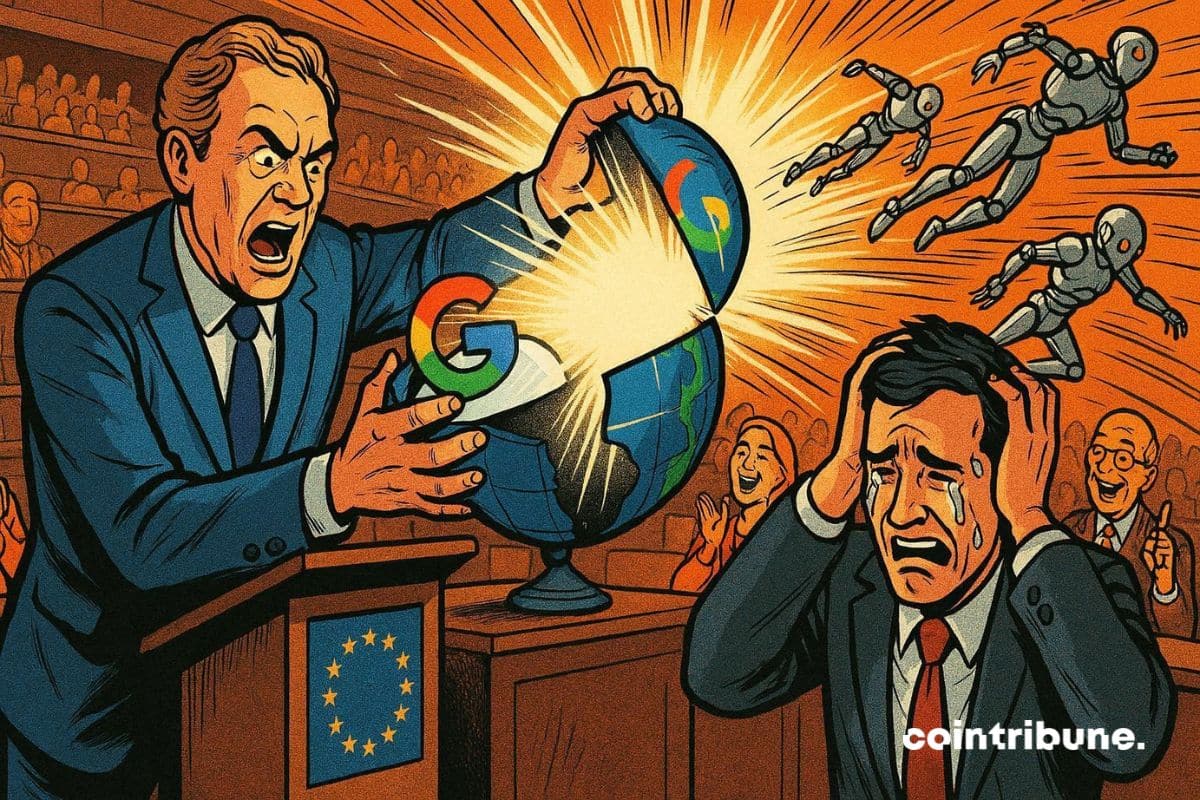
The European Union has just taken a major step by forcing Google to open its Android system to competing artificial intelligence (AI) tools. This decision, taken as part of the Digital Markets Act (DMA), could redefine the rules of the game for technology giants and digital players. What will be the impacts for the market, businesses and consumers?

In brief
- The EU requires Google to open Android to rival AI tools within six months or face sanctions.
- This EU measure aims to break Google's monopoly, promote competition and stimulate innovation in artificial intelligence and AI cryptos.
- Consumers could benefit from more diversified services, but technical and ethical challenges (security, interoperability) remain to be met.
EU gives Google 6 months to open Android to competing AI
The Digital Markets Act (DMA), which came into force in 2022, aims to regulate dominant digital platforms to promote competition and innovation. With this new measure, the EU requires Google to remove technical barriers limiting access of third-party AI tools to Android. The objective is clear: to prevent technology giants from stifling emerging innovations by controlling access to data and infrastructure.
Google now has six months to comply with these requirements, or face penalties of up to 10% of its global turnover. This decision is part of a broader desire by the EU to limit abuse of a dominant position, particularly in the digital and technology sectors. It could inspire other regions, such as the United States or Asia, where the regulation of technological giants remains a hot topic.
Google forced to open Android to competing AI: what impacts for the players?
This forced opening of Android to competing AI tools by the EU could create new opportunities for companies specializing in digital, e-commerce and technology. Players like Mistral, Anthropic or Asian startups could finally access Android's hardware and software features, allowing them to develop innovative solutions.
For textile, fashion or luxury companies, this measure could facilitate the integration of advanced AI tools into their mobile applications, thus improving the customer experience. For example, more capable voice assistants or chatbots could be deployed, providing a competitive advantage. However, Google risks losing part of its control over the Android ecosystem! Which could affect its advertising revenues and its dominant position.
Android invaded by competing AI tools: a boon for cryptos?
The forced opening of Android to third-party AI tools could indirectly boost the crypto market linked to artificial intelligence. Indeed, assets like Fetch.ai, SingularityNET or Ocean Protocol, are based on decentralized platforms allowing the exchange of data and AI services. With expanded access to Android features, developers could more easily integrate their solutions into mobile apps, increasing adoption.
Crypto AI could then benefit from increased demand if market players use them to monetize AI services on Android. However, this growth will depend on the ability of projects to guarantee security, transparency and interoperability with existing infrastructure. Mass adoption could explode their value, but the risks of volatility and regulation remain present.
This EU decision marks a turning point in the regulation of artificial intelligence (AI) and the technology market. It could promote innovation and competition, but its success will depend on its implementation. A question remains open: will this measure be enough to balance the forces present, or will it create new technological wars?
Maximize your Tremplin.io experience with our 'Read to Earn' program! For every article you read, earn points and access exclusive rewards. Sign up now and start earning benefits.


