

Ethereum, a pillar of the digital economy with a network value of $278 billion, faces a major challenge. The majority of its validators depend on a single software, Geth. This situation raises concerns about the risks of centralization and vulnerability.
Dependence on Geth: a significant risk
Coinbase, Lido Finance and Binance, leaders in staking services on Ethereum, find themselves in a delicate position. Next to 80% of Ethereum validators use Geth to connect to the network.
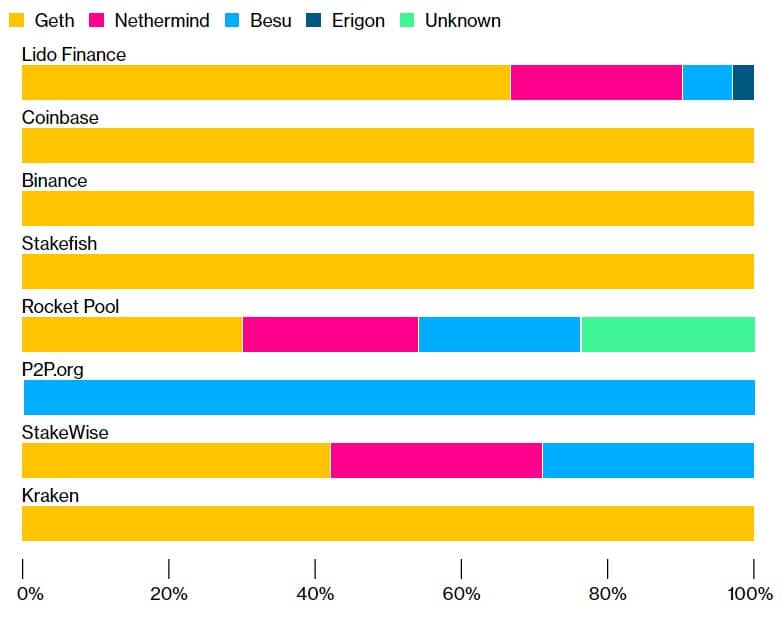
This situation can be considered the Achilles heel of Ethereum. Indeed, a bug in Geth could, in theory, stop transaction processing on Ethereum. According to experts, such a scenario is catastrophic. Indeed, this would lead to losses for investors and could even split the network.
The recent outage caused by a bug in the lesser-used software, Nethermind, highlighted this problem. Although Nethermind represents only a small fraction of validators, the incident has raised awareness. The dependence on Geth is all the more criticized as its dominance makes the Ethereum network vulnerable.
Big players such as Coinbase, Binance have recognized the risk and are now exploring alternatives to Geth. These platforms together manage nearly $13 billion in staked Ether, according to StakingRewards.
This search for diversity comes after years of dependence on a single software client. It reflects a late awareness of the risks of centralization in a field where decentralization is a founding principle.
Towards essential diversification to save Ethereum
This situation shows that diversification is no longer an option, but an emergency. Moreover, it highlights a blatant contradiction with the principles of blockchain.
The reaction of the platforms, although late, shows awareness. Moreover, we note the recent decrease in Geth usagegoing from 84% to 78% in less than two weeks, since the Nethermind bug on Ethereum. Coinbase and Kraken are indeed turning to new software clients. However, Binance’s reaction remains unknown.
How Ethereum responds to this challenge will determine not only its survival but also its loyalty to the ideals of decentralization. Software diversification is therefore crucial for network resilience. The question is indeed more than a technical necessity, it is vital for the future of the Ethereum network.
Maximize your Tremplin.io experience with our ‘Read to Earn’ program! For every article you read, earn points and access exclusive rewards. Sign up now and start earning benefits.


