
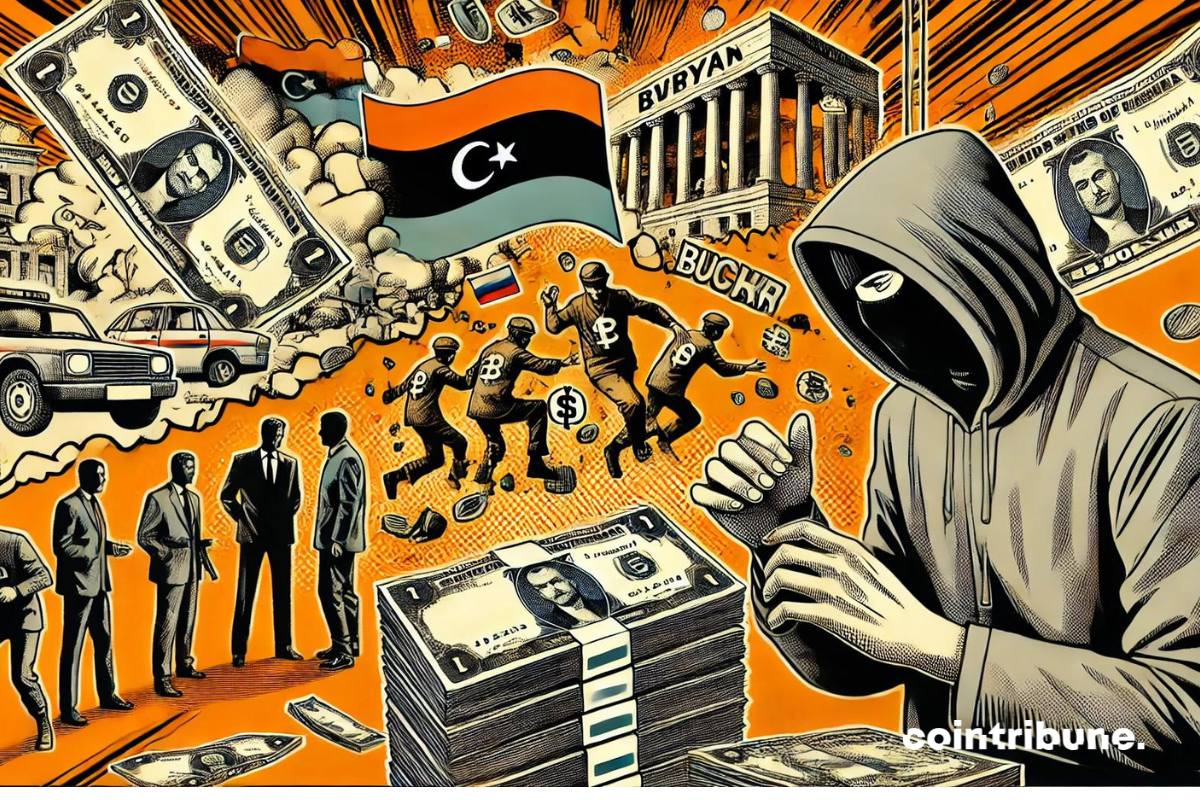
The dramatic devaluation of the Libyan dinar has recently attracted the attention of international observers. Libyan authorities attribute the sharp fall to a wave of counterfeit banknotes, which appear to have originated in Russia. The revelation raises crucial questions about Moscow’s involvement in the economic affairs of Libya, a country already plagued by conflict and chronic political instability.
The discovery of counterfeit notes
On June 24, Reuters published a report detailing how the influx of counterfeit banknotes may have contributed to the devaluation of the Libyan dinar. The notes were reportedly exchanged for U.S. dollars. Libyan authorities suspect that the Russian printer Goznak may be behind the illicit currency. Diplomatic sources and the international investigative group The Sentry also confirm the presence of these counterfeit notes in the country.
Counterfeit tickets would have been introduced in Libya, where they were exchanged in the east of the country, a region controlled by commander Khalifa Haftar. This region has also previously benefited from Russian financing for infrastructure projects. The new information suggests that these notes may have been used to finance Russian mercenary activities in the region and the Sahel. So far, neither the Central Bank of Libya (CBL) nor the Libyan National Army have officially responded to these allegations.
Economic consequences for Libya and Russia
The devaluation of the Libyan dinar, caused in part by these counterfeit notes, is further exacerbating the economic and political crisis in Libya. Russia, through Goznak, provided billions of dinars to the eastern Libyan government before the formation of the unity government in 2020. Although this practice ceased following a ceasefire agreement, the repercussions of these actions continue to affect the country’s economic stability.
The accusations against Russia could have significant diplomatic repercussions. The international community could intensify its investigations into Russian involvement in Libya and other volatile regions. At the same time, Libya will face the difficult task of stabilizing its economy and restoring confidence in its national currency. The Libyan government will also need to strengthen its financial security measures to prevent future fraud.
In summary, this case of counterfeit banknotes highlights the complex challenges facing Libya. The devaluation of the Libyan dinar is not only an economic problem, but also a symptom of broader geopolitical conflicts in the region. Transparency and international cooperation will be essential to resolve this crisis and stabilize the situation in Libya.
Maximize your Tremplin.io experience with our 'Read to Earn' program! For every article you read, earn points and access exclusive rewards. Sign up now and start earning benefits.
Click here to join 'Read to Earn' and turn your passion for crypto into rewards!


