
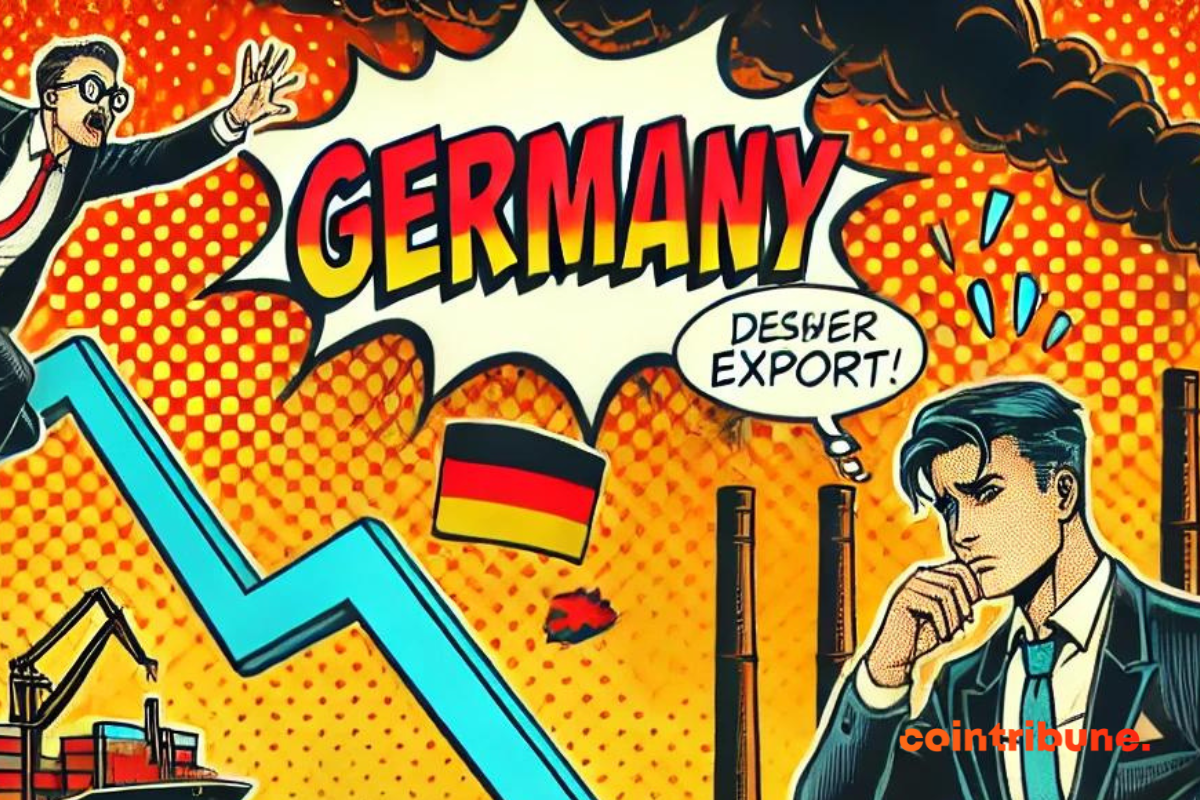
The German economy is going through a turbulent period. The decline in exports, announced by the German statistical office Destatis, raises crucial questions: Is Germany on the verge of a recession? The factors behind this complex situation deserve careful analysis to understand the potential implications for the global economy.
An unexpected decline in exports
On Wednesday, August 7, Destatis revealed that German exports had decreased by 3.4% in one month.
This fall is all the more alarming as a rebound was expected. This highlights the persistent difficulties of Europe's leading economy.
In June, exports amounted to 127.7 billion euros, a decrease of 4.5 billion compared to May.
This situation is aggravated by the high cost of energy and the increase in the cost of credit, which weigh heavily on the competitiveness of German companies.
Factset analysts had expected exports to rise 1.3% in June, showing the extent of the disappointment.
Imports, meanwhile, edged up 0.3 percent to €107.3 billion. This modest increase was not enough to offset the decline in exports, reducing the trade surplus to €20.4 billion, down from €25.3 billion in May.
The structuring factors of the crisis
For two years, Germany's export industry, once the engine of its economy, has been in trouble. The loss of momentum in the American and Chinese economies, combined with trade tensions, is contributing to this crisis.
Carsten Brzeskian economist at ING, highlights the lack of hope for a solid recovery driven by exports.
High energy costs and rising credit costs are major obstacles for German companies, reducing their competitiveness on the international stage.
However, it is not all doom and gloom. In June, industrial production increased by 1.4%, beating expectations of +0.8%. This slight rebound offers a glimmer of hope in a difficult context.
Jens-Oliver Niklasch, an economist at LBBW, sees the increase as a “sign of life” in a struggling industry. Despite these occasional improvements, structural challenges remain.
Impact on the Global Economy
The contraction in German exports has repercussions beyond national borders. As Europe's main economic engine, Germany's economic health directly influences that of its neighbors and trading partners.
A recession in Germany could trigger a broader economic slowdown in Europe, hitting financial markets and investor confidence.
Germany is at a delicate economic crossroads. Falling exports and structural challenges raise questions about the future of its economy. Nevertheless, recent increases in industrial production show that there are signs of recovery, even if they remain fragile.
The global economy is interconnected, and Germany’s challenges are a reminder of the importance of adaptability and innovation in overcoming crises. By leveraging new technologies and remaining flexible in the face of change, opportunities can be found even in the most challenging times.
Maximize your Tremplin.io experience with our 'Read to Earn' program! For every article you read, earn points and access exclusive rewards. Sign up now and start earning benefits.
Join the Read to Earn program


