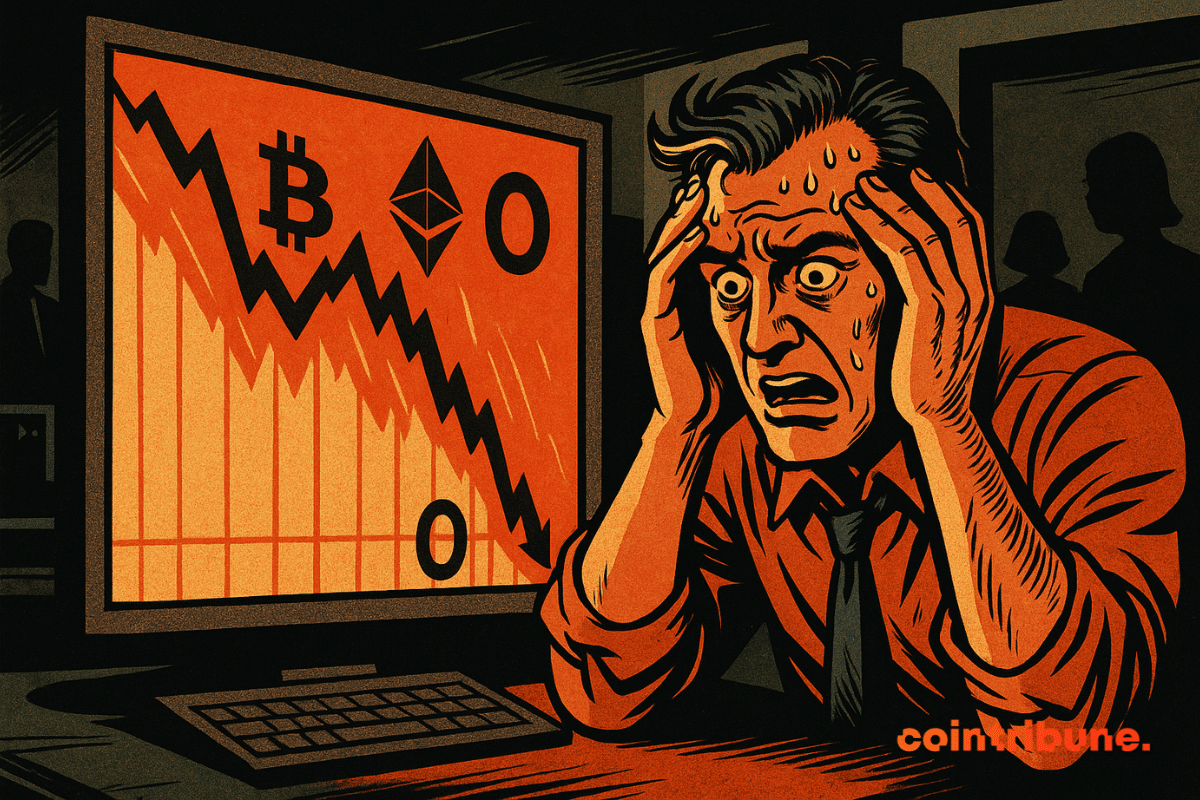
Crypto markets have started to cough again. No spectacular crash this time, but a slow loss of steam: crypto trading volumes are falling, prices are correcting, and even bitcoin spot ETFs are turning red. For JPMorgan, the picture is clear: the appetite for risk is declining, and the market is stalling just when it was supposed to confirm its strong comeback.
In brief
- Crypto trading volumes are contracting sharply across the entire market, from spots to derivatives to stablecoins.
- Spot bitcoin ETFs and listed crypto products are experiencing massive outflows, a sign of a clear disengagement by institutional investors.
- Between leverage, fear of a new crypto winter and underperformance against stocks, the market appears more fragile, even if this phase could also serve as a purge before a new cycle.
A crypto market on its last legs
After having firmly denied that the closure of certain crypto accounts is a “political hunt” targeting Donald Trump, JPMorgan brings the discussion back to the field of figures. According to the bank, last month saw a sharp fall in trading volumes across the market. Spot, derivatives, stablecoins: nothing escapes it.
Crypto spot trading volumes are reported to have fallen by around 19%, while other indicators like TradingView suggest a similar decline, close to 23%. In other words, fewer trades, less liquidity and a structurally more fragile market.
The most telling signal comes from stablecoins. These tokens, supposed to reflect the strength of the ecosystem, saw their average daily volume decline by 26% from one month to the next. When stablecoins freeze, it is often because traders prefer to stand back rather than take risks on the market. Less rotation, less arbitrage, less leverage.
At the same time, decentralized finance (DeFi) and NFTs are not immune to the slowdown. Volumes in these segments are also contracting, confirming that it is not only the bitcoin market that is breathing, but the entire crypto edifice that is slowing down. Difficult, in these conditions, to simply speak of a small technical consolidation.
Crypto ETFs, massive outflows and institutional disenchantment
Beyond the spot market, the message from listed products is even starker. U.S. spot bitcoin ETFs, long touted as the dream bridge between Wall Street and the crypto world, saw nearly $3.4 billion in net outflows in November. Within a month, the October entries were simply deleted.
For JPMorgan, exchange-traded crypto products (ETPs, ETFs, trusts, etc.) experienced their worst month in history, with $1.4 billion in net redemptions. It is no longer a simple profit-taking, it is a real withdrawal movement. Institutional investors, who had timidly started to gain exposure again, are now reducing their exposure once again.
This reversal of flows adds to the drop in prices. The total capitalization of the crypto market fell by around 17%, returning to around $3.04 trillion. In detail, the value of bitcoin is falling, the capitalization of ether drops nearly 22% to fall towards $361 billion, and the shares of companies linked to cryptos sink by around 21%. The transmission chain between spot market, listed products and stock market values works… but in the wrong direction.
The transition is clear: where some were hoping for a new bullish leg driven by ETFs, it is ultimately mistrust that takes over. And this distrust does not come from nowhere.
Leverage, fear of a new winter and comparison to stocks
JPMorgan analysts point to several factors that simultaneously weigh on valuations and crypto trading volumes. First, concerns about leverage. After several months of almost uninterrupted rise, numerous derivative positions had accumulated. The slightest correction movement then triggers liquidations, which mechanically amplifies the fall in prices… and chills traders a little further.
Then, discussions about a possible “new crypto winter” resurface. Each contraction in volumes, each release of listed products, revives the memory of 2018 or 2022. At this stage, we are not there yet, but the market seems fragile enough for the narrative to take hold. However, in crypto, the narrative matters almost as much as the numbers.
And while crypto stalls, traditional equity indices are holding up quite well. The S&P 500 remains generally stable, the Nasdaq 100 only falls by around 2% over the period. The comparison is painful: the supposedly ultra-efficient asset, supposed to offer a high beta, this time underperforms the “classic” markets. For some investors, the calculation is simple: why carry this level of volatility if performance does not follow?
Sustainable winter or just a break? What investors should remember
However, should we see the fall in crypto trading volumes as the start of a long bearish cycle? Not necessarily. Historically, phases where volumes contract often follow periods of overactivity. They make it possible to purge leverage, calm speculative excesses and restore some oxygen to the market before a new construction phase.
What is certain, however, is that this context is forcing investors to change their posture slightly. Less volume means sometimes hollower books, therefore more violent price movements on simple orders. Risk management is once again becoming central: position size, measured use of leverage, choice of platforms, selectivity of assets.
For long-term profiles, this phase can also be an opportunity to distinguish noise from fundamental. Strong projects continue to move forward, even when volumes disappear. The others live solely on the euphoria of the market. When crypto trading volumes dry up, the veneer quickly cracks.
Maximize your Tremplin.io experience with our 'Read to Earn' program! For every article you read, earn points and access exclusive rewards. Sign up now and start earning benefits.