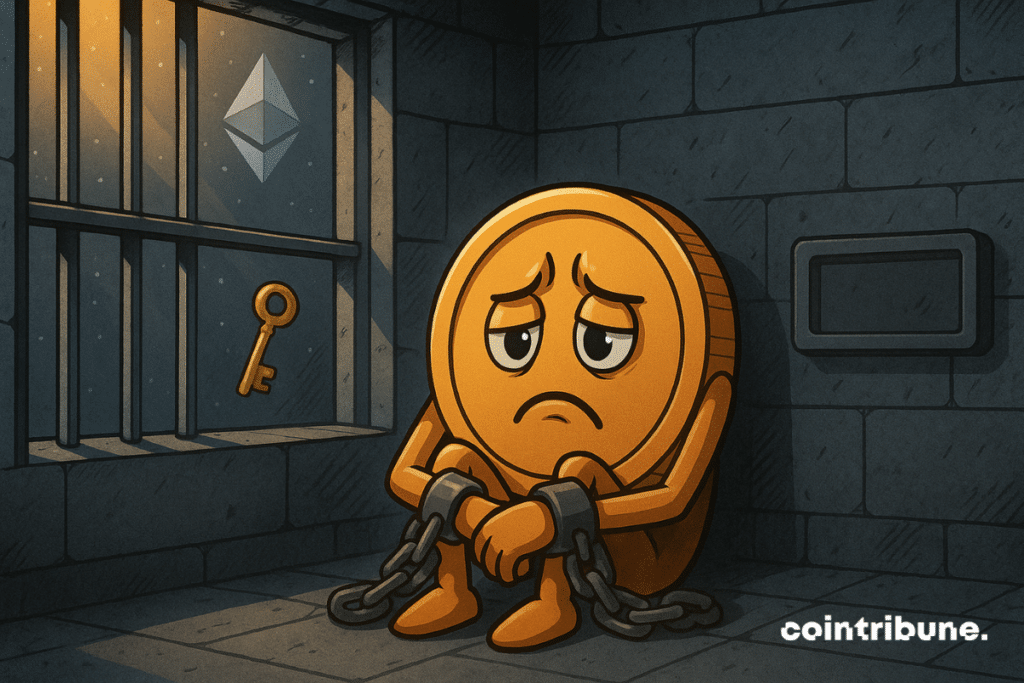
While distrust is installed in the crypto ecosystem, Pi Network stirs tensions with a controversial decision: a voluntary locking of tokens against a mining bonus that can climb up to 200 %. In a context of free fall price and sluggish liquidity, the initiative causes the indignation of a community already tested by technical delays and the absence of use cases.
In short
- Pi Network triggers a lively controversy by launching a voluntary locking program for Pi tokens.
- Users are encouraged to block their tokens in exchange for mining bonuses up to +200 %.
- Many users denounce an unsuitable measure, in the absence of liquidity or true utility of the token.
- Faced with growing anger, the Core Team is accused of a lack of transparency and the absence of a clear roadmap.
A crypto locking program that falls at the worst moment
While the crypto continues to unscrew on August 2, Pi Network has formalized Via his blog activating a feature allowing users to voluntarily lock their tokens in exchange for a mining bonus up to 200 %.
The measurement applies at two levels: before migration to the Mainnet via the main application, or after migration via the PI Wallet, in which case the bonuses are applied directly to the on-chain tokens. Once the choice is validated, the tokens remain blocked for the defined duration and the locking is irreversible.
Here are the specific elements of the device put in place:
- Pre-migration: influence future sales and projections of rewards;
- Post-migration: via the PI Wallet, offers mining bonuses up to +200 %;
- The locking is final during the entire selected period, without the possibility of early withdrawal;
- The program aims to encourage long -term involvement via a voluntary commitment of users to support the project economy;
- The announcement comes when the Token Pi has dropped 90 % since its February summit and has just lost 11 % in a weekend, reaching a historic low.
This strategic choice, presented as a community alignment tool, has been widely criticized on social networks. Many users see it as a poorly calibrated measure, even disconnected from the current reality of the project, in the absence of liquidity, real rating or concrete use for the Token.
Technical delays that undermine the credibility of the ecosystem
Beyond the locking itself, it is above all the structural conditions in which it is inserted which concentrate the most virulent criticisms. On X (ex-Twitter), many users denounce a feeling of technical immobility and lack of transparency on the part of the Core Team.
For more than a year, community members have validated their KYC, but they still cannot migrate tokens because of persistent blockages on migration, which leave many sales in a non -transferable state. For the latter, the locking offer is simply inapplicable, even off -topic.
Unwarmed promises also weigh heavily in the perception of the project. Several tools presented in preview, such as PI Domans or App Studio, are always non-functional or not accessible, fueling an increasing climate of frustration.
In parallel, the mining rate has just been lowered to its lowest level ever reached, in an assumed logic of a deflationary model intended to limit tokenization. And to top it all, 160 million tokens must be unlocked in August, which risks exerting additional pressure on an already fragile market.
This series of delays, combined with a clear lack of communication on the roadmap, feeds an increasingly palpable skepticism about the real trajectory of the project as well as the leak of investors. The absence of concrete perspectives or visible partnerships reinforces the fear of structural shortness of breath. If the Crypto Pi Network really wishes to regain the confidence of its base, it will have to deliver tangible results, but also restore a form of open dialogue with its users.
Maximize your Cointribne experience with our 'Read to Earn' program! For each article you read, earn points and access exclusive rewards. Sign up now and start accumulating advantages.