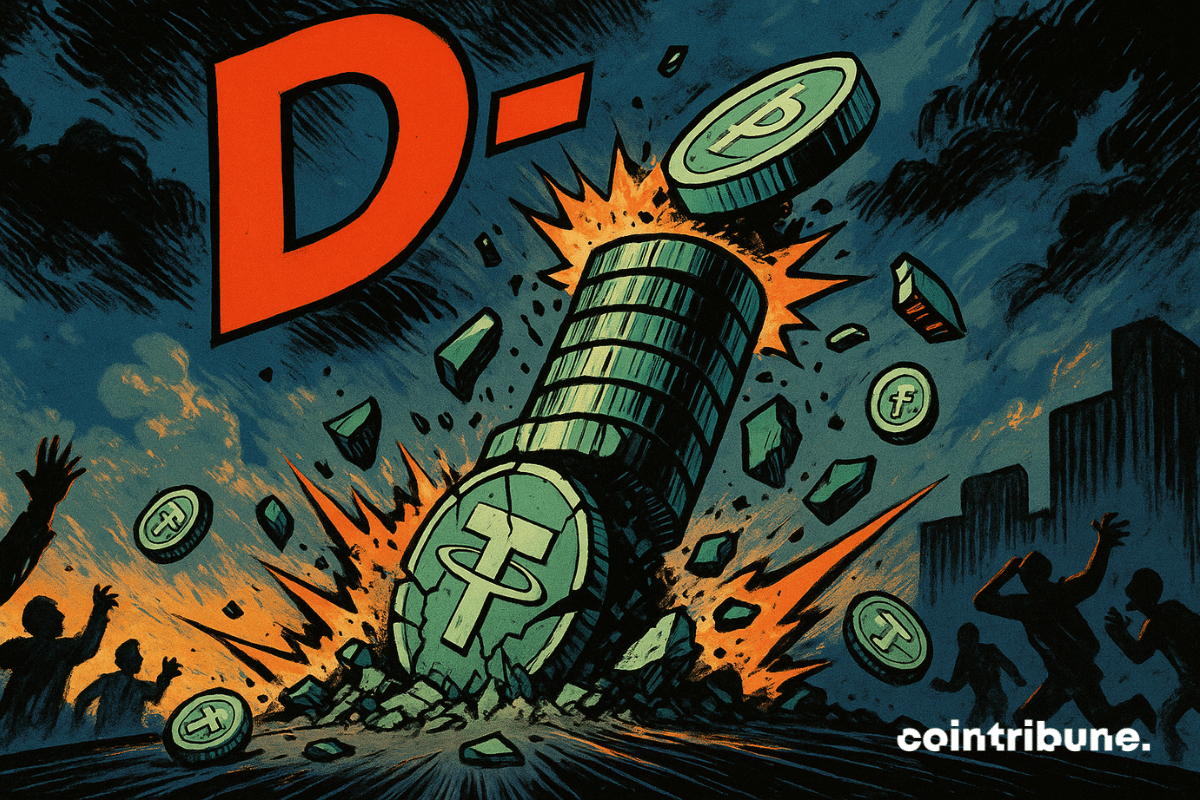
S&P Global Ratings just downgraded USDT to its lowest stable level. A rare decision, which targets the most used stablecoin in the world and raises doubts about its ability to maintain its peg to the dollar. At a time when regulators are tightening the noose around cryptos, this assessment reignites debates on the strength of Tether's reserves and on the systemic risks that stablecoins pose to the entire market.
In brief
- S&P Global Ratings gives USDT the lowest stability rating on its scale, a first for a stablecoin of this scale.
- The agency calls into question the composition of Tether's reserves, deemed too exposed to volatile assets such as Bitcoin, gold or loans.
- The lack of independent audits and the permissive regulatory framework in El Salvador reinforce doubts about the solidity of Tether's model.
- In response, Tether rejects the report, defends the robustness of its reserves and criticizes the relevance of the criteria used by S&P.
USDT Stability Questioned
S&P Global Ratings assigned USDT, a stablecoin issued by Tether, the lowest rating on its stability scale, highlighting risks deemed structural in the company's reserve model, while the issuer would target a valuation of $500 billion.
The agency questions Tether's ability to maintain parity with the dollar in certain market conditions, particularly in times of stress. It states that the reserves portfolio includes a proportion deemed too high of volatile or illiquid assets.
“A decline in the price of bitcoin or the value of other risk assets could reduce collateral coverage“, precise the report. This statement targets in particular Tether's exposure to certain assets whose stability is uncertain.
Here are the main elements involved in the S&P analysis:
- 5.6% of reserves are invested in bitcoin, which exceeds the estimated margin of 3.9%, in a model with 103.9% collateralization;
- The presence of risky assets in reserves: gold, loans, corporate bonds, all more volatile than US Treasury bonds;
- A lack of a complete independent audit, considered problematic for an asset of this scale;
- Lax regulation: Tether is regulated in El Salvador, via the National Commission for Digital Assets (CNAD), whose standards are considered permissive by the S&P.
Despite this, the report acknowledges that 75% of USDT reserves are invested in US Treasuries and other short-term instruments, considered low risk.
However, this is not enough to counterbalance the elements of vulnerability mentioned, particularly in a context of market instability or liquidity crisis. This decision marks a first in the public assessment of the strength of a stablecoin of this size by a major financial rating agency.
Tether defends its model and rejects traditional rating criteria
Faced with this symbolic setback, Tether reacted strongly, describing the S&P report as “misleading”. In a press release, the company states that it “categorically rejects the characterization presented in the report“, adding that he “does not reflect the nature, scale, or macroeconomic importance of digital native money“.
Director General Paolo Ardoino also criticized the relevance of the evaluation models used by traditional agencies, recalling that these same methods had assigned favorable ratings to institutions that subsequently went bankrupt: “Classic models built for traditional financial institutions have historically led investors to put their money in companies that, despite their ratings, collapsed“, he said.
Tether puts forward massive numbers to justify its strength: more than $112 billion in US Treasury bills, making the stablecoin issuer the 17th largest global holder of American sovereign debt, ahead of economic powers like Germany or South Korea.
The company also holds 116 tons of gold, which, combined with its ability to issue and repurchase digital dollars on a global scale, brings its operation closer to that of a real central bank, according to some analysts. These data, although partially recognized in the S&P report, are according to Tether largely underestimated in the analysis of its ability to maintain parity with the dollar.
The S&P's downgrade of USDT exposes the tensions between the promise of stability and the reality of reserves. In a market under increasing surveillance, stablecoins will now have to combine transparency, robustness and credibility to remain at the heart of digital exchanges.
Maximize your Tremplin.io experience with our 'Read to Earn' program! For every article you read, earn points and access exclusive rewards. Sign up now and start earning benefits.