What’s really going well with Ethereum these days? The ETH crypto remains in free fall, and Ethereum spot ETFs haven’t had the expected effect. However, the recent drop in gas fees could be the boost needed to get things moving again. Behind this downward movement are more complex issues that could influence the future trajectory of the crypto.
Ethereum Gas Fees Plummet: Opportunity or Mirage?
Ethereum gas fees, which have been plummeting since last week, recently hit their lowest level in five yearsand while this may seem like good news for users, it hides some significant implications for crypto.
This spectacular fall, largely attributed to the increasing adoption of Layer 2 solutions and the Dencun update last March, has allowed to significantly reduce transaction costs. Indeed, thanks to the introduction of new features such as “Blobs”, Layer 2 networks like Arbitrum or Base can now post data to the main blockchain at a lower cost.
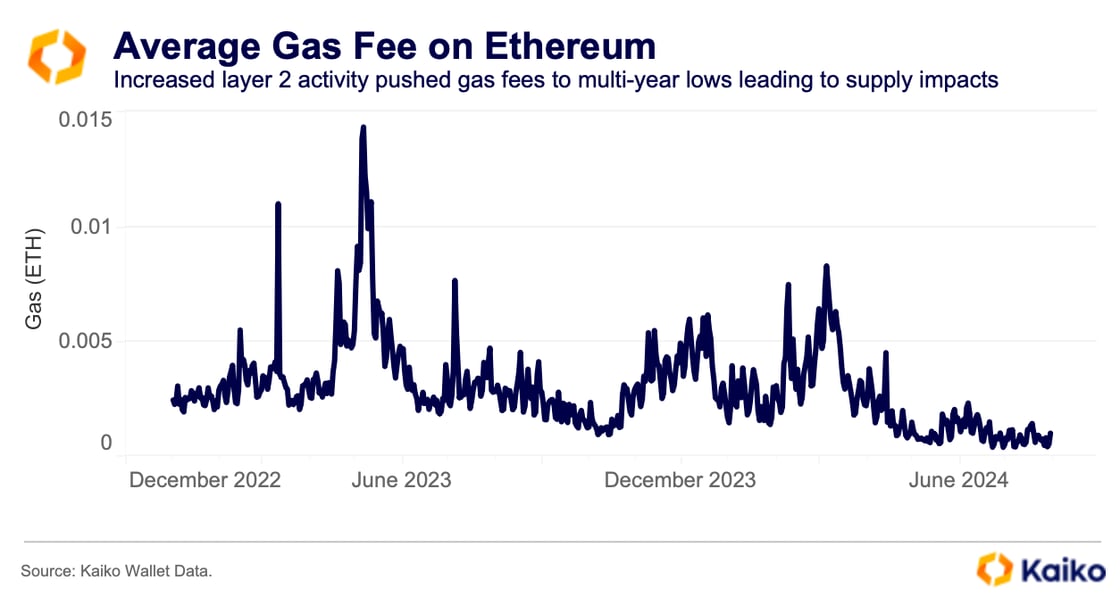
You might think that this reduction in gas costs is a blessingbut it raises a major issue: lower fees also mean less ETH burned.
Since April, the continued decline in fees resulted in a constant increase in the total supply of Ethereuman inflation situation which continues to be worrying and which could, in the long term, compromise the stability of its price.
According to Kaikothe ratio of gas fees to crypto supply is crucial:
” Despite demand drivers like spot ETFs, this supply growth could dampen potential price increases in the near term. »
An increase of 223,000 ETH in circulationor about $591 million at the current price, has been recorded since April 2024. This surge in supply is a red flag for investors, as excess supply could keep downward pressure on the price of ether.
The Impact of New Dynamics on Ethereum Crypto
As the price of ether struggles to regain positive momentum, The impact of lower gas costs is being felt on several frontsThis situation, which might seem beneficial at first glance, hides perverse effects that threaten market stability.
On the one hand, lower gas fees make transactions more accessible, but on the other hand, it reduces ETH burn ratewhich contributes to the increase in overall supply. This surplus of ether has a direct effect on inflationary pressure, thus threatening efforts to keep the price of crypto on an upward trajectory.
To illustrate the scale of this dynamic, here are some key figures:
- Since April, ETH supply has increased by 0.2%, reaching 120.286 million units;
- ETH's inflation rate is currently 0.71% per year;
- 16,500 ETH are added to the supply every week, which is a significant amount on the market.
Despite hopes placed in Ethereum ETFs, Investors are cautious. Recent spot ETFs have not yet had the desired effect, and demand has not increased enough to offset this growth in supply.
The fee cut could signal a potential “floor price,” but in an environment where supply fundamentals are not in control, this outlook remains uncertain. A wise trader would say that “ The road to the top is paved with good intentions and lower gas costs. »
The drop in Ethereum gas fees could well be a double-edged sword, potentially propelling the ether crypto while posing challenges to its future valuation.
Maximize your Tremplin.io experience with our 'Read to Earn' program! For every article you read, earn points and access exclusive rewards. Sign up now and start earning benefits.